Do I Need To Pay The Venice Access Fee?
The Venice access fee was charged on 60 days in spring and summer 2026 and is not charged now. Here is who paid, who was exempt, and what is known about 2027.
Do I Need To Pay The Venice Access Fee?
No, not right now. The Venice access fee, formally the Contributo di Accesso, was charged on 60 selected days between 3 April and 26 July 2026, from 08:30 to 16:00, and the season closed on 26 July with the infrastructure taken down. Outside those days and hours no fee applied, and none applies today. No official 2027 dates or amounts have been published, so there is nothing to pay and nothing to book at the moment.
The fee is easy to misunderstand because it is not a ticket to anything. It is a charge for entering the historic centre, the Citta antica, on set days, aimed mainly at day visitors. It does not replace any museum ticket, transport pass or church donation, and it is separate from the tourist tax that overnight guests pay through their accommodation. If you read a headline in 2026 saying Venice was charging entrance, the reality was narrower: a trial on specific days, in a specific window from 08:30 to 16:00, for a specific group of visitors.
It is also worth separating the fee from the cost of enjoying the city once you are inside. The historic centre is extraordinarily generous to anyone walking around on foot. Squares, bridges, canalsides and entire neighbourhoods cost nothing, and the free walking tours listed on this site, 17 in total across GuruWalk and freetour.com, are pay what you want with no fixed price at all. A day in Venice can genuinely consist of an unpaid walk, a free square and whatever you choose to give a guide at the end.
Who Has To Pay The Venice Access Fee?
Every person over 14 entering the historic centre on a charged day was liable, unless excluded or exempt. Excluded by law were residents of the Comune di Venezia, workers and commuters, students in the Citta antica, and IMU payers and their households. Exempt but required to register were overnight guests staying inside the Comune, Veneto Region residents and several other groups. Murano, Burano, Torcello and the Lido were never charged.
That split between excluded and exempt-but-register is the part that tripped people up. Exclusion is automatic: if you are a resident or a worker, you simply were not in scope, and there was nothing to do. The exempt-but-register groups, above all overnight guests in accommodation inside the Comune, did not pay but did have to register and carry proof. A hotel guest in the historic centre therefore had an extra step that a day visitor from Padua did not, even though the day visitor was the one paying.
The geography matters too. The charge applied only to the Citta antica, the historic centre of Venice itself. The lagoon islands sat outside it. Day trippers heading straight to Murano or Burano, or to the Lido beaches, were not entering the charged zone at all, and no fee was due for those islands on any day of the trial.
| Visitor situation | Access fee position in the 2026 trial |
|---|---|
| Day visitor over 14, entering the historic centre on a charged day | Liable, EUR 5 or EUR 10 depending on payment timing |
| Resident of the Comune di Venezia | Excluded by law, nothing to pay or register |
| Worker or commuter, student in the Citta antica, IMU payer | Excluded by law |
| Overnight guest in accommodation inside the Comune | Exempt, but had to register and carry proof |
| Veneto Region resident | Exempt, but had to register |
| Visitor going only to Murano, Burano, Torcello or the Lido | Not charged, the islands were outside the scheme |
How Much Is The Venice Access Fee?
The Venice access fee cost EUR 5 per person if paid by the fourth-to-last day before your visit, or EUR 10 if paid inside the last four days. Payment through the official portal, cda.ve.it, produced a QR code to carry on the day, and anyone in the historic centre on a charged day without proof risked a fine of EUR 25 to 150 plus the EUR 10 payment. These figures applied to the 2026 trial only.
The two-tier pricing was a deliberate nudge. Paying a few days ahead cost half as much as paying at the last minute, which pushed people toward planning rather than deciding on the vaporetto. The QR code was the whole proof: there was no separate paper pass, and the code was what a check could ask to see.
None of this is live at the moment. The season ended on 26 July 2026 and the checkpoints and signage came down with it. If a site tries to sell you an access fee ticket for a date after that, it is selling you something that does not exist. The only official source for the scheme is the municipal portal, and its frequently asked questions page covers the exemptions in detail.
Once you are inside the city, the spending stops being mandatory very quickly. A guided walk with a local costs nothing up front, and the Heart Of Venice, Bilingual Guide, a freetour.com listing run by Venicemania, is one way to spend a first hour and a half in the city without a fixed price. It meets at the Gallerie dell'Accademia in Dorsoduro and runs in English and Spanish.
When Was The Venice Access Fee Charged In 2026?
The 2026 trial ran on 60 non-consecutive days between 3 April and 26 July 2026, always from 08:30 to 16:00 and only in the historic centre. The days clustered around weekends and holidays in spring, then ran almost continuously in early June and mid-July. Outside those days and hours the fee was never charged, and the season ended entirely on 26 July 2026.
The calendar was the single most confusing part of the scheme, because a visitor could arrive on a Tuesday and owe nothing, then return the following Saturday and be liable. The 60 days were spread across four months in blocks, mostly Thursday to Sunday patterns in April and May, a solid run in early June, and another in late June, with July following the same rhythm until the 26th.
| Month | Charged days in the 2026 trial |
|---|---|
| April 2026 | 3 to 6, 10 to 12, 17 to 19, 24 to 30 |
| May 2026 | 1 to 3, 8 to 10, 15 to 17, 22 to 24, 29 to 31 |
| June 2026 | 1 to 7, 12 to 14, 19 to 21, 26 to 28 |
| July 2026 | 3 to 5, 10 to 12, 17 to 19, 24 to 26 |
Do Overnight Guests Pay The Venice Access Fee?
No, overnight guests staying in accommodation inside the Comune di Venezia did not pay the access fee, but they were not ignored either. They belonged to the exempt-but-register group: no payment, but a registration on the official portal and a QR code to carry as proof. Guests also pay the separate overnight tourist tax through their accommodation, which is a different charge entirely.
This is where the fee and the tourist tax get tangled in most conversations. The access fee targeted day visitors entering the historic centre. The imposta di soggiorno is the longstanding nightly tax that overnight visitors pay, collected by hotels and apartments, and it applied before, during and after the access fee trial. Paying one never covered the other.
The registration step for exempt guests was quick but real. You declared your stay on the official portal, received a QR code and carried it. The point was administrative: the city wanted to distinguish people contributing to the overnight economy from commuters-in-for-the-day, and the QR code was the marker. The official Venice travel portal still carries the entry fee explanation for anyone planning a return trip in a future season.
What Can You Do In Venice Without Spending More?
A great deal. Piazza San Marco is free to enter, though the Basilica at EUR 10, the Campanile at EUR 15 and the full St Mark's ticket at EUR 30 are separate purchases. The Ghetto streets cost nothing, Libreria Acqua Alta is free to walk into and browse, and Murano, Burano and Torcello are free to wander, with their museums and the Torcello cathedral paid. Walking the city itself, and walking it with a guide, costs nothing fixed at all.
The free square, paid tower pattern repeats all over Venice, so it pays to know which side of the pattern you are standing on. The square is public ground. The basilica, its Pala d'Oro and its museum and terrace, and the Campanile are each their own ticket, and a basilica ticket also admits the holder to 34 other sites within 6 months. None of that is a barrier to a good day: it just means the free version of Venice is the city itself, not its interiors.
| Thing | Cost position |
|---|---|
| Piazza San Marco | Free |
| St Mark's Basilica | EUR 10, with the Pala d'Oro, museum, Loggia dei Cavalli and terrace paid separately |
| Campanile di San Marco | EUR 15 |
| Ghetto streets in Cannaregio | Free |
| Jewish Museum | Paid |
| Libreria Acqua Alta | Free to walk in and browse, open about 09:00 to 19:15 |
| Murano, Burano, Torcello on foot | Free to walk, museums and the Torcello cathedral paid |
| Vaporetto single, 75 minutes | EUR 9.50 |
This is the logic behind the directory at Free Things To Do In Venice: the city's best material is free, and the paid layer is optional. A guided walk is the clearest example. The Rialto And Secret Spots Walk, a GuruWalk listing run by Free Walk in Venice with guide Lucia, is rated 4.92 out of 5 across 366 GuruWalk reviews, lasts 2 hours in English and meets at Campo San Polo in San Polo. Like every walk on this site, it is free, pay what you want, with no fixed price anywhere in the arrangement.
The Heart Of Venice, Bilingual Guide covers similar ground from a Dorsoduro start. It is a freetour.com listing run by Venicemania, rated 8.9 out of 10 across 2,142 freetour.com reviews, meeting at the Gallerie dell'Accademia and running 1 hour 30 minutes in English and Spanish. Recent guest reviews note that the route skips St Mark's Square and the Basilica, so it is a neighbourhood walk rather than a checklist walk. You can read more about it on its Heart Of Venice tour page, or See this free tour directly. For the wider picture of how these walks work, the piece on whether free walking tours are really free breaks down the pay what you want model.
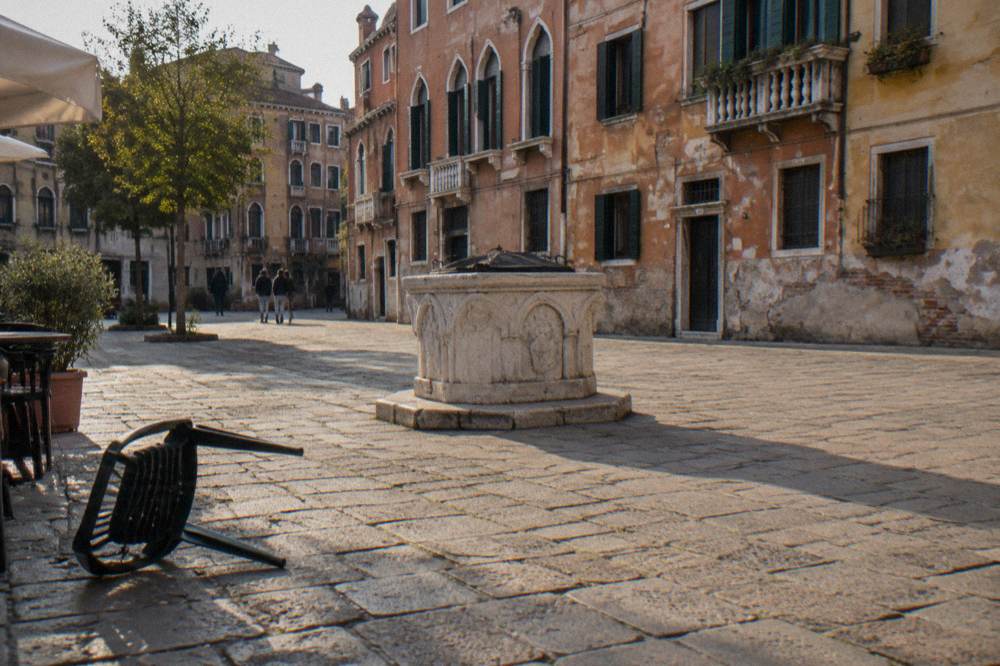
What Is Happening With The Access Fee In 2027?
Nothing official. As of late September 2026, no 2027 dates, amounts or confirmed changes have been published, and any increase to the cap would require national approval. News reporting has floated higher figures for future seasons, but a floated figure is not a published one. The only reliable move before a 2027 trip is to check the official portal, cda.ve.it, closer to travel.
That is an unsatisfying answer, and it is the honest one. The 2026 trial generated real revenue and real debate, and the city's governing bodies will decide what happens next within a process that is not finished. Until something is published, any number you see for 2027, in any framing, from any intermediary, is speculation dressed up as information.
What you can plan around is the structure, because a future season would likely resemble the last one: set days, a daytime window, a historic-centre-only boundary, exemptions for residents and overnight guests, and a QR code as proof. The full background sits in the Venice access fee guide on this site.
Whatever a future season looks like, the free layer of the city will still be there. The walks that start deep in the residential districts are the best evidence: the Northern Districts, Locals' Venice walk from Campo de la Fava in Castello, rated 4.82 out of 5 across 3,020 GuruWalk reviews, the 3-Hour Hidden Venice Walk from Campo San Geremia in Cannaregio, rated 4.76 out of 5 across 1,911 GuruWalk reviews, and the Overlooked Highlights Walk from Campo Sant'Agnese in Dorsoduro, rated 4.84 out of 5 across 1,668 GuruWalk reviews. Each is a GuruWalk listing, each is free, pay what you want, and none of them depends on what the city decides about entrance charges.
Common Questions About The Venice Access Fee
Do I Need To Pay The Venice Access Fee?
Not right now. The 2026 season ran on 60 days between 3 April and 26 July and has ended. No official 2027 dates or amounts have been published, so there is currently nothing to pay. Check the official portal, cda.ve.it, before any future trip.
Is The Venice Access Fee Charged Every Day?
No. Even during the 2026 trial it applied only on 60 selected days, always from 08:30 to 16:00. Outside those days and hours, including every evening, no fee was charged. The trial ended on 26 July 2026.
Do I Pay The Access Fee To Visit Murano Or Burano?
No. The charge applied only to the historic centre, the Citta antica. Murano, Burano, Torcello and the Lido were outside the scheme on every day of the 2026 trial. Note that vaporetto tickets to reach the islands are a separate, real cost, at EUR 9.50 for a 75-minute single.
I Am Staying Overnight In Venice. Do I Pay?
Overnight guests in accommodation inside the Comune di Venezia did not pay the access fee, but they had to register on the official portal and carry the QR code as proof. The nightly tourist tax paid through your accommodation is a separate charge and was unaffected.
Where Do I Register Or Pay The Venice Access Fee?
Only on the official portal, cda.ve.it. Payment produced a QR code to carry on the day. Beware of lookalike sites selling access fee tickets; several copycat domains exist and none of them is the official channel.
Is The Venice Access Fee The Same As The Tourist Tax?
No. The access fee was a daytime entry charge for the historic centre on set days, aimed mainly at day visitors. The tourist tax, the imposta di soggiorno, is a longstanding nightly charge collected by accommodation providers from overnight guests. They are separate schemes with separate rules.