Venice Access Fee Explained: Who Pays, What It Costs, Who Is Exempt
Venice charges a day-visitor entry fee on selected days in spring and summer. Here is what the fee is, who pays it, who does not, and how to prove payment if a season is running when you travel.
Short answer
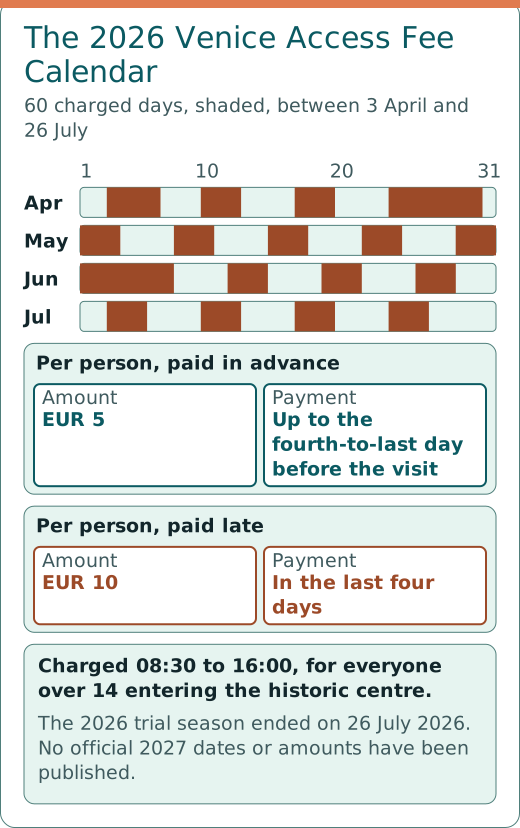
The Venice access fee is a charge for entering the historic centre as a day visitor on selected days, not a museum or attraction ticket. The 2026 trial ran 60 days from 3 April to 26 July 2026, 08:30 to 16:00, at EUR 5 paid early or EUR 10 paid late. Overnight guests register instead of paying.
Venice is the first city in the world to charge day visitors an entry fee simply for arriving. The scheme, called Contributo di Accesso, ran as a trial across 60 non-consecutive days in spring and early summer 2026 and ended on 26 July 2026. Whether that changes how you plan a trip depends almost entirely on one question: are you sleeping inside the Comune of Venice, or are you arriving and leaving the same day? This guide lays out every detail of the fee, what it does and does not cover, and what a free visit to the city looks like while a season is active.
What Is The Venice Access Fee?
The Venice access fee is a municipal charge for entering the historic centre (Citta antica) as a day visitor on designated days and hours. It is not a ticket to any attraction, not a city tax on your hotel bill, and not a pass that includes transport or museums. In 2026 it applied on 60 selected days between 3 April and 26 July, from 08:30 to 16:00, and nowhere else in the Comune.
The council's stated aim is to manage day-tripper pressure on the historic centre, not to raise revenue from people who stay overnight. Overnight guests are treated completely differently from day visitors: they do not pay, but they do have to register and carry proof. The fee applies only to the Citta antica, the main island city. Murano, Burano, Torcello and the Lido were not charged at any point in the 2026 season, which matters if your day is built around the lagoon islands rather than Piazza San Marco.
It helps to keep three separate charges from colliding in your head. The access fee is for entering the city on set days. The imposta di soggiorno is the tourist tax added to a hotel bill for overnight stays. And every museum, basilica and campanile sets its own tariff regardless of both. Paying the access fee, when a season is running, buys you nothing except lawful presence in the historic centre during the charged hours. The official portal run for the council, cda.ve.it, is the only source for dates once a new season is announced, and the council's own tourism pages carry the same position.
| Charge | What it is for | Who pays it |
|---|---|---|
| Access fee (Contributo di Accesso) | Entering the historic centre on set days, 08:30 to 16:00 | Day visitors over 14, on charged days only |
| Imposta di soggiorno (tourist tax) | Overnight accommodation | Hotel and rental guests, added to the bill |
| Attraction tickets (Basilica, museums, transport) | Each operator's own tariff | Anyone who enters or rides |
Do You Have To Pay The Venice Access Fee?
You have to pay only if you enter the historic centre as a day visitor on a charged day, during the charged hours, and you are over 14. Overnight guests in accommodation inside the Comune do not pay but must register for a QR code exemption. Residents, workers, students and several other groups are excluded outright. Outside charged days and hours, nobody pays anything.
The single most useful fact for most travellers: no fee season is in force. The 2026 trial closed on 26 July 2026 and its infrastructure was removed. No official 2027 dates or amounts have been published, so any figure you see for a future season is speculation rather than council policy. Before any spring trip, check the official portal; that is where a new calendar would appear first.
If you are staying overnight inside the Comune, in the historic centre or on the lagoon islands, the mechanism is registration rather than payment. You declare your stay at the portal, receive a QR code, and carry it on charged days the same way a payer carries theirs. Day trippers arriving by train at Santa Lucia or by bus at Piazzale Roma during charged hours are the core target of the scheme. The fine for non-payment ran from EUR 25 to 150, plus the EUR 10 late-rate fee itself, under the 2026 rules.
For a fuller walkthrough of the payment logic from a traveller's perspective, the companion piece on whether you need to pay the access fee works through arrival-by-arrival scenarios. And if the whole cost picture of the city is what you are building, the Venice on a budget guide covers where the real spending happens once you are inside.
Once you are past the gate question, the cheapest way to get oriented is one of the free walking tours listed on this site, 17 in total across GuruWalk and freetour.com. The 3-Hour Hidden Venice Walk by Francesco, rated 4.76 out of 5 across 1,911 GuruWalk reviews, meets at Campo San Geremia in Cannaregio.
How Much Does The Venice Access Fee Cost?
The 2026 fee was EUR 5 per person if paid by the fourth-to-last day before the visit, and EUR 10 if paid in the last four days before the visit, under the council's November 2025 press release. Everyone over 14 pays. There is no child rate below that age because under-15s are simply not charged. The fine for riding it out was EUR 25 to 150 plus the EUR 10 fee.
Two rates exist to push people toward booking ahead rather than deciding on the day, and the spread is deliberately stingy: paying late doubles the cost of a family's day. There is no discount for arriving late in the charged window or leaving before it ends, and no refund logic published for weather or cancelled trains. The charge is per person, per day, with no multi-day pass in the 2026 rules.
| Payment timing | 2026 amount | Notes |
|---|---|---|
| Paid by the fourth-to-last day before the visit | EUR 5 per person | The early rate for booked-ahead day trips |
| Paid in the last four days before the visit | EUR 10 per person | The late rate |
| Under 15 years old | Not charged | Age threshold is 14 |
| Caught without payment | EUR 25 to 150 fine plus EUR 10 | 2026 enforcement terms |
The revenue side of the 2026 season is a matter of public record rather than forecast. September 2026 reporting put paid tickets at roughly 680,000 for the season, around EUR 5.2 million in revenue, with fewer daily day-trippers than in comparable prior periods. The council's own framing is on the official Venice tourism entry-fee page, which restates the rules in traveller-facing form.
No official 2027 calendar, amount or cap has been adopted, and any cap increase requires national approval. Treat every future number you read as a proposal, not a price.
Who Is Exempt From The Venice Access Fee?
Excluded outright, with no registration: residents of the Comune di Venezia, workers including commuters, students in the Citta antica or the minor islands, and IMU payers and their households. Exempt but required to register at the portal: overnight guests in accommodation inside the Comune, Veneto Region residents, people visiting for medical care or sports, and close relatives of residents.
The overnight-guest exemption is the one that catches most travellers. Sleeping inside the Comune, which includes the historic centre and the islands but not mainland Mestre, converts payment into paperwork. You register, you get the QR code, and the code is what a checkpoint would ask for during charged hours. Sleeping outside the Comune and commuting in for the day, even from a hotel two kilometres away in Mestre, makes you a day visitor for the scheme's purposes.

| Group | Status | Action needed |
|---|---|---|
| Comune residents | Excluded | None |
| Commuters and workers | Excluded | None |
| Students in the Citta antica or minor islands | Excluded | None |
| IMU payers and households | Excluded | None |
| Overnight guests inside the Comune | Exempt | Register, carry QR code |
| Veneto Region residents | Exempt | Register, carry QR code |
| Medical care and sports participants | Exempt | Register, carry QR code |
| Relatives to the 3rd degree of residents | Exempt | Register, carry QR code |
The registration list above is not exhaustive; the Regolamento carries further exemptions, so if your situation is unusual the portal's FAQ is the arbiter. What no exemption does is waive attraction prices. St Mark's Basilica is EUR 10 under its own Procuratoria tariff, and that has nothing to do with the access fee either way, a distinction the St Mark's Basilica guide untangles.
If your exempt status rests on an overnight stay in Dorsoduro, the Heart Of Venice, Bilingual Guide walk on freetour.com, rated 8.9 out of 10 across 2,142 freetour.com reviews, meets at Gallerie dell'Accademia in that same neighbourhood and runs in English and Spanish. It is free, pay what you want, 1 hour 30 minutes, with guide Venicemania.
One caution on expectations before you head out with that walk: recent guest reviews say the route skips St Mark's Square and the Basilica, so treat it as a Dorsoduro-and-centre introduction rather than a square-focused one. The meeting point at the Gallerie dell'Accademia also puts you a short walk from the Punta della Dogana waterfront, which is free to wander before or after the walk ends.
How Do You Pay And Prove Payment?
Payment and registration both happen at the official portal, cda.ve.it, and proof is a QR code carried on the charged day. Payers buy the code per person per day; exempt overnight guests generate one by declaring their stay. The code is what you show if asked during the 08:30 to 16:00 charged window.
The practical workflow, when a season is live, is simple. Check the calendar on the portal, match your travel dates against it, and either pay early at the lower rate or register your exemption. Screenshots die and printed codes survive dead phone batteries, so print if you can. The 2026 season sold roughly 680,000 paid tickets through this same flow, so the machinery has now been exercised at scale. The rest of the planning pages sit on Free Things To Do In Venice.
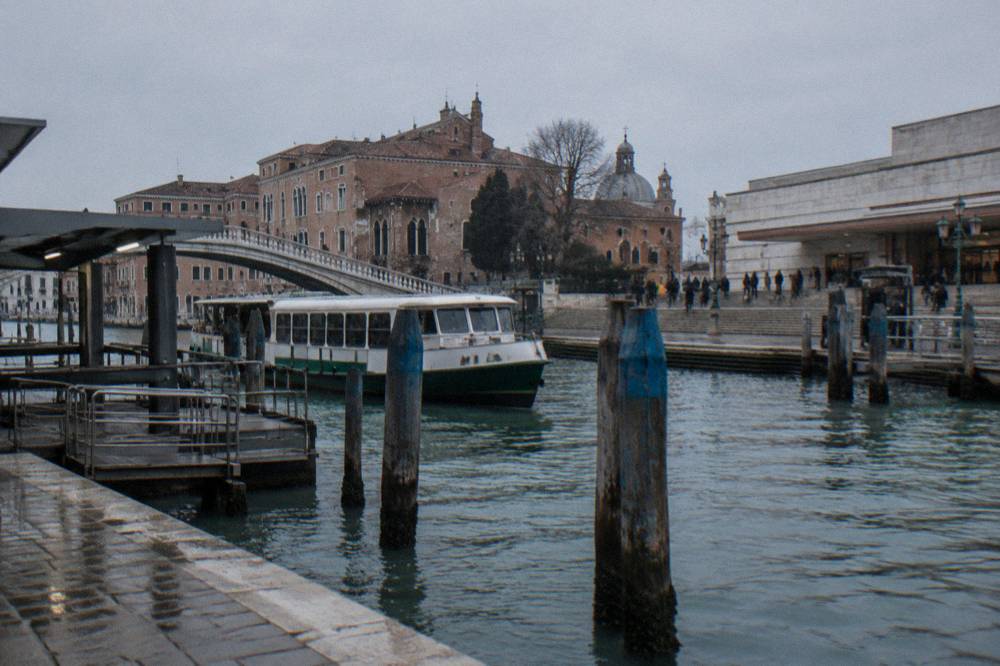
Only use the official portal and the council's own pages for this. The Comune di Venezia access-fee page and cda.ve.it are the two addresses that matter; anything else selling you an "official" Venice entry code deserves suspicion.
What Does The Venice Access Fee Not Cover?
The access fee covers nothing but lawful entry during charged hours. It is not a transport pass, not a museum pass, not a Basilica ticket and not a discount on anything. The vaporetto network, every paid attraction and every church tariff sit entirely outside it, and the 2026 season never bundled a single ride or exhibition into the price.
Transport is the misunderstanding worth heading off, because visitors assume an entry fee must include getting around. It does not. ACTV vaporetto fares for the 2026 to 2027 season are confirmed unchanged: a 75-minute single is EUR 9.50, 24 hours EUR 25, 48 hours EUR 35, 72 hours EUR 45 and 7 days EUR 65, with the airport bus single at EUR 10. The vaporetto guide on this site works through which of those, if any, make sense for your itinerary.
| Thing people assume the fee includes | Reality |
|---|---|
| Vaporetto rides | No, ACTV fares are separate and unchanged |
| Museums and galleries | No, each sets its own tariff |
| St Mark's Basilica | No, EUR 10 under the Procuratoria's own tariff |
| Doge's Palace | No, part of the St Mark's Square Museums Ticket |
| The lagoon islands | They were never charged the access fee at all |
On the museum side the regimes genuinely differ and should never be merged. The Gallerie dell'Accademia, a state museum, joined the Domenica al Museo scheme and is free on the first Sunday of the month with no booking, EUR 20 otherwise. The MUVE civic museums, including the Doge's Palace, run their own tariff with no first-Sunday scheme, and their free days are for residents of the Metropolitan City of Venice. The details sit in the first-Sunday museums piece if you are planning around a month's opening Sunday.
Was The Access Fee Even Working?
The 2026 season's reported results are roughly 680,000 paid tickets and about EUR 5.2 million in revenue, with reduced daily day-trippers against prior years, according to September 2026 news reporting. The council has not framed those numbers as a verdict, and no 2027 continuation, calendar or price has been officially adopted.
What the numbers do show is that the machinery functioned: tickets sold, QR codes were issued at volume, and the enforcement window operated across 60 days without the system collapsing. Whether EUR 5.2 million against the city's visitor-management costs counts as success is a political question, and it is being argued in the council rather than settled. The trial also ended with the physical infrastructure removed, which is worth knowing if you see photos of gates and scanners and assume they are permanent fixtures.
The visitor-side effect is milder than the headlines suggest. For an overnight guest the fee is a registration form. For a day tripper on a charged day it is the price of a coffee on top of the train fare. The cost structure of a Venice day, vaporetto fares, basilica tickets, museum entry, still dwarfs it, which is why the question of whether Venice is expensive for tourists has an answer that barely mentions the access fee.
What Can You Still Do In Venice For Free?
A great deal remains free regardless of the access fee: Piazza San Marco itself, the Rialto and its markets' surroundings, every calle and campo in Cannaregio and Castello, the Ghetto streets, the Punta della Dogana waterfront, and walking on Murano, Burano and Torcello, which were never charged the fee. Free, pay-what-you-want walking tours run across the same ground.
The squares, bridges and backstreets are the city's main free estate, and no fee season changes that. Piazza San Marco costs nothing to stand in; only the Basilica at EUR 10, the Pala d'Oro at EUR 10, the museum and terrace at EUR 10 on top of the basilica, the full ticket at EUR 30 and the Campanile at EUR 15 are paid, all separate facts under the square's own guide. The Rialto bridge and the Grand Canal's banks are free to walk and free to photograph. The full inventory lives in the what to do in Venice for free rundown.
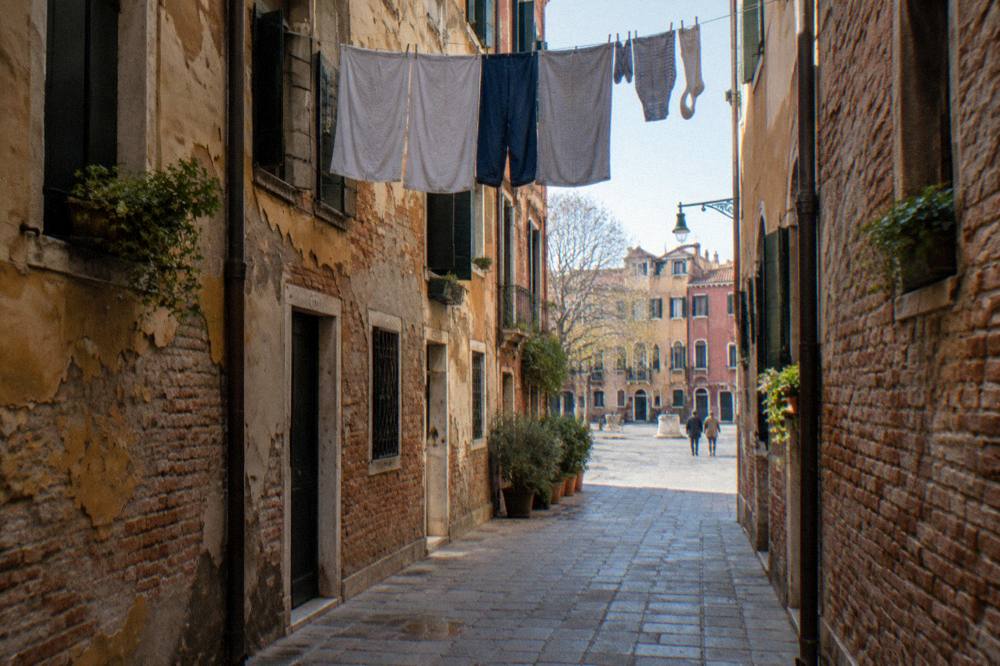
Guided introductions cost nothing up front either. In San Polo, the Rialto And Secret Spots Walk, led by Lucia of Free Walk in Venice on GuruWalk, rated 4.92 out of 5 across 366 GuruWalk reviews, meets at Campo San Polo and runs 2 hours in English, free, pay what you want.
In Cannaregio, The Original Free Walking Tour by Simona, rated 4.88 out of 5 across 325 GuruWalk reviews, meets at Campo Santi Apostoli for a 2-hour English walk on the same free, pay-what-you-want basis.
The same logic extends across every neighbourhood. Six of the walks listed on this site run in Spanish only, so English speakers plan around those. The Murano And Burano Islands Trip on GuruWalk is Spanish-language too and carries extra costs for the boat tickets to the islands, separate from anything the islands themselves charge, or rather do not charge, since Murano, Burano and Torcello are free to walk and only their museums and the Torcello cathedral are paid.
For deeper immersion in the parts of the city that a day tripper never reaches, three walks stand out: the 3-Hour Hidden Venice Walk by Francesco, the Overlooked Highlights Walk by Venice Walking Tour, and the Hidden Secrets And Curiosities Walk by ITAKA tours. Each meets in a different corner of the city, from Campo San Geremia in Cannaregio to Campo Sant'Agnese in Dorsoduro, and each is free, pay what you want.
Common Questions About The Venice Access Fee
Is The Venice Access Fee Being Charged Now?
No. The 2026 trial ended on 26 July 2026 and the infrastructure was removed. No fee applies outside the charged days and hours of an active season.
Do Overnight Guests Pay The Venice Access Fee?
No, but they must register at the official portal and carry the QR code exemption on charged days. The exemption covers guests in accommodation anywhere inside the Comune of Venice.
How Much Is The Venice Access Fee?
In 2026 it was EUR 5 per person if paid by the fourth-to-last day before the visit, or EUR 10 if paid in the last four days. No official 2027 amounts have been published.
Do Children Pay The Venice Access Fee?
No. The 2026 rules charged every person over 14, which means anyone aged 14 and under entered without payment or registration.
Does The Venice Access Fee Include Transport Or Museums?
No. It covers entry to the historic centre during charged hours only. Vaporetto fares, the Basilica at EUR 10 and every museum tariff are entirely separate.
Were Murano, Burano And The Lido Charged The Access Fee?
No. The 2026 charge applied to the historic centre (Citta antica) only; Murano, Burano, Torcello and the Lido were never charged.