What Are The Hidden Gems In Venice That Cost Nothing?
A researched guide to Venice's free hidden gems: quiet campi, Cannaregio's back canals, the Jewish Ghetto streets, the lagoon islands' walkable shores, and the free walking tours that reach them.
Venice's genuinely free hidden gems are its quiet residential campi, the back canals of Cannaregio and Castello, the Jewish Ghetto streets, the Punta della Dogana waterfront, Libreria Acqua Alta, and the walkable shores of Murano, Burano and Torcello. None of these charges entry. The catches are real but small: island boat fares, and museums on otherwise free ground, cost extra.
The secret most guidebooks underplay is structural: Venice charges for buildings, not for streets. The city's entire public realm, its squares, its bridges, its waterfront promenades and its labyrinth of alleys, is open to anyone who walks in. What costs money is the enclosed stuff: museums, the Basilica's paid itinerary, the Campanile, the Doge's Palace. Once you accept that split, the map of free Venice becomes enormous, and the hidden gems are simply the parts of that free public realm where the crowds thin out.
This article walks through those corners neighbourhood by neighbourhood, states every condition and exception plainly, and points to the free walking tours on this site that reach them. The site publishes 17 free walking tours in total across GuruWalk and freetour.com, and several of them concentrate precisely on the districts where the hidden material lives.
What Are The Hidden Gems In Venice That Cost Nothing?
The hidden gems that cost nothing are: the quiet campi of Dorsoduro and Castello, the back canals of Cannaregio around Campo della Maddalena, the Jewish Ghetto streets in Cannaregio, the Punta della Dogana waterfront, Libreria Acqua Alta's bookshop canals, and the free-to-walk ground of Murano, Burano and Torcello. Each is free to enter with no ticket, queue or booking.
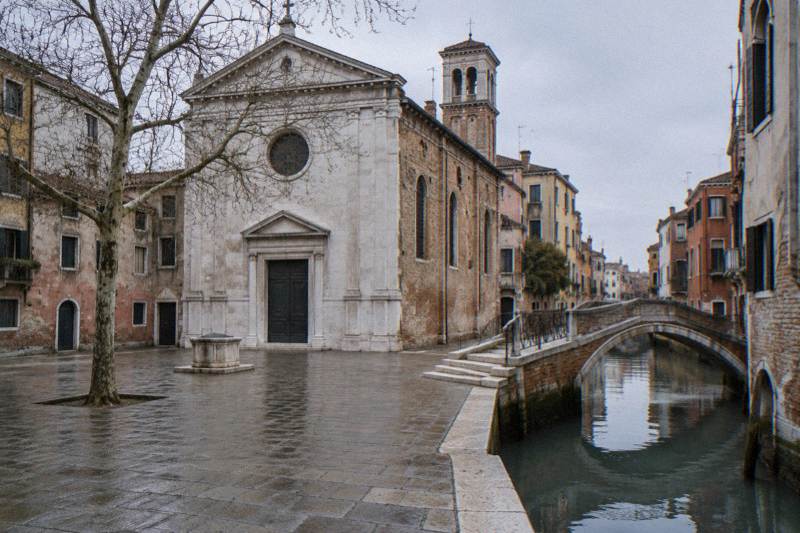
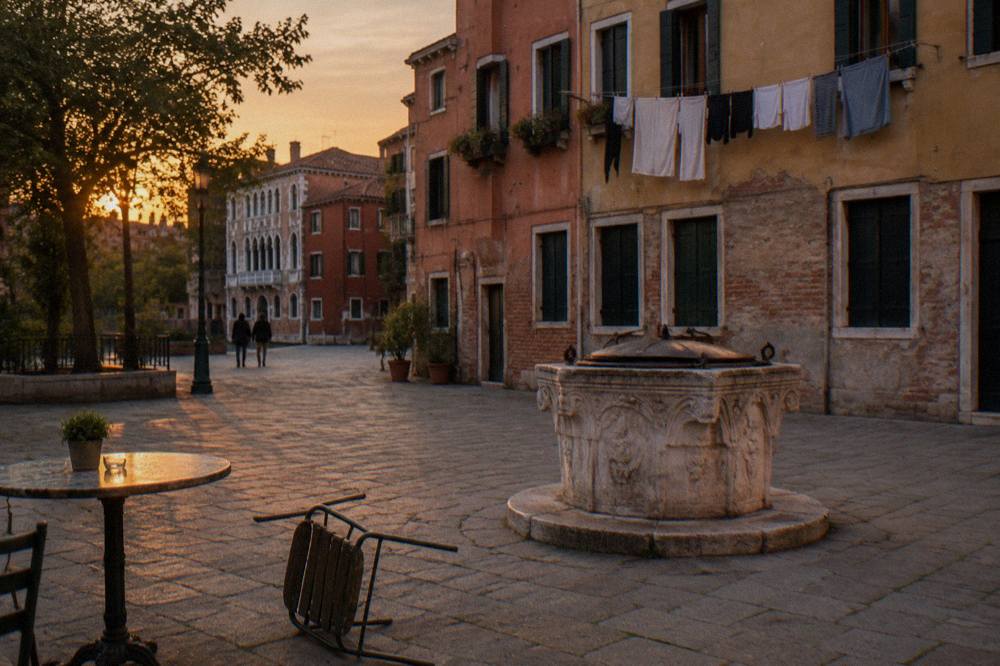
Start with the campi, because they are the city's living rooms and nobody charges for a seat at one. A campo is Venice's version of a square, and the famous ones, Piazza San Marco above all, absorb the crowds. But Venice holds well over a hundred campi, and the ones without a monument or a museum entrance stay empty. In Dorsoduro, Campo Sant'Agnese is a working neighbourhood square where children play and locals cycle to the bakery. In Castello, Campo de la Fava sits among ordinary apartment blocks a short walk from the Rialto, yet tour groups rarely turn into it. In Cannaregio, Campo della Maddalena is one of the city's oldest layouts, an understated polygon of brick and water with almost nothing to buy.
The reason these places stay quiet is foot-flow. Day visitors arrive at Santa Lucia station or the cruise terminal and follow the signed route to Rialto and San Marco. The signage creates a river of people a few streets wide; two streets away in any direction, the city empties. That is the single most reliable way to find Venice's hidden gems without a guide: walk perpendicular to the crowd for five minutes.
Two free walking tours listed on this site make that principle their entire route. The Overlooked Highlights Walk, run on GuruWalk by the operator Venice Walking Tour, is rated 4.84 out of 5 across 1,668 GuruWalk reviews and meets at Campo Sant'Agnese in Dorsoduro, an English-language, two-hour, pay-what-you-want walk. The Hidden Secrets And Curiosities Walk, also on GuruWalk under the operator ITAKA tours, is rated 4.89 out of 5 across 1,189 GuruWalk reviews and meets at Campo della Maddalena in Cannaregio for two hours and fifteen minutes. Both are free to book, with the tip decided at the end, and both start on ground that is itself one of the gems.
Where Are The Free Hidden Corners Of Cannaregio?
Cannaregio's free corners cluster in its northern half: the Jewish Ghetto streets around Campo del Ghetto, the canals around Campo della Maddalena and Rio Terà Barba Frutariol, and the quiet Fondamenta della Misericordia waterfront. All are public streets with no entry charge of any kind. The one paid exception in the area is the Jewish Museum, which charges admission.
Cannaregio is the district where Venice stops performing for visitors and resumes being a city. Its western edge takes the station traffic, but the further north and east you walk, the more the streets narrow into laundry-strung alleys and tiny squares where the bars are for residents. The Jewish Ghetto is the historic heart of this. It is the area that gave the world the word "ghetto", and its streets, campo and memorials are free to walk at any time. The square's bronze Holocaust memorial panels and the sombre heights of the former warehouse buildings say more than most paid exhibits manage.
The condition, stated plainly: the Ghetto's streets are free, but the Jewish Museum on the same square is a paid museum. Walking the neighbourhood costs nothing; going inside the museum does.
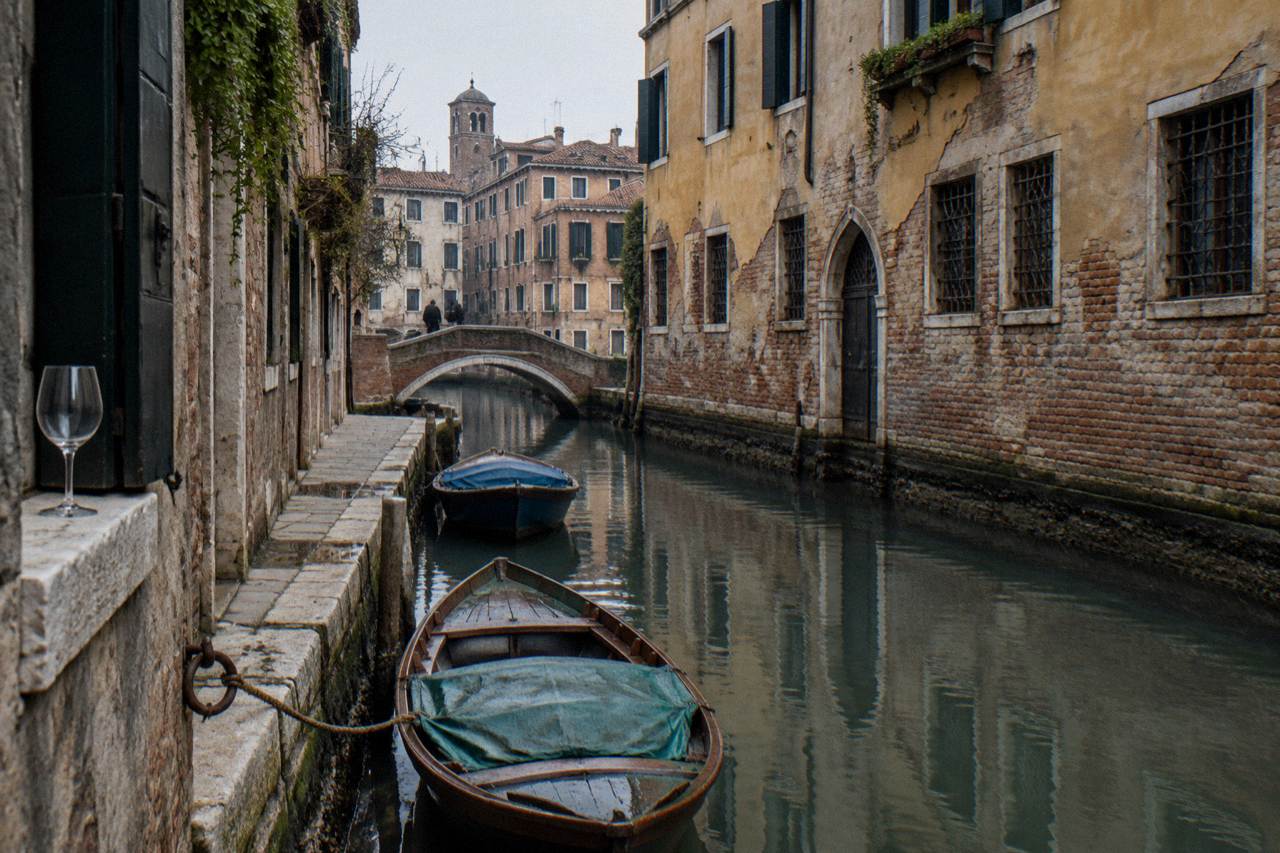
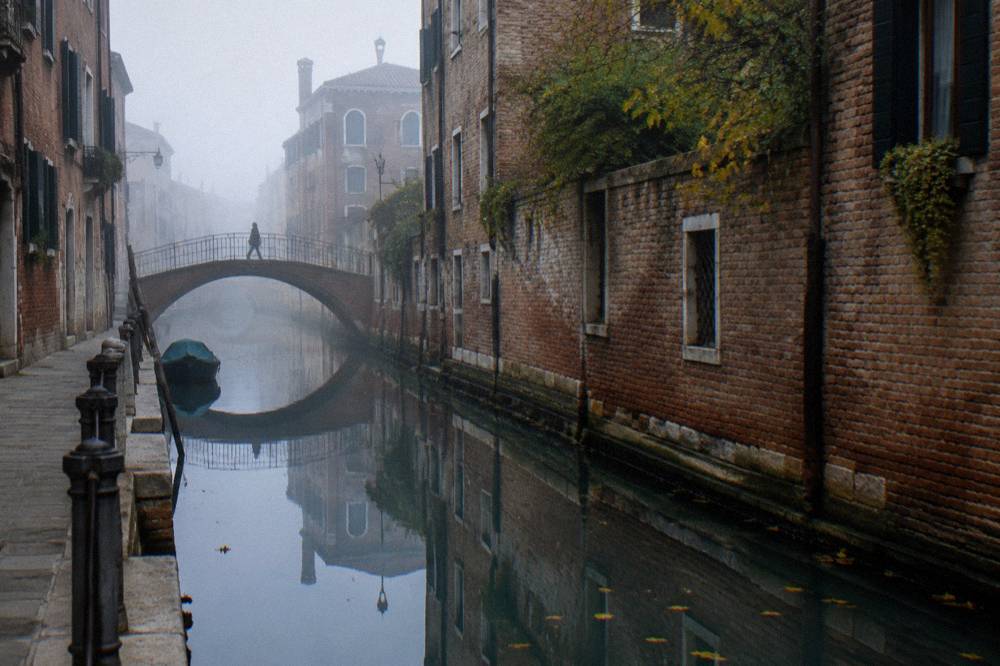
The rest of Cannaregio rewards aimlessness. Rio Terà Barba Frutariol, a paved-over canal now serving as a street, gives its name to a quiet stretch where the Hidden Gems, Bilingual Guide walk on GuruWalk meets, an English-and-Spanish, two-hour walk by Scandic Tours rated 4.61 out of 5 across 444 GuruWalk reviews. Further along, the Fondamenta della Misericordia and its continuation toward the northern lagoon edge offer one of the city's better free waterside walks, with the open lagoon appearing suddenly at the end of the streets.
For depth, the 3-Hour Hidden Venice Walk on GuruWalk, run by the guide Francesco, rated 4.76 out of 5 across 1,911 GuruWalk reviews, meets at Campo San Geremia at the Cannaregio end of the Grand Canal and spends three hours in exactly this territory. It is the longest of the free walks on this site, pay what you want, in English.
Is The Jewish Ghetto Area Really Free To Explore?
Yes, the Jewish Ghetto area is entirely free to explore. The streets, Campo del Ghetto Nuovo, the memorials and the exterior of the historic synagogues are public space with no ticket. Only the Jewish Museum and any guided synagogue interiors carry a charge.
It is worth separating the neighbourhood from its institutions, because conflating them is how misinformation spreads. The Ghetto is not an attraction with an entrance; it is a district of Cannaregio that happens to hold a heavy history. Visitors can stand in Campo del Ghetto Nuovo, read the memorial plaques set into the walls, and study the strange top-heavy architecture of buildings that were raised because the residents were forbidden from expanding outward, all without spending anything.
For travellers who want the history explained rather than self-interpreted, the Small-Group Jewish Ghetto Walk on GuruWalk is the natural fit. Run by Lucia of Free Walk in Venice, it is rated 4.95 out of 5 across 39 GuruWalk reviews, meets at Campo San Geremia, and runs two hours in English, free with a tip at the end. The small review pool is worth stating honestly: 39 reviews is a small sample, but the score is close to perfect. The same guide's other walk on this site, the Rialto And Secret Spots Walk, meets at Campo San Polo and is rated 4.92 out of 5 across 366 GuruWalk reviews.
What Free Neighbourhoods Lie Beyond San Marco?
Beyond San Marco, the free neighbourhoods worth seeking are Castello's eastern residential streets around Campo de la Fava and the Arsenale edge, Dorsoduro's squares and the Punta della Dogana waterfront, and San Polo's quiet corners near Campo San Polo. All are open public streets. Punta della Dogana's tip is free to walk; the art museum on it is paid.
Castello is the largest district and the least visited, because it sits in the wrong direction from everything a day tripper is chasing. That makes it the best free territory in the city. Campo de la Fava, near the Rialto's quiet side, is where the Northern Districts, Locals' Venice walk begins: a GuruWalk listing by Venice Walking Tour, rated 4.82 out of 5 across 3,020 GuruWalk reviews, two hours in English, pay what you want. It is the related walk for this article because it does exactly what a hidden-gems seeker needs, it stays in the everyday districts where Venetians actually live. The rest of the planning pages sit on Free Things To Do In Venice.
The eastern stretch of Castello toward the Arsenale and the public gardens edge keeps a village character that surprises people who assume Venice ends at Piazza San Marco. Dorsoduro, by contrast, mixes grand museums with mundane streets, and the walk from Campo Sant'Agnese toward the Punta della Dogana tip passes through both. At the point itself, where the Grand Canal meets the Giudecca Canal, the waterfront is free and open, one of the finest free views in the city. The contemporary art museum occupying the old customs house there is a paid attraction; the spit of land it stands on is not.
San Polo, the smallest district, holds Campo San Polo, the city's second-largest square and a genuinely local one, with a church at one edge and nothing touristic at its centre except the passage of people heading onward. The Rialto And Secret Spots Walk above meets here.
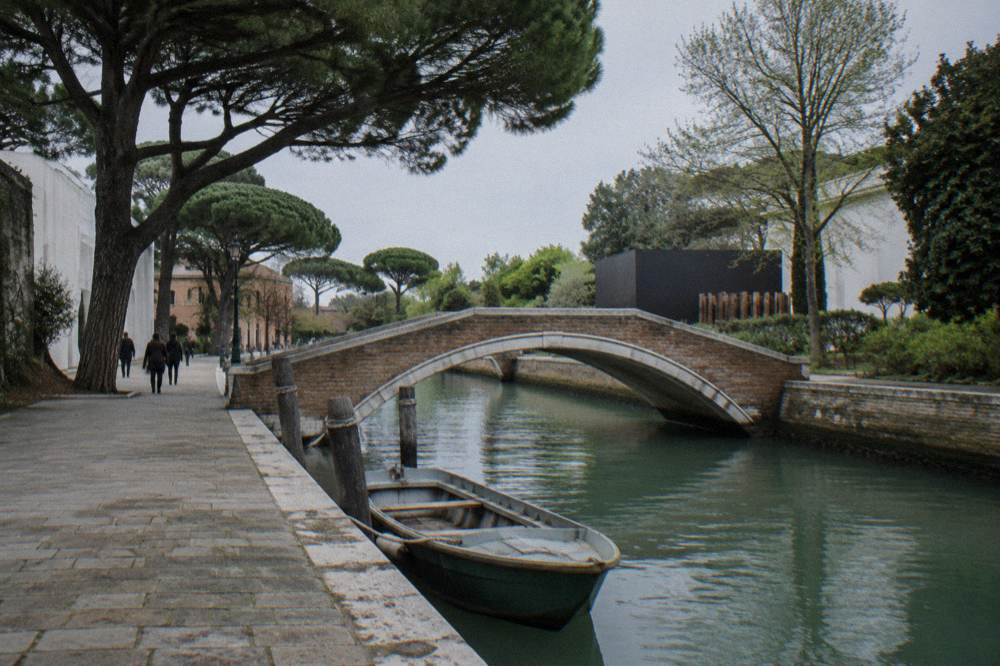
Do The Lagoon Islands Hide Free Gems Too?
They do. Murano, Burano and Torcello are all free to walk, and each hides gems: Murano's canal-side furnaces and facades, Burano's painted houses and quiet side canals, and Torcello's near-empty open ground around its ancient cathedral. The costs are the boat fares between islands and the paid museums and cathedral interior.
The islands are the clearest case of the conditionally free pattern that runs through this whole subject. Nothing charges you to step off the vaporetto and walk. Burano in particular rewards the visitor who walks past the famous painted front row and into the back streets, where the houses are still colourful but the crowds vanish within two streets. Torcello is the wildcard: once a city of thousands, now a scattering of buildings in open grass, and walking its paths and bridges costs nothing. The interior of its cathedral is paid, as are the island museums on Murano and Burano.
Boat fares are the unavoidable cost, and they are real: an ACTV single ticket valid 75 minutes costs EUR 9.50, with 24-hour, 48-hour and 72-hour passes at EUR 25, EUR 35 and EUR 45 respectively per the operator's own published fares, which are confirmed stable for the 2026 to 2027 season. There is no free boat service for visitors. The one island walk on this site's roster, the Murano And Burano Islands Trip on GuruWalk, is itself free and pay what you want, in Spanish only, meeting at Campo dei Gesuiti, but the boat tickets to the islands are an extra cost on top, with no amount stated here.
| Free hidden gem | Neighbourhood or island | What it costs | The condition to know |
|---|---|---|---|
| Jewish Ghetto streets | Cannaregio | Nothing | Jewish Museum on the square is paid |
| Campo della Maddalena | Cannaregio | Nothing | Open public square |
| Campo Sant'Agnese | Dorsoduro | Nothing | Working residential square |
| Campo de la Fava | Castello | Nothing | Meeting point of a free GuruWalk |
| Punta della Dogana waterfront | Dorsoduro | Nothing | Art museum on the tip is paid |
| Libreria Acqua Alta | Castello | Nothing | It is a bookshop; books cost money |
| Burano back streets | Burano | Nothing to walk | Boat fare applies; lace museum paid |
| Torcello paths | Torcello | Nothing to walk | Cathedral interior is paid |
One more free interior deserves its own line: Libreria Acqua Alta, the bookshop where volumes are stacked in a gondola and a bathtub against the flood. It is free to walk in and browse, because it is a shop; its own pages give two slightly different closing times, so treat its hours as about 09:00 to 19:15 and expect nothing firmer.
Does The Venice Access Fee Change Any Of This?
No, the access fee does not currently apply: the 2026 trial ended on 26 July 2026, and no fee is charged now. In 2026 it ran on 60 non-consecutive days, 08:30 to 16:00, at EUR 5 paid early or EUR 10 in the last four days, for day visitors over 14 entering the historic centre. No official 2027 dates or amounts have been published.
The fee matters to a hidden-gems itinerary only in one way: every place listed above sits inside the historic centre or on the lagoon islands, and in 2026 the islands of Murano, Burano and Torcello were not charged at all. Overnight visitors were exempt but had to register for a QR code at the official portal. The official position for 2027 is that there is no position yet, and any figure quoted for next year is speculation, not policy. The city's official guidance lives at the entry-fee page on visit.venice.it, and the operative detail, who pays and who registers, is in the official FAQ at cda.ve.it.
A second seasonal note belongs beside it. Acqua alta season runs October to March, peaking in November and December, and the MOSE barriers rise against tides forecast above 110 cm at Punta della Salute. Lower tides can still dampen low points of the city, which is one reason the raised walkways appear in cooler months. None of this carries a charge; it simply shapes when the quiet corners are at their best, and the city's tide centre publishes forecasts anyone can check.
Which Free Walking Tours Reach The Hidden Venice?
The free walking tours that reach hidden Venice are the Northern Districts, Locals' Venice walk, the Overlooked Highlights Walk, the Hidden Secrets And Curiosities Walk, the 3-Hour Hidden Venice Walk, the Rialto And Secret Spots Walk and The Original Free Walking Tour, all on GuruWalk, plus the Heart Of Venice, Bilingual Guide walk on freetour.com. All are pay what you want.
This is where the free-attraction and free-tour worlds meet. The walks above are drawn from the 17 free walking tours listed on this site across GuruWalk and freetour.com, and the hidden-district specialists among them are the reason a traveller can see Cannaregio and Castello with a local interpreter rather than alone. Each is booked on the operator's own listing, costs nothing up front, and is paid by tip afterward at whatever the walker decides. The Heart Of Venice walk on freetour.com, run by Venicemania and rated 8.9 out of 10 across 2,142 freetour.com reviews, meets at the Gallerie dell'Accademia; recent reviews note that its route skips St Mark's Square and the Basilica, so treat it as an inner-city walk rather than a square visit.
For planning around the free attractions themselves, the companion guides on this site go deeper: see free things to do across Venice for the full free-attraction round-up, and the essential Venice planning guide for how the districts fit together. If churches are your interest, the question of which ones charge has its own honest answer in which churches in Venice are free.
Common Questions About Hidden Gems In Venice
What Are The Hidden Gems In Venice That Cost Nothing?
The quiet campi of Dorsoduro, Castello and Cannaregio, the Jewish Ghetto streets, the Punta della Dogana waterfront, Libreria Acqua Alta, and the walkable ground of Murano, Burano and Torcello. All are free to enter; only museums and boat fares on that list cost anything.
Is The Jewish Ghetto Free To Visit?
The Ghetto streets, Campo del Ghetto Nuovo and the memorials are free public space. The Jewish Museum on the square is paid.
Are Murano And Burano Free?
Both islands are free to walk, including Burano's painted back streets. You pay the boat fare to reach them, and the islands' museums and the Torcello cathedral interior are paid.
Are The Free Walking Tours Really Free?
Yes. Every walk listed on this site is free to book on its own listing and works on a pay-what-you-want basis, with the tip decided at the end. Sixteen run on GuruWalk and one on freetour.com, 17 in total.
Do I Need To Pay The Venice Access Fee To See The Hidden Gems?
Not now. The 2026 trial ended on 26 July 2026 and no fee is currently charged. No official 2027 dates or amounts have been published, so check the official portal before a 2027 trip.
Is Libreria Acqua Alta Free?
Yes, it is free to walk in and browse because it is a working bookshop. Its own pages give two slightly different closing times, so treat its hours as about 09:00 to 19:15.