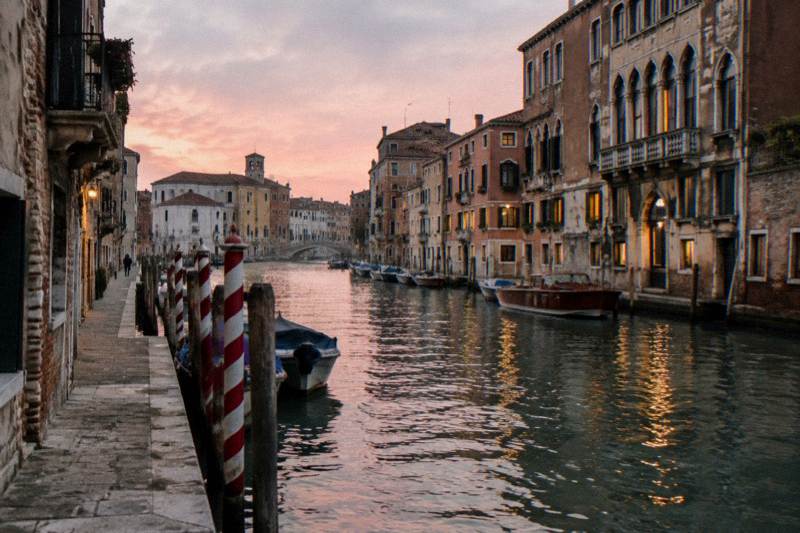
What To Do In Venice For Free?
A researched guide to the genuinely free side of Venice: squares, churches, viewpoints, free walking tours and lagoon islands, with the paid extras clearly separated.
What To Do In Venice For Free?
Venice gives away more than almost any city its size: Piazza San Marco costs nothing to stand in, the Ghetto streets are open to all, Murano, Burano and Torcello are free to walk, and the 17 free walking tours listed on this site across GuruWalk and freetour.com cover the historic centre end to end. The paid parts, the Basilica, the museums, the boat fares, sit beside the free ones, and telling them apart is the trick.
That last sentence is the honest summary of budgeting Venice. The city does not hide its prices, but it does mix them. A single square can contain a free experience and thirty euros of extras within fifty metres of each other, and a church that is free at one door can charge an offering at another. This guide separates the two, section by section.
The free layer is not a consolation prize, either. Some of the best of Venice, the light on the Zattere, the back calles of Cannaregio, the view across the water at Punta della Dogana, cannot be sold in ticket form at all. What follows is the full inventory of that layer, plus the free walking tours that turn it into a route.
If you want a guide rather than a map, the free walks below are the fastest start: all three are pay-what-you-want, all run in English, and each covers different ground from a different meeting point.
Is Piazza San Marco Really Free To Visit?
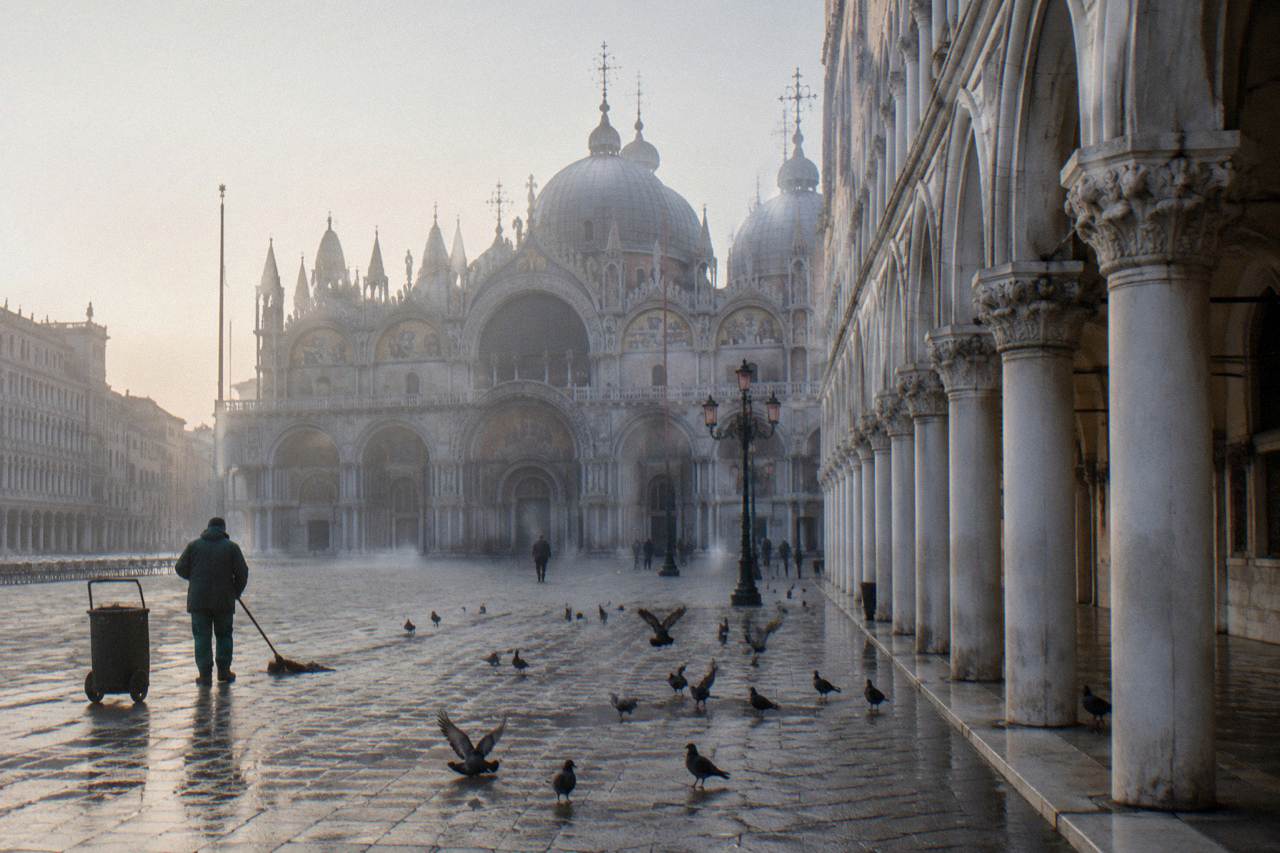
Yes, the square itself is completely free to enter and walk across at any hour, and Napoleon's description of it as the world's finest drawing room still holds. But the buildings around it are a paid stack: St Mark's Basilica is EUR 10, the Pala d'Oro is EUR 10, the museum, Loggia dei Cavalli and terrace are EUR 10 on top of the basilica, the full ticket is EUR 30, and the Campanile is EUR 15.
The square and its sights are the clearest example of the free-square-paid-tower pattern that runs through Venice. Standing in the Piazza, watching the pigeons, the cafe orchestras and the facade of the Basilica, costs nothing and never has. The Procuratie arcades are public. The whole theatrical space is open, which is remarkable for the most famous square in one of the most visited cities in Europe.
The moment you step through a door or up a stair, the tariff starts. The Basilica's own Procuratoria price list puts entry at EUR 10, and a basilica ticket also admits the holder, within six months, to 34 other sites under the same administration, a detail worth knowing if you plan a longer stay. The Campanile lift is a separate EUR 15. None of this is hidden; it is simply a different product from standing in the square. A free walk covers this ground: Historic Centre Walk With Annie.
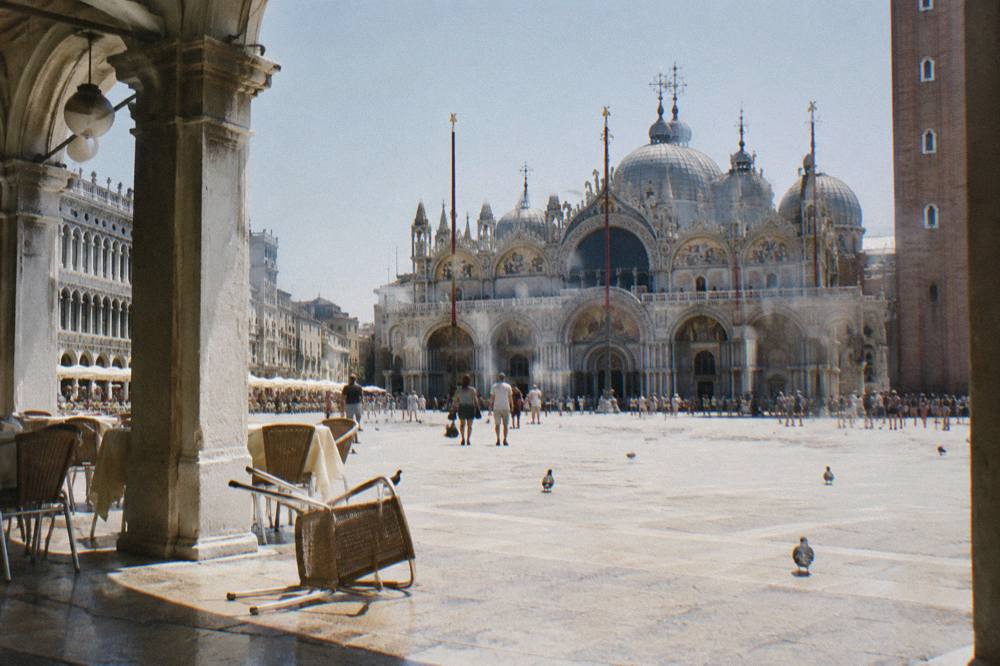
The practical reading: budget an hour of free time in the square before or after any paid visit. Early morning, before the day-trippers arrive from the station, the Piazza is close to silent, and that version of it is one of the best free experiences in Italy. Our St Mark's Square guide breaks down every sight on the square, free and paid, in more detail.
Which Museums And Churches Can You Enter Without Paying?
In Venice, only the Gallerie dell'Accademia offers truly free entry, opening to everyone on the first Sunday of each month under the Domenica al Museo scheme, with under 18s always free and EU visitors aged 18 to 25 paying EUR 2. The Doge's Palace, Correr, Peggy Guggenheim, and St Mark's Square museums all charge admission, though certain groups like Venetian residents qualify for exemptions.
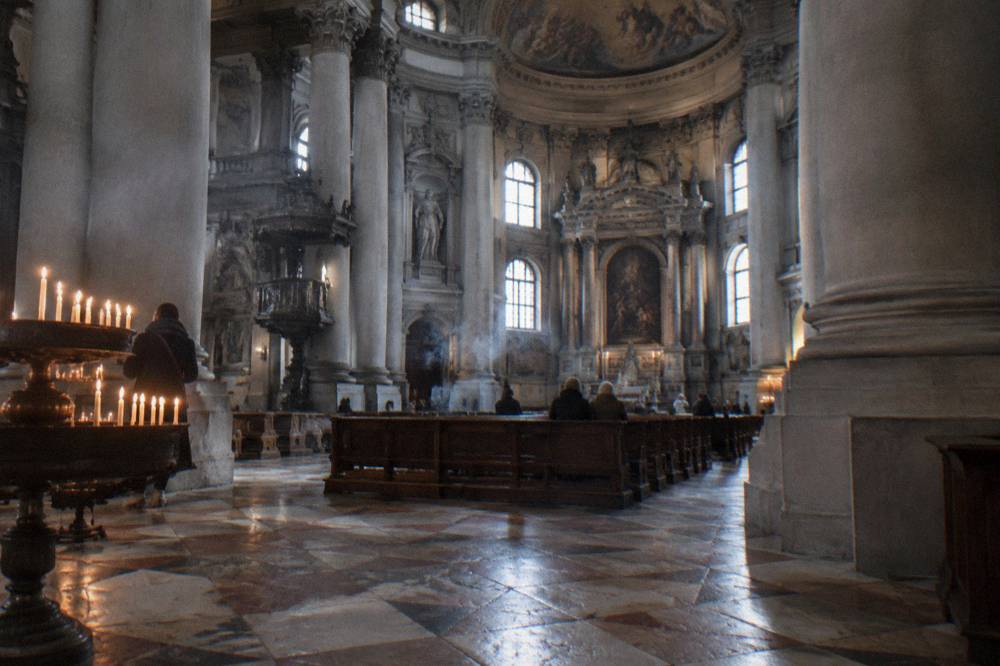
The churches are equally fragmented. The Frari, one of the great Gothic interiors of Italy, is an independent church with its own EUR 8 ticket and its own concession list. Santi Giovanni e Paolo, the monumental pantheon of the doges, treats its EUR 3.50 as an offering and keeps the church free for anyone coming to pray or attend Mass.
| Site | Entry status | The condition, in the same breath |
|---|---|---|
| Piazza San Marco | Free | Open public square, always |
| Gallerie dell'Accademia | Free on first Sundays | EUR 20 otherwise, no booking needed on the free day |
| Basilica dei Frari | Paid | EUR 8, own concessions |
| Santi Giovanni e Paolo | Conditionally free | EUR 3.50 offering for tourist visits, free for prayer and Mass |
| Ghetto streets | Free | The Jewish Museum is a separate paid visit |
| Peggy Guggenheim Collection | Paid | EUR 17 adults, no general free day |
The Peggy Guggenheim is included in the table because it is the one people most often hope is free. It is a private museum, adults pay EUR 17, and it has no general free day; its Dorsoduro neighbour, the Punta della Dogana waterfront, is the free half of that visit, with the museum inside it paid. For the full church-by-church picture, our free churches in Venice post covers it, and the first Sunday museums question is answered separately.
If a guided first day would help you place all of these neighbourhoods before you explore them alone, the Heart Of Venice walk is the natural starting point.
Can You Enjoy The Water In Venice Without Paying For A Boat?
Yes, in the sense that Venice's entire waterside is a free spectacle: every canal bank, every bridge, the Zattere, the Riva degli Schiavoni and the Punta della Dogana waterfront cost nothing. No, in the sense that no free boat service exists for visitors: a 75-minute vaporetto ticket is EUR 9.50, 24 hours is EUR 25, 48 hours is EUR 35, 72 hours is EUR 45, and 7 days is EUR 65.
The honest line on the water is that walking is free and floating is not. The vaporetto network is the city's bus system and it is priced like one that happens to run on water, with the single 75-minute ticket at EUR 9.50 and the airport bus single at EUR 10. Those fares are confirmed for the 2026 to 2027 season, with no increases announced. There is no visitor free-ride scheme, and any route that crosses the Grand Canal by public boat needs a ticket.
What the fares buy is perspective you cannot get on foot, but the free compensations are real. The walk along the Giudecca side of the Zattere, facing the water with the island of Giudecca across it, is one of the widest and calmest free promenades in the city. The fondamenta around the Accademia and the stretch past the Salute give the classic Grand Canal views from the bank. Venice rewards the pedestrian as much as the passenger; the city was built to be walked.
Our vaporetto guide has the full fare table and pass maths.
What Free Walking Tours Cover Venice?
Seventeen free, pay-what-you-want walking tours are listed on this site, 16 on GuruWalk and one on freetour.com, run by independent local guides. They cover the essential San Marco and Rialto core, the northern districts where locals live, the hidden corners of Cannaregio, the Jewish Ghetto in small groups, and themes from legends to carnival, meeting at points across Dorsoduro, San Polo, Cannaregio, Castello and San Marco.
This site operates none of them. Every walk belongs to an independent guide or operator and runs on a pay-what-you-want basis, which means the price is genuinely zero until you decide otherwise at the end. The largest English-language option is the Heart Of Venice walk with Venicemania, a freetour.com listing rated 8.9 out of 10 across 2,142 freetour.com reviews, meeting at the Gallerie dell'Accademia in Dorsoduro and running an hour and a half in English and Spanish. Recent reviews on that listing note the route skips St Mark's Square and the Basilica, so treat it as a Dorsoduro-and-centre walk rather than a square tour.
The Rialto side is covered by the Rialto And Secret Spots Walk, run by Free Walk in Venice with the guide Lucia on GuruWalk, rated 4.92 out of 5 across 366 GuruWalk reviews, a two-hour English walk from Campo San Polo in San Polo. It is the strongest pick if your first morning starts on the market side of the city rather than the lagoon side.
For the districts tourists usually skip, the Northern Districts walk, the locals' Venice route by Venice Walking Tour on GuruWalk, rated 4.82 out of 5 across 3,020 GuruWalk reviews, leaves from Campo de la Fava in Castello for two hours of the working east of the city. Its sibling, the Overlooked Highlights Walk from the same operator, rated 4.84 out of 5 across 1,668 GuruWalk reviews, starts at Campo Sant'Agnese in Dorsoduro and picks up the famous sights that most itineraries rush past. If your interest is depth, the 3-Hour Hidden Venice Walk with Francesco, rated 4.76 out of 5 across 1,911 GuruWalk reviews, is the longest of the English options, from Campo San Geremia in Cannaregio.
Six further walks on the roster run in Spanish only, and the Murano And Burano Islands Trip, in Spanish from Campo dei Gesuiti, carries extra costs for the boat tickets to the islands. The Ghetto is covered in English by the Small-Group Jewish Ghetto Walk, rated 4.95 out of 5 across 39 GuruWalk reviews, from Campo San Geremia. How the pay-what-you-want model actually works, and what it is fair to tip, is covered in our are free walking tours really free post.
Are Murano, Burano And Torcello Free To Visit?
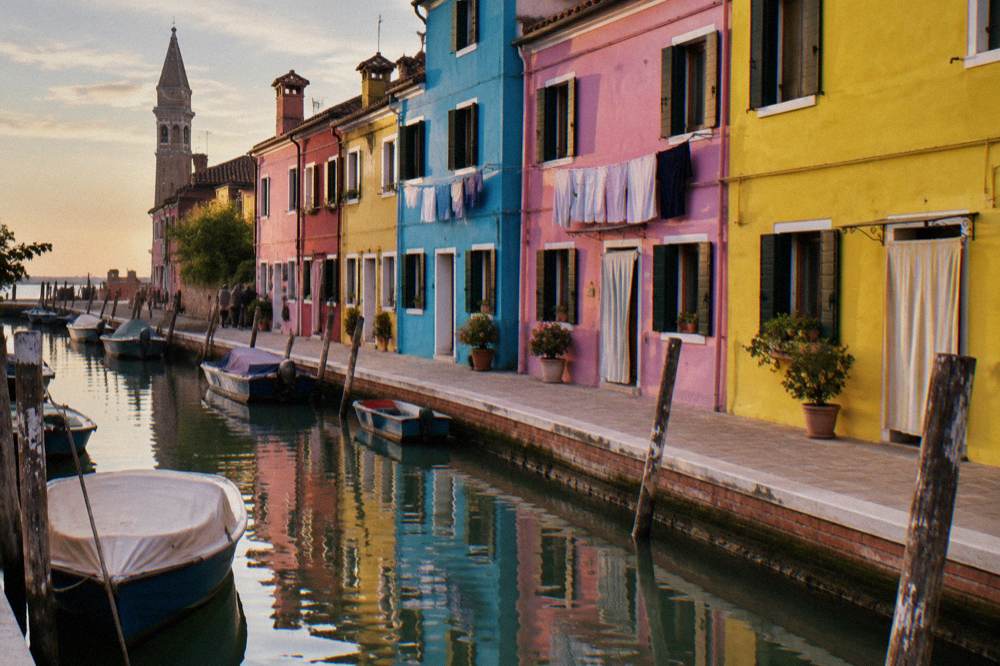
Yes, the islands themselves are free to walk: Murano's canals and glass districts, Burano's painted houses and Torcello's silent open ground cost nothing to enter and wander. The paid parts are separate: the museums on Murano and Burano and the Torcello cathedral charge admission, and the boat fare to reach the islands is a real cost on top of any visit.
The islands are the clearest case of the free-ground-paid-interior pattern. Nothing stops you off the vaporetto and straight into Burano's lace-coloured streets or along Murano's fondamente past the glass furnaces. That wandering, which is the essence of both islands, is entirely free, and Torcello is quieter still, a nearly empty island where the walk itself is the attraction.
Two costs bracket it. The boat fare is unavoidable, since the islands sit in the north lagoon and only public boats reach them, and the museums and the cathedral on Torcello are paid visits under the MUVE island tariff, which has no first-Sunday scheme. Plan the day as a free walk with a paid ride, and the budget is honest from the start. Our Murano or Burano comparison helps choose between them.
What Free Events And Traditions Can You Catch In Venice?
Several of Venice's most atmospheric events cost nothing to watch or join: the Festa della Madonna della Salute on 21 November 2026, when a votive bridge crosses the Grand Canal to the Salute church; the Festa de San Martino on 11 November; the open-air elements of the Biennale Arte 2026, which runs to 22 November; and the street spectacle of Carnevale, whose full 2027 programme has not yet been published.
The Salute festival is the one to plan around. Every 21 November, a temporary votive bridge is built across the Grand Canal from the San Marco side to Santa Maria della Salute, and the city walks across it in a traditional local pilgrimage that is free to join. The atmosphere is Venetian rather than tourist, and it falls in the quiet shoulder season. The Salute church itself faces the water at the tip of Dorsoduro, and the day around it is one of the city's genuinely local spectacles.
San Martino, a few days earlier, is the children's festival, with pastry shop windows full of the shortbread San Martino horse and small processions in the campi. The Biennale's main venues are ticketed, but its presence spills into public space through the autumn, and the Biennale's own site lists what is open where. Carnevale's street events are famously free to watch; the full open-air programme for 2027 has not been published, so treat any date you see elsewhere with caution.
Do You Need To Pay The Venice Access Fee?
Not now. The 2026 trial ran on 60 non-consecutive days between 3 April and 26 July 2026, from 08:30 to 16:00, and it has ended; the charge is EUR 5 if paid by the fourth-to-last day before a visit and EUR 10 in the last four days, but only on charged days. No official 2027 dates or amounts exist yet, so any figure you see for next year is speculation.
The access fee is the newest line item in the Venice budget and the one most travellers misunderstand. It is a charge for entering the historic centre, the Citta antica, on set days, not a museum ticket or a city tax; overnight guests in accommodation inside the Comune are exempt but must register for a QR code, and residents, workers, students and several other groups are excluded outright. The islands, Murano, Burano, Torcello and the Lido, were not charged. The official portal at cda.ve.it carries the FAQ and the registration flow, and the official visitor guidance restates it in English.
For a free-first trip, the significance is simple: outside the charged windows the city has no entry cost at all, and the whole inventory in this guide applies without a gate fee. This site, Free Things To Do In Venice, tracks the free layer and the fee calendar separately, and the access fee guide has the full exemption list.
Whether 2027 brings a new calendar, and at what amount, is genuinely undecided; a September 2026 news report quoted a councillor suggesting a higher cap is possible, but nothing official exists, and national approval would be required for any increase. Plan on the 2026 rules as the last confirmed position and check the portal before travel.
Before you go, these three walks are the free-first way to see the city with someone who knows it:
Common Questions About Venice For Free
What To Do In Venice For Free?
Walk Piazza San Marco, the Zattere and the Ghetto streets, visit the Gallerie dell'Accademia on a free first Sunday, enter Santi Giovanni e Paolo for prayer or the Frari for EUR 8, browse Libreria Acqua Alta, and take one of the 17 free, pay-what-you-want walking tours listed on this site across GuruWalk and freetour.com.
Is Piazza San Marco Free To Enter?
Yes, the square is free and open at all times. The paid sights are separate: St Mark's Basilica is EUR 10, the Pala d'Oro is EUR 10, the museum, Loggia dei Cavalli and terrace are EUR 10 on top of the basilica, the full ticket is EUR 30, and the Campanile is EUR 15.
Are The Free Walking Tours In Venice Really Free?
Yes. They operate on a pay-what-you-want basis: you book a spot, take the walk, and decide at the end what to give the guide. The 17 walks listed on this site, 16 on GuruWalk and one on freetour.com, all work this way.
Is The Gallerie Dell'Accademia Free?
On the first Sunday of the month, yes, under the state Domenica al Museo scheme, with no booking required. On every other day it is EUR 20. Do not assume other Venice museums follow the same first-Sunday rule; the civic MUVE museums do not.
Are Murano And Burano Free To Visit?
The islands are free to walk, including Burano's painted streets and Murano's glass fondamente. The museums on both islands and the Torcello cathedral are paid, and the vaporetto fare to reach the islands is a real cost: a 75-minute ticket is EUR 9.50.
Do I Need To Pay The Venice Access Fee?
Not at present. The 2026 trial ran on 60 days between 3 April and 26 July 2026 and has ended. No official 2027 dates or amounts have been published, so check the official portal at cda.ve.it before you travel.