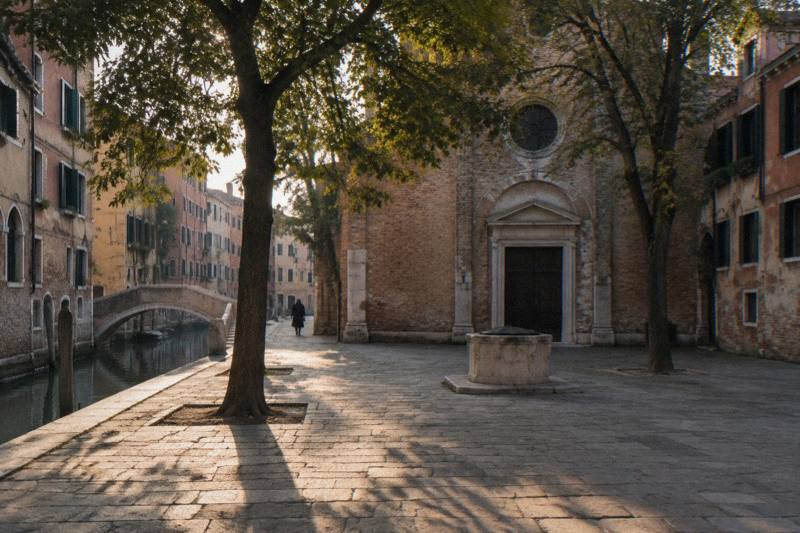
Is Venice Worth Visiting On A Tight Budget?
Yes, Venice rewards a tight budget: the historic centre is free to walk, 17 free pay-what-you-want tours run across the city, and only a handful of headline sights carry paid tickets.
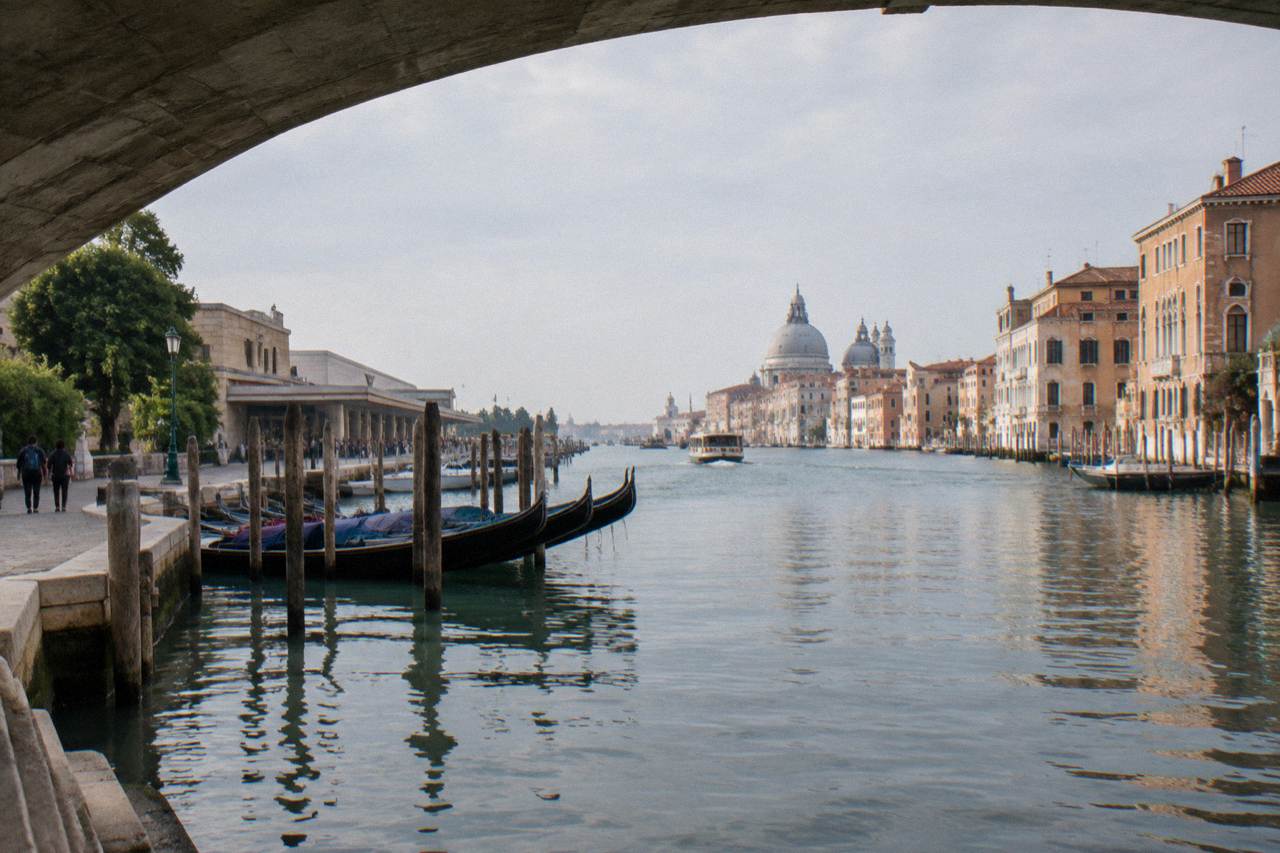
Is Venice Worth Visiting On A Tight Budget?
Yes. The part of Venice that people travel for, the canals, the campi, the bridges and the lagoon light, costs nothing to walk through, and this site lists 17 free pay-what-you-want walking tours across GuruWalk and freetour.com. Only the headline indoor sights charge: St Mark's Basilica at EUR 10, the Doge's Palace ticket at EUR 35, or EUR 30 booked online 30 days ahead. A budget visitor skips those and loses little.
The honest accounting starts with a distinction most cost-of-Venice articles blur. Venice the outdoor city is nearly free. Venice the museum city is expensive. The vaporetto costs EUR 9.50 for a single 75-minute ticket, the Basilica is EUR 10, the Campanile is EUR 15, and the Peggy Guggenheim Collection charges adults EUR 17. Yet none of those gates the thing people actually remember: the walk from Campo San Polo to the Rialto, or a wrong turn into a Cannaregio alley where laundry still hangs over the water.
A budget trip also has help that earlier generations of travellers did not. The free walking tour model, where you book a slot, walk, and pay the guide what you choose at the end, is mature here. Among the options, the Heart Of Venice, Bilingual Guide runs on freetour.com, rated 8.9 out of 10 across 2,142 freetour.com reviews, 1 hour 30 minutes in English and Spanish, meeting at the Gallerie dell'Accademia. Recent reviews note the route skips St Mark's Square and the Basilica, which suits a budget plan that treats the square as a free self-guided stop anyway.
The three walks above cover the essential-venice ground at zero fixed price: two English-language GuruWalk walks and the bilingual freetour.com walk. Between them a first-time visitor gets orientation, history and a route without a booking fee. For a deeper read on how the pay-what-you-want model actually functions, see how free walking tours really work.
What Does Venice Cost If You Pay Nothing?
A zero-ticket day in Venice is genuinely full: Piazza San Marco is free to enter, the Rialto Bridge is free to cross, the Ghetto streets are free to walk, and Murano, Burano and Torcello are free to wander once you have paid the boat fare. The unavoidable costs are the vaporetto at EUR 9.50 per 75-minute ticket and food. Everything else on a free day is a choice, not a charge.
The free-square-paid-tower pattern is the one to internalise. Piazza San Marco itself is an open public space; the Basilica entry (EUR 10), the Pala d'Oro (EUR 10), the museum, Loggia dei Cavalli and terrace (EUR 10 on top of the basilica ticket), the full ticket (EUR 30) and the Campanile (EUR 15) are each separate paid facts. Standing in the square, photographing the facade, watching the pigeons and the water in the corner where the tide comes in: all free. The same pattern repeats at Punta della Dogana, free to walk, museum paid, and at the islands, free to walk, museums and the Torcello cathedral paid.
Churches need their own arithmetic, and the honest numbers are these: Basilica dei Frari charges EUR 8 with its own concessions, and Santi Giovanni e Paolo asks an offering of EUR 3.50 for tourist visits while remaining free for prayer and Mass. Neither is part of any combined church scheme. For other churches, the safe line is to ask at the door, because the access rules for the Patriarchate's church network are genuinely unclear even on its own pages.
| Item | Cost | Notes |
|---|---|---|
| Piazza San Marco | Free | Open public space |
| St Mark's Basilica entry | EUR 10 | Own tariff; full ticket EUR 30 |
| Campanile di San Marco | EUR 15 | Separate from the Basilica |
| Doge's Palace | EUR 35 standard | EUR 30 if bought online at least 30 days ahead |
| Basilica dei Frari | EUR 8 | Own concessions apply |
| Santi Giovanni e Paolo | EUR 3.50 offering | Free for prayer and Mass |
| Gallerie dell'Accademia | EUR 20 | Free on the first Sunday of the month, no booking |
| Vaporetto single | EUR 9.50 | 75 minutes |
| Vaporetto 24 hours | EUR 25 | Fare stable for the 2026-2027 season |
That table is the whole budget decision in nine lines. A visitor who walks, visits the square, crosses to the islands on a day pass and skips the paid interiors spends almost nothing beyond transport and food. A visitor who buys every ticket on the list spends several times what the walker does before lunch even starts.
Which Free Walking Tours Replace Paid Guiding?
Free walks replace paid guiding almost entirely in Venice. This site lists 17 free pay-what-you-want walking tours across GuruWalk and freetour.com. Each is booked free and paid by tip at the end, so the ceiling on guiding cost is entirely the walker's own choice.
The Rialto And Secret Spots Walk on GuruWalk, run by Free Walk in Venice with the guide Lucia, is rated 4.92 out of 5 across 366 GuruWalk reviews, runs 2 hours in English and meets at Campo San Polo. That meeting point puts a budget walker in San Polo, one of the least commercial districts, two minutes from the Grand Canal. The same operator runs the Small-Group Jewish Ghetto Walk, rated 4.95 out of 5 across 39 GuruWalk reviews, meeting at Campo San Geremia in Cannaregio, an area whose streets are free and whose museum is paid, so the walk plus a self-guided wander costs nothing at all.
Two neighbourhoods carry the free-walk roster's weight: San Polo and Cannaregio. The Overlooked Highlights Walk, run by Venice Walking Tour and rated 4.84 out of 5 across 1,668 GuruWalk reviews, starts from Campo Sant'Agnese in Dorsoduro, where the Zattere waterfront costs nothing. There are also Spanish-language walks in the roster, including Panoramic San Marco and San Marco District editions, which run in Spanish only. The practical point for a budget traveller: whichever district you sleep in or arrive at, a free walk starts within a short stroll.
Is The Venice Access Fee A Reason To Stay Away?
No, and for most of the year it does not exist. The 2026 trial ran on 60 non-consecutive days between 3 April and 26 July 2026, 08:30 to 16:00, and it is not charged now. When it runs, it is EUR 5 paid by the fourth-to-last day before a visit, EUR 10 in the last four days, for day visitors over 14 entering the historic centre. Overnight guests register for an exemption instead of paying.
The fee applies to the Citta antica, the historic centre, only. Murano, Burano, Torcello and the Lido were not charged. Proof is a QR code from the official portal, and the official FAQ answers the edge cases directly (cda.ve.it). No official 2027 dates or amounts have been published; anything else you read about next year's fee is speculation, not policy. The city's own visitor guidance keeps the current position on one page (visit.venice.it).
For a tight-budget traveller the arithmetic is favourable outside high season. Autumn, winter and early spring visits fall entirely outside the fee's charged windows as they existed in 2026. The money question then reduces to transport, food and whatever indoor tickets you choose. A fuller breakdown of who pays and who registers lives in the Venice access fee guide.
What Free Events Fill A Cheap Calendar?
Venice's calendar is full of free open-air events: the Festa della Madonna della Salute on 21 November 2026, with its votive bridge across the Grand Canal, the Festa de San Martino on 11 November 2026, and the street dimension of Carnevale, where much of the open-air programme is free to watch. The Biennale Arte 2026 runs to 22 November 2026, ticketed inside its venues but with public elements outside.
Timing a budget trip around one of these costs nothing and changes the whole character of a visit. The Salute pilgrimage is the most Venetian of them: a temporary pontoon bridge carries locals across the Grand Canal to Santa Maria della Salute, and the atmosphere, not the church ticket, is the event. San Martino in November belongs to the pastry shops and the children, and the Festa del Redentore's bridge-building tradition belongs to July. Christmas markets run from late November into early January and are free to visit.
The Biennale deserves a budget note. Its main venues are ticketed, but the city fills with public art and collateral presence during the run. A tight-budget visitor treats it as street atmosphere rather than a ticket line.
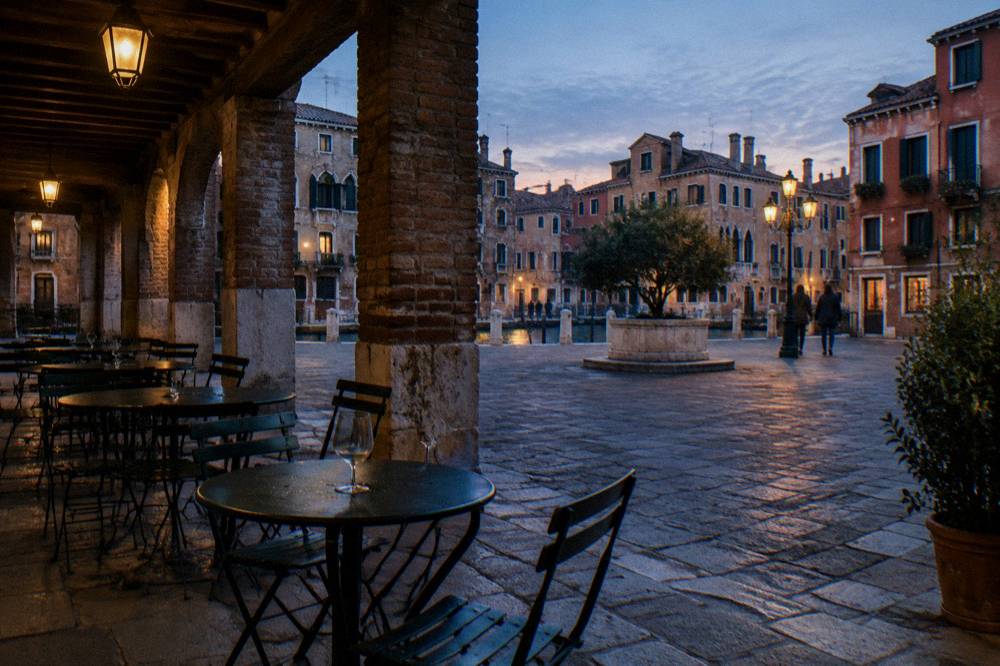
One seasonal caution belongs here rather than in a list of tips. Acqua alta season runs from October to March, peaking in November and December, when roughly three quarters of flooding events occur. The MOSE barriers rise on forecast tides above 110 cm at Punta della Salute, but lower tides from around 80 cm can still water the lowest corners of Piazza San Marco. None of this costs money; the raised walkways, where they are laid, are simply how the city moves. Check the Centro Maree forecasts before a winter day trip.
Where Does A Tight Budget Actually Leak?
The leaks are transport and impulse tickets, not the city itself. The vaporetto single at EUR 9.50 makes every boat hop a decision, so walking, which Venice rewards better than any city in Europe, is the budget tool. The second leak is buying every summit: the Campanile, the Basilica terrace, the museum add-ons. Choose one paid view or interior per trip and the spend stays flat.
The fare table helps here. A 24-hour pass is EUR 25, 48 hours EUR 35, and seven days EUR 65, with the fare structure confirmed stable for the 2026-2027 season. If the plan is two islands plus the historic centre, a single 24-hour pass usually beats three singles bought separately, and if the plan is Venice on foot, the answer is to walk. Venice's historic centre is small enough that a full day of walking crosses it several times over.
For the bigger framing of what to do with the money you did not spend on tickets, free things to do across the whole city extends this article's logic, and Free Things To Do In Venice exists precisely to keep that list maintained.
Which Neighbourhood Walks Save The Most Money?
Cannaregio and Dorsoduro give the most free city per step. Cannaregio holds the Ghetto streets, free to walk, and three of the roster's meeting points; Dorsoduro holds Campo Sant'Agnese, the Zattere waterfront and the Accademia bridge approach, all free. The Northern Districts, Locals' Venice walk, rated 4.82 out of 5 across 3,020 GuruWalk reviews, starts from Campo de la Fava in Castello and covers exactly this locals' register.
The hidden-Venice walks are the budget traveller's compounding asset. They cost nothing up front and they deliver the city that guidebooks charge for in print: the 3-Hour Hidden Venice Walk, run by Francesco on GuruWalk and rated 4.76 out of 5 across 1,911 GuruWalk reviews, meets at Campo San Geremia and runs three hours in English, longer than most paid introductory tours in the city. The Hidden Secrets And Curiosities Walk, run by ITAKA tours and rated 4.89 out of 5 across 1,189 GuruWalk reviews, starts from Campo della Maddalena in Cannaregio.
A walk with a good guide also does the work of a guidebook. Meeting points cluster where the free city is densest: Campo Sant'Agnese, Campo San Geremia, Campo dei Gesuiti, Campo Santi Apostoli. A budget itinerary that strings three of these squares together on foot, with a coffee standing at a bar between them, has spent nothing on the city itself.
Common Questions About Venice On A Tight Budget
Is Venice Worth Visiting On A Tight Budget?
Yes. The outdoor city is free, this site lists 17 free pay-what-you-want walking tours across GuruWalk and freetour.com, and the only unavoidable costs are transport, at EUR 9.50 for a single vaporetto ticket, and food. Paid tickets, from the Basilica at EUR 10 upward, are optional extras rather than the price of entry.
Do I Need To Pay The Venice Access Fee?
Not now. The 2026 trial ended on 26 July 2026 and covered 60 days between 3 April and 26 July, 08:30 to 16:00, at EUR 5 or EUR 10 for day visitors over 14. Overnight guests register for an exemption instead of paying, and Murano, Burano, Torcello and the Lido were not charged. No official 2027 dates or amounts have been published.
Are The Walking Tours Really Free?
Yes, in the pay-what-you-want sense: booking costs nothing and you pay the guide what you choose at the end. Sixteen of the walks listed on this site run on GuruWalk and one, the Heart Of Venice, Bilingual Guide, runs on freetour.com.
Is St Mark's Basilica Free?
No. Entry costs EUR 10 under the Procuratoria's own tariff, the Pala d'Oro costs EUR 10, the museum, Loggia dei Cavalli and terrace cost EUR 10 on top of the basilica ticket, and the full ticket is EUR 30. Piazza San Marco itself is free.
Which Museums Are Free On The First Sunday?
Only the Gallerie dell'Accademia is confirmed among the state museums: free on the first Sunday of the month under Domenica al Museo, no booking, EUR 20 otherwise. The civic MUVE museums, including the Doge's Palace, run their own tariff with no first-Sunday scheme.
What Is The Cheapest Way To See The Islands?
Walk them. Murano, Burano and Torcello are free to wander; their museums and the Torcello cathedral are paid. The real cost is the boat: vaporetto tickets at EUR 9.50 single or EUR 25 for 24 hours, so a day pass usually wins for an island circuit.
The verdict, in plain figures: a day in Venice with a free walking tour, the square, the bridges and a vaporetto pass costs less than a single Doge's Palace ticket plus a Campanile ride. The city rewards exactly the kind of visitor who asks the question.