Rialto Bridge: What It Costs To Visit And What Is Free Nearby
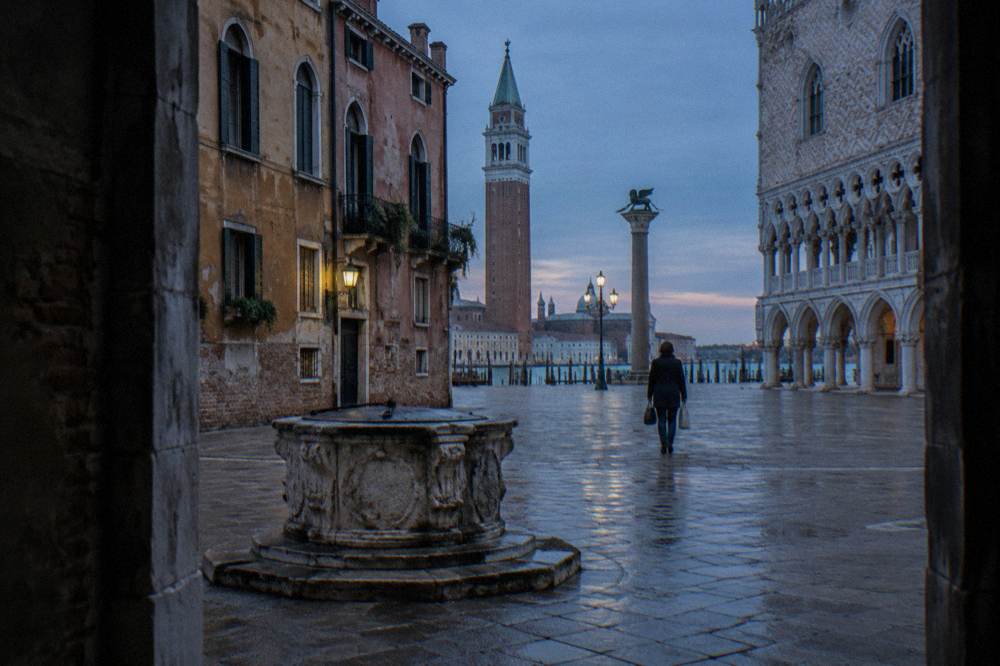
The Rialto Bridge is the oldest of the four bridges that cross the Grand Canal and the one most visitors walk over without a second thought. Crossing it costs nothing. The money around it, from boat fares to the city's access fee, is where a day's budget actually goes.
Short answer
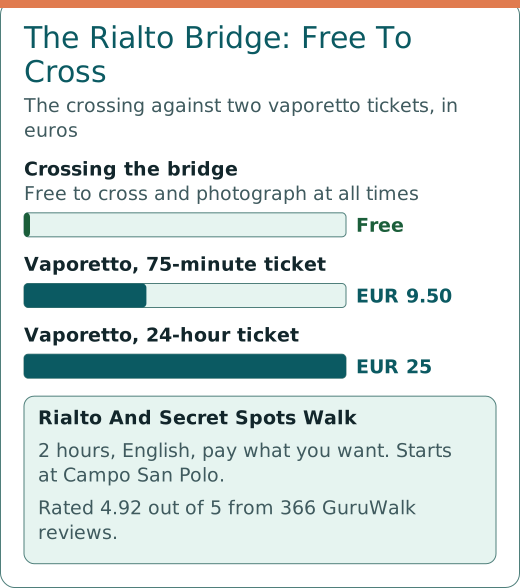
Crossing the Rialto Bridge is free: it is a public bridge open at all hours, and no ticket, pass or booking exists for it. The paid costs sit around it, mainly vaporetto fares at EUR 9.50 for a 75-minute ticket and the Venice access fee on set days, which is not charged outside its trial season.
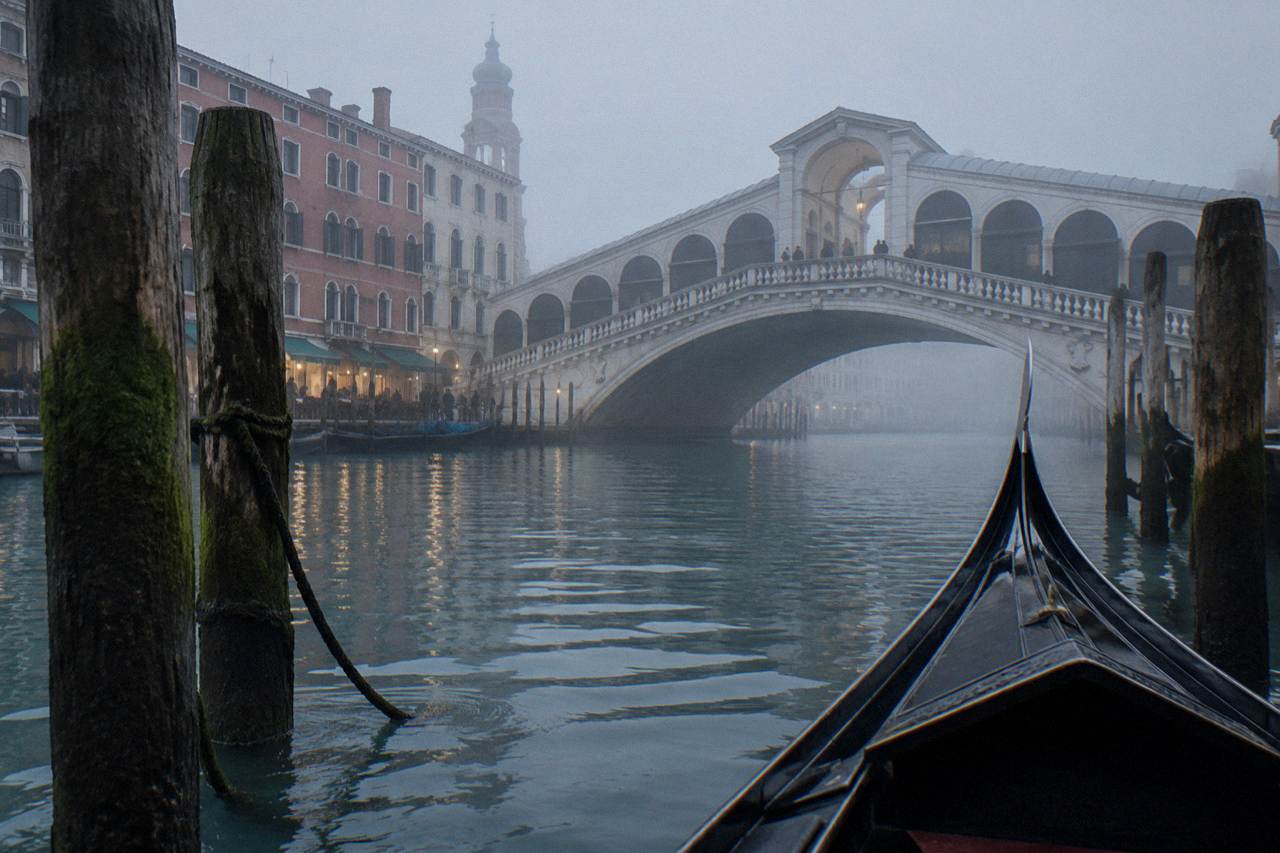
The Rialto Bridge carries foot traffic over the Grand Canal at the narrowest point where the canal can be crossed, and it does so without a ticket booth, a turnstile or an opening time. It is public infrastructure. You walk on, you walk across, you walk off, and the only thing that changes is the view. That simplicity is worth stating plainly, because almost everything else in this part of Venice comes with a price attached, and the bridge is the exception.
This guide covers what the Rialto Bridge costs, which is nothing, and what surrounds it, which is a mix of free streetscapes, paid museums and churches, a market neighbourhood with its own rhythm, and a set of free walking tours that start within a short walk of its steps. Every walk named here is a real listing on GuruWalk or freetour.com, run by an independent local guide, free to join and paid by tip at the end.
Is The Rialto Bridge Free To Visit?
Yes, the Rialto Bridge is completely free to visit and cross, at any hour, with no ticket, queue system or booking of any kind. It is a public bridge and the city charges nothing to walk over it. The costs begin only when you step off it: boats on the Grand Canal, museums, churches with tourist tariffs, and the Venice access fee on its trial days.
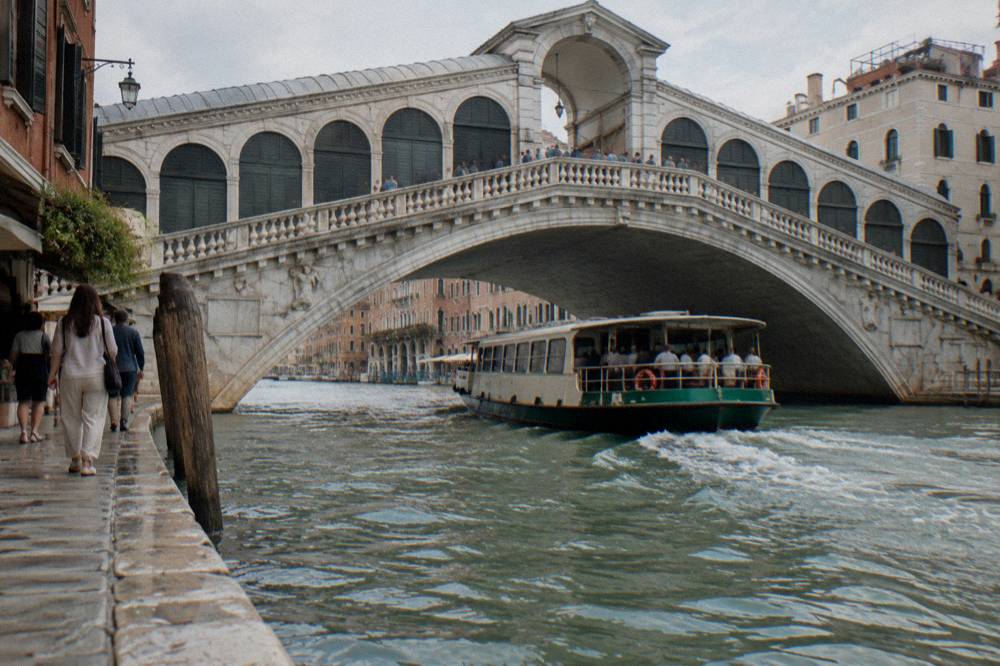
There is no scenario in which the bridge itself charges. It has no entrance, no gate and no staffed desk. The stone arch you see today replaced earlier wooden crossings that served the same spot for centuries, and the commercial rows built into its flanks, the small shops that line both sides of the span, are ordinary businesses with ordinary opening hours, not attractions with tariffs. You can cross it twenty times in a day and pay nothing but attention.
What confuses some first-time visitors is the number of paid things packed within a two-minute walk of either end. The Grand Canal itself is crossed by vaporetto lines that charge visitors: a single 75-minute ACTV ticket costs EUR 9.50. The churches of this city run on several different tariff regimes, and some that look free charge a small offering for tourist visits. None of that is a fee for the bridge. It is worth separating the two clearly before you plan a day around it.
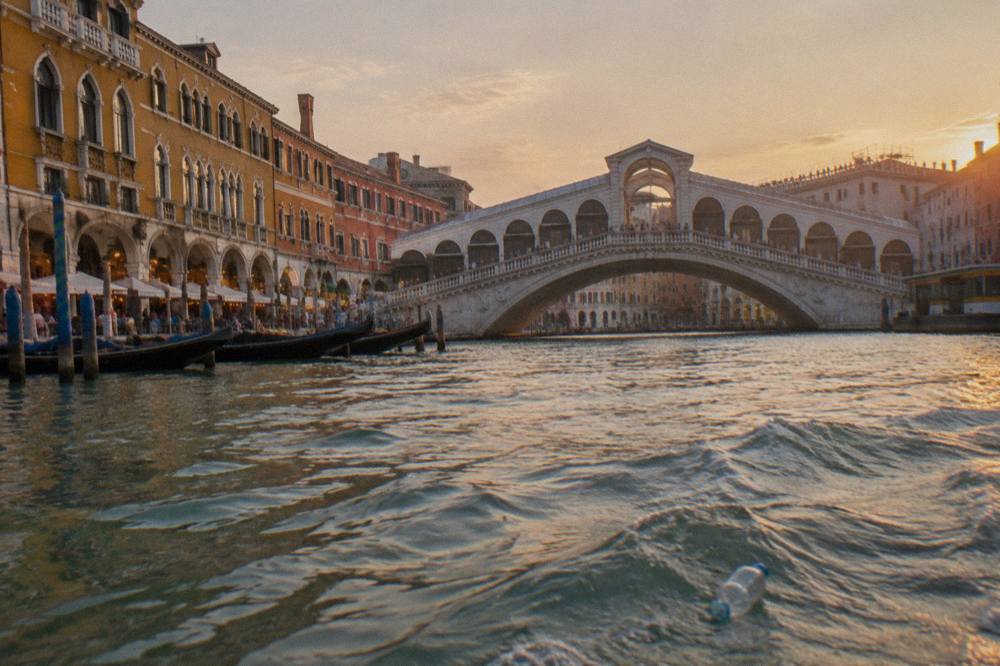
The bridge is also the single best free viewpoint of the Grand Canal that exists in the city, which is a claim no paid observation deck here can compete with, because the view from the top of the arch takes in the canal in both directions, the gondola traffic below, and the rows of palazzi that face the water. Photographers gather there for that reason. It costs the effort of the steps and nothing else.
What Can You See Around The Rialto Bridge For Free?
The area around the Rialto Bridge is one of the densest free-sightseeing zones in Venice: the bridge itself, the Grand Canal waterfront on both banks, the Rialto market neighbourhood's streets and campi, and the walk along the canal to Campo San Polo all cost nothing. The only paid items nearby are boats, museums and churches with their own tariffs.
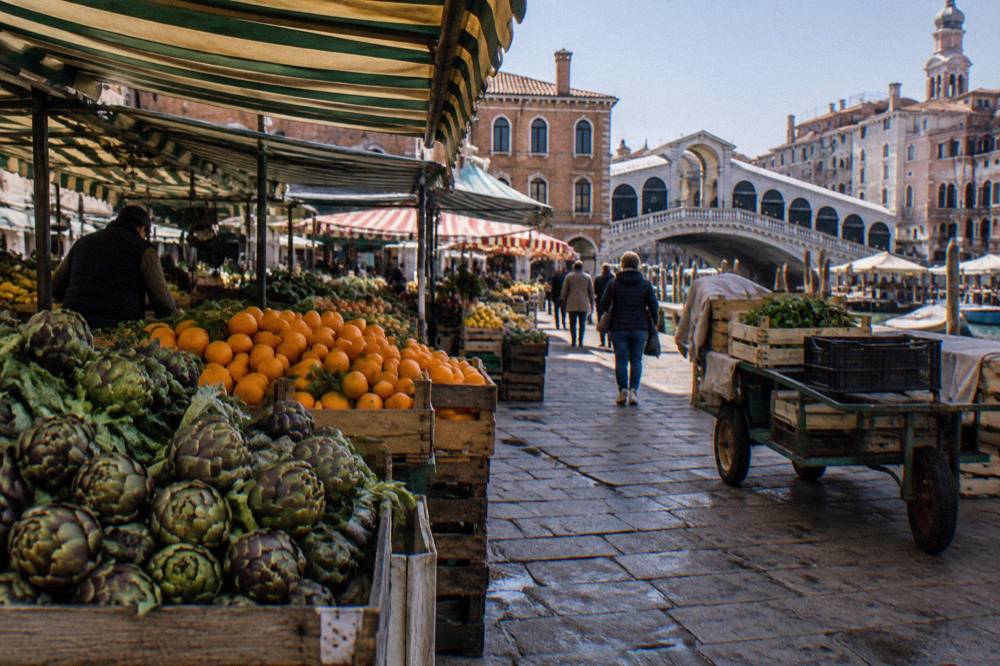
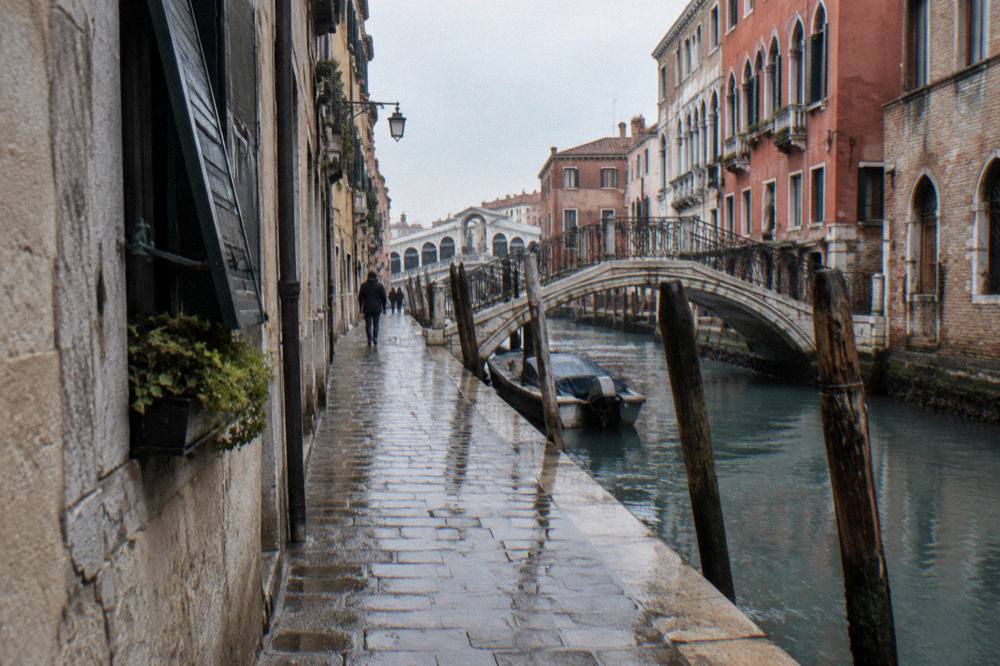
Start with the bridge, then work outward. On the San Marco side, the streets funnel toward the commercial heart of the old city. On the San Polo side, the market quarter opens up into a network of small squares, fish stalls, produce sellers and bacaro bars that are free to wander even when the stalls are closed. The neighbourhood is the attraction. Venice does not fence its streetscapes, and the Rialto district rewards slow, aimless walking more than any single ticketed site in it.
The Grand Canal waterfront on both banks is free to walk. You can follow the canal edge away from the bridge in either direction and the palazzi keep coming, facades of centuries of mercantile wealth built to be seen from the water, though they cost nothing to look at from land.
For structure, a free walking tour turns the same ground into a narrative rather than a wander. This site lists 17 free walking tours in total across GuruWalk and freetour.com, and several of them start in the districts around the Rialto or in the adjacent San Marco and Cannaregio quarters. The three below are a good spread of formats: a bilingual freetour.com walk, a small GuruWalk walk with a personal guide, and a longer two-hour option that begins right in San Marco.
Each of those walks is free to book and pay what you want at the end, which is the standard model on both GuruWalk and freetour.com. The guides are independent locals, not employees of this site or of the platforms; the platforms are directories that connect guides with visitors. If you want the full picture of how the model works, the article are free walking tours really free breaks down the economics, and the guide to the best free walking tour in Venice compares the full roster.
Which Free Walking Tours Start Near The Rialto?
Three featured free walks start within a short walk of the Rialto Bridge: the Heart Of Venice bilingual walk on freetour.com meeting at the Gallerie dell'Accademia, the Rialto And Secret Spots Walk meeting at Campo San Polo, and The Original Free Walking Tour meeting at Campo Santi Apostoli in Cannaregio. All three are free to join, English-speaking, and paid by tip.
The Heart Of Venice, Bilingual Guide walk runs on freetour.com with the guide Venicemania, rated 8.9 out of 10 across 2,142 freetour.com reviews, lasting 1 hour 30 minutes in English and Spanish, meeting at the Gallerie dell'Accademia in Dorsoduro. One thing to know from recent guest reviews on that listing: the route skips St Mark's Square and the Basilica, so treat it as a Dorsoduro-and-districts walk rather than a San Marco one. It is a fit for visitors who want the canal-side city rather than the postcard.
Closest to the bridge itself is the Rialto And Secret Spots Walk, a GuruWalk listing run by Free Walk in Venice with the guide Lucia, rated 4.92 out of 5 across 366 GuruWalk reviews, two hours long, in English, meeting at Campo San Polo, the large campo one bridge-neighborhood over from the Rialto on the San Polo side. Its name puts the Rialto at the centre of its ground, and its meeting point puts you in the market quarter before you cross.
The Original Free Walking Tour, run by the guide Simona on GuruWalk, rated 4.88 out of 5 across 325 GuruWalk reviews, two hours, in English, meets at Campo Santi Apostoli in Cannaregio, which sits on the walking route between the railway station and the Rialto along the Strada Nova corridor. It suits visitors arriving from the station who want an oriented introduction to the city before they reach the bridge.
| Walk | Platform | Guide | Rating and reviews | Duration | Meeting point |
|---|---|---|---|---|---|
| Heart Of Venice, Bilingual Guide | freetour.com | Venicemania | 8.9 out of 10 across 2,142 reviews | 1 hour 30 minutes | Gallerie dell'Accademia |
| Rialto And Secret Spots Walk | GuruWalk | Free Walk in Venice, Lucia | 4.92 out of 5 across 366 reviews | 2 hours | Campo San Polo |
| The Original Free Walking Tour | GuruWalk | Simona | 4.88 out of 5 across 325 reviews | 2 hours | Campo Santi Apostoli |
All three take bookings through their listings at no charge, with the tip settled in cash at the end. If the bilingual Dorsoduro start appeals most, the Heart Of Venice walk is the one to look at first: it costs nothing to reserve a place, and the tip is entirely up to you on the day.
How Much Does A Day Around The Rialto Really Cost?
The bridge costs nothing, but a full day around it rarely does: a 75-minute ACTV vaporetto ticket is EUR 9.50, a 24-hour pass is EUR 25, and the Venice access fee charged EUR 5 or EUR 10 per person on its 2026 trial days, though it is not charged outside that season. A careful visitor can still spend almost nothing beyond food.
The boat fares are the biggest structural cost. Venice's vaporetto network is the city's bus service, and visitors pay visitor rates: EUR 9.50 for a single 75-minute ticket, EUR 25 for 24 hours, EUR 35 for 48 hours, EUR 45 for 72 hours and EUR 65 for seven days, with the airport bus single at EUR 10. Those figures are confirmed for the 2026 to 2027 season with no increases announced. If your day around the Rialto is on foot, and in this flat, compact city it can be, you can skip them entirely. The bridge itself is the crossing; you do not need a boat to use it.
The access fee is the other line item that scares people, and it deserves precision. The 2026 trial ran on 60 non-consecutive days between 3 April and 26 July 2026, from 08:30 to 16:00, and it has ended: no fee applies now. It charged EUR 5 per person if paid by the fourth-to-last day before the visit and EUR 10 if paid in the last four days, for day visitors over 14 entering the historic centre, with lagoon islands like Murano, Burano and Torcello excluded. Overnight guests in accommodation inside the Comune were exempt but had to register. No official 2027 dates or amounts have been published. The official portal at cda.ve.it carries the current position, and the city's own planning pages at visit.venice.it explain who pays; this site's Venice access fee guide covers the exemptions in full.
| Cost around the Rialto | Amount | What it buys |
|---|---|---|
| Crossing the Rialto Bridge | Free | Unlimited crossings, any hour |
| Vaporetto single, 75 minutes | EUR 9.50 | One ACTV journey |
| Vaporetto 24-hour pass | EUR 25 | A full day of ACTV boats |
| Venice access fee, early payment | EUR 5 | Day entry on 2026 trial days only |
| Venice access fee, late payment | EUR 10 | Same, paid in the last four days |
The churches near the Rialto follow the city's patchwork of regimes. The Basilica dei Frari, a walk away in San Polo, charges EUR 8 with its own concessions.
When Is The Best Time To Walk Across The Rialto Bridge?
Early morning and late evening are the best times to cross the Rialto Bridge, because the span is a narrow, crowded thoroughfare at midday and a quiet, open viewpoint at the day's edges. Winter crossings carry a small flood risk: Venice's acqua alta season runs October to March, peaking in November and December, when about three quarters of flood events occur.
The bridge is a working commuter route between two halves of the city, and it behaves like one. It fills with through-traffic and camera stops from late morning through the afternoon. Before about nine and after dusk the crowd thins, the shop shutters close, and the top of the arch becomes what it was built to be: a place to stand and look at the Grand Canal. The light is better at both ends of the day anyway, low and warm along the water.
Acqua alta deserves a mention because the Rialto sits at the commercial heart of a low-lying city. Tides are forecast by the city's own Centro Maree, and the MOSE barrier system raises on forecast tides above 110 centimetres at Punta della Salute, taking roughly 30 minutes to close. Lower tides, from about 80 centimetres, can still put water on the lowest paving of Piazza San Marco. The official flood-season guidance at visit.venice.it is the source for forecasts and alerts, and raised walkways are suspended in the summer half of the year. None of this closes the bridge; it just changes your shoes.
| Time of day | What the bridge is like |
|---|---|
| Before 09:00 | Quietest crossings, market activity nearby, low light on the canal |
| Midday to late afternoon | Heaviest foot traffic, slowest crossing, busiest shops |
| Evening after dusk | Thinning crowds, lit palazzi along the canal, shutters closed |
| October to March | Small chance of high water on the lowest paving; check the tide forecast |
Where Can You Walk For Free From The Rialto?
Four free walking routes radiate from the Rialto Bridge: west along the Grand Canal into San Polo and the Frari quarter, north up the Strada Nova corridor into Cannaregio, east through the commercial streets toward Piazza San Marco, and south across the canal toward Dorsoduro and the Accademia waterfront. Every one of them is public street, costs nothing, and can be walked without a map.
The westward route into San Polo is the shortest and the most local, passing through the market quarter toward Campo San Polo, the meeting point of the Rialto And Secret Spots Walk. The northward route up the Strada Nova is the city's main pedestrian artery toward the railway station, wide, busy and lined with shops, ending in Cannaregio, where The Original Free Walking Tour meets at Campo Santi Apostoli and where the historic Jewish Ghetto streets are free to walk, though the Jewish Museum there is paid.
Eastward, the commercial streets funnel toward Piazza San Marco itself, which is free to enter; the Basilica di San Marco, its Pala d'Oro, its museum and terrace, and the Campanile each carry their own separate tariffs, with a basilica ticket at EUR 10. That split, free square and paid interiors, is covered in detail in the St Mark's Square guide. Southward across the bridge, Dorsoduro opens toward the Gallerie dell'Accademia, which is free on first Sundays under the state's Domenica al Museo scheme and otherwise EUR 20, a rare genuinely free museum day in this city.
If your instinct is to see the city through a guide's eyes rather than a map's, the free walks below all cover ground within walking distance of the bridge's two ends, and each is a GuruWalk listing with an English-speaking independent guide, free to book and tipped at the end. The three-hour Hidden Venice walk from Campo San Geremia goes deepest; the Overlooked Highlights Walk from Campo Sant'Agnese keeps to two hours; the Hidden Secrets And Curiosities Walk from Campo della Maddalena adds a quarter hour over that.
For visitors who read Spanish, this site also lists several Spanish-language walks in the same districts, including the Panoramic San Marco and San Marco District walks; they run in Spanish only, and their listings carry their own details. Whatever you choose, the model is the same across the roster: nothing is paid upfront on Free Things To Do In Venice or on the platforms behind it, and the guide is paid what you decide at the end.
Common Questions About The Rialto Bridge
Is The Rialto Bridge Free To Cross?
Yes. It is a public bridge with no ticket, no gate and no opening hours, and you can cross it as many times as you like at no cost. The shops on the span are ordinary businesses and the paid costs nearby, such as vaporetto fares and museum tickets, are separate from the bridge entirely.
Do You Need A Ticket For The Rialto Bridge?
No ticket, booking or pass exists for the bridge. It is public infrastructure, open around the clock. Any product sold as a Rialto Bridge ticket is not an entry requirement, because there is nothing to enter.
What Is The Best Time Of Day To Visit The Rialto Bridge?
Early morning before about nine, or evening after dusk, when the commuter and tourist traffic thins and the top of the arch becomes a quiet viewpoint over the Grand Canal. Midday is the most crowded and slowest time to cross.
Are The Free Walking Tours Near The Rialto Really Free?
They are free to book and free to join, and you pay the guide what you want at the end. The walks named in this guide are real listings on GuruWalk and freetour.com run by independent local guides, and no money is charged upfront through either platform.
Does The Venice Access Fee Apply When Visiting The Rialto Bridge?
Only on the trial season's charged days, and the 2026 season ended on 26 July 2026, so no fee applies now. The fee charged day visitors over 14 entering the historic centre, EUR 5 paid in advance or EUR 10 in the last four days, on 60 days between April and July 2026.
Can You See The Grand Canal From The Rialto Bridge For Free?
Yes, and it is one of the best free views in the city. The top of the arch looks up and down the Grand Canal in both directions, over gondola traffic and the palazzi along the water, and it costs nothing at any hour of the day.