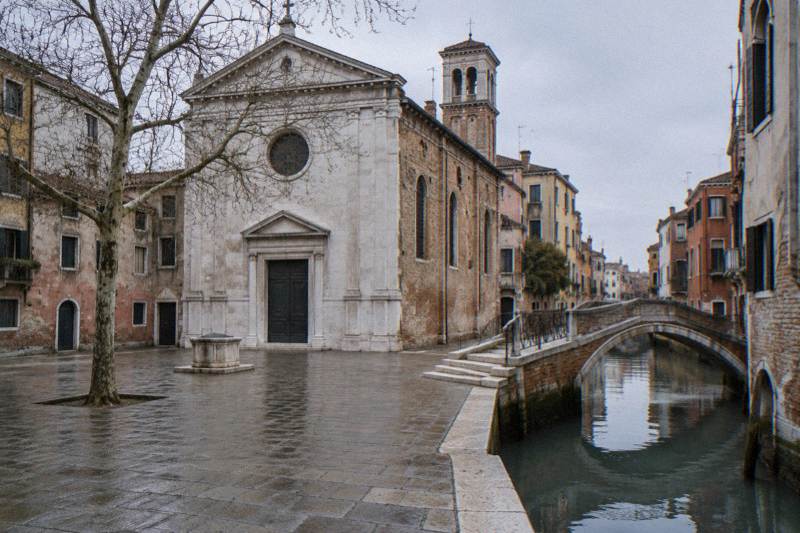
Is Murano Or Burano Better For A Free Day Out?
Murano and Burano both cost nothing to walk, but they reward very different days. A plain comparison of boat fares, free sights, paid extras and which island fits your trip.
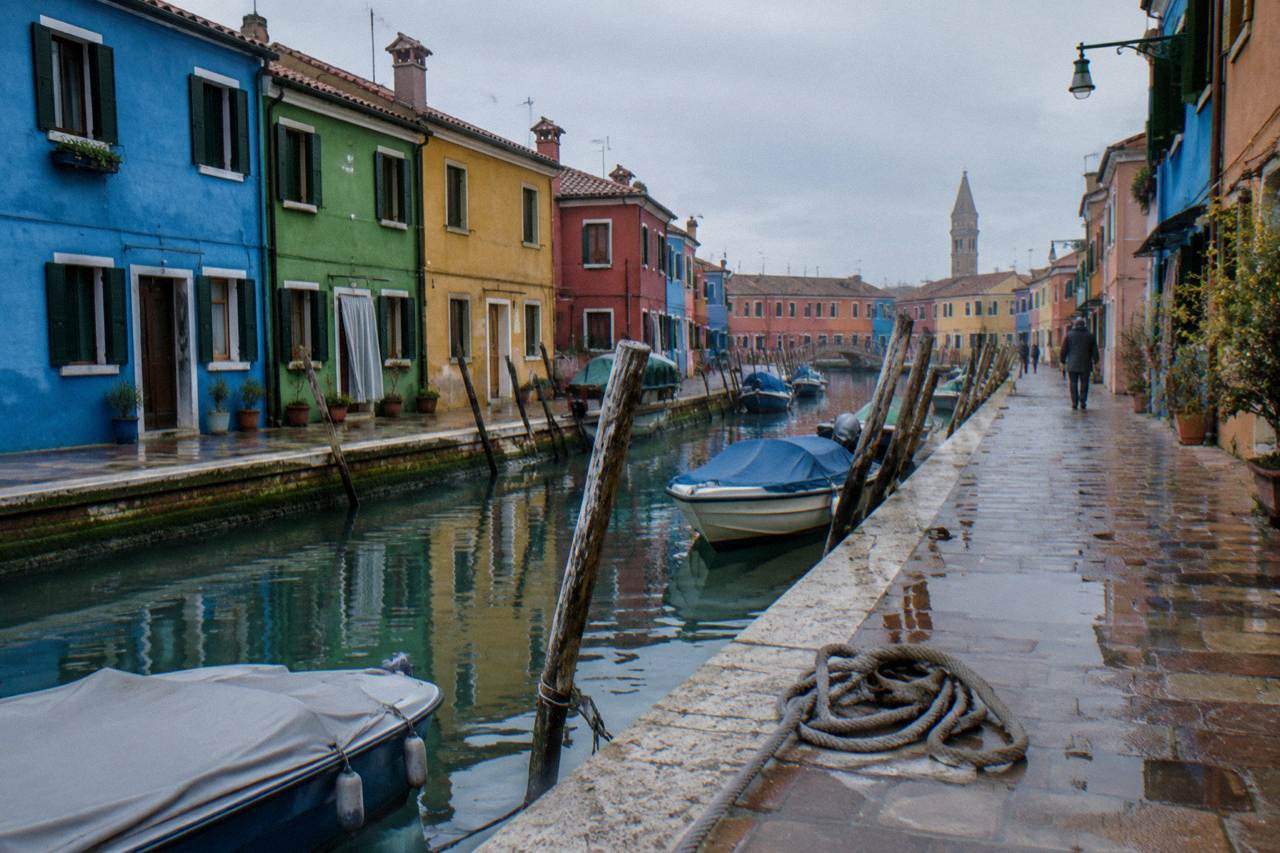
The honest answer costs one boat ticket. Murano and Burano are both free to wander from the moment you step off the vaporetto: no gate, no ticket, no access charge of any kind on either island. What separates them is what you do there. Murano gives you glass furnaces and quiet canals; Burano gives you painted house fronts, lace and the most photographed street corners in the lagoon.
Is Murano Or Burano Better For A Free Day Out?
Burano is the better free day out for most visitors, because its main attraction, the painted houses themselves, costs nothing and fills hours, while Murano's signature draw, glassmaking, is mostly watched in showrooms that exist to sell. Both islands are free to walk. Both sit outside the historic centre, so neither was touched by the 2026 access fee days. The real difference is density: Burano's spectacle is the street you are standing in, and Murano's is behind shop windows.
That said, "better" depends on what you want from the word free. If free means spending nothing beyond transport, Burano wins on spectacle per square metre: the painted facades, the canal reflections, the leaning bell tower, all of it is public space. If free means free to move slowly without crowds, Murano is quieter away from the main Fondamenta and gives you a working island rather than a backdrop. Neither island charges you to exist on it, which is more than can be said for the museums on each.
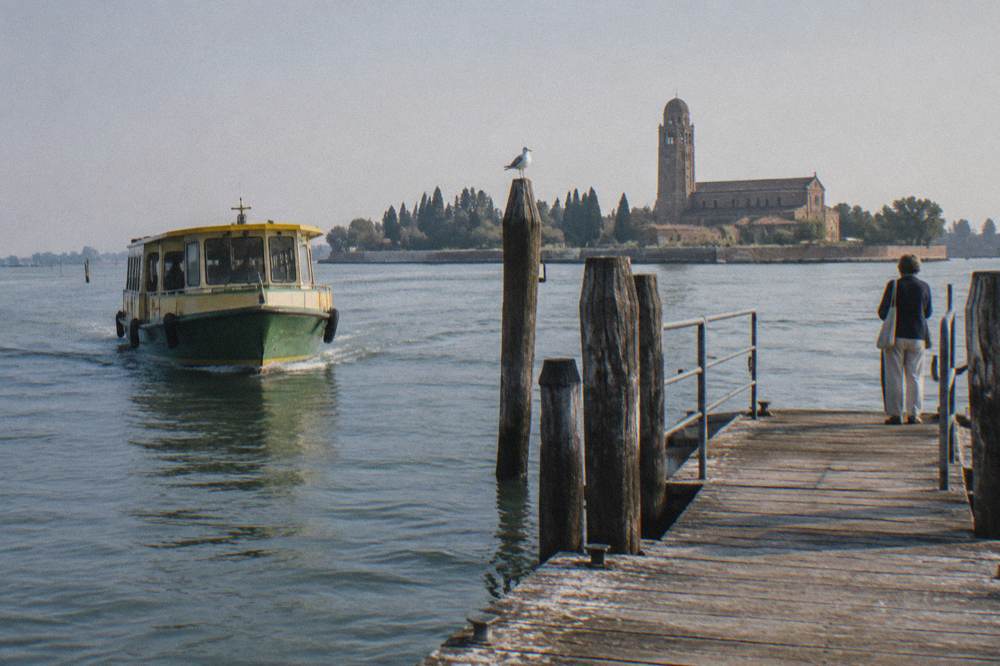
The water in between is also free to look at, and the crossing itself is part of the day. The lagoon ride out from Fondamente Nove passes empty mudflats and isolated camini, the brick chimneys of the old salt works, and on a clear evening the light across the water is the show. Budget the crossing as part of the plan rather than dead travel time, and the day feels fuller than the price of the ticket suggests.
A note on how this article works: this site is a directory of free, pay what you want walking tours and free attractions. Nothing here is sold by the site itself.
What Does It Cost To Get To Each Island?
Neither island can be reached on foot, so the boat is the one unavoidable cost of the day. A single ACTV vaporetto ticket, valid 75 minutes, costs EUR 9.50, which covers the ride out and a transfer within the window. A 24-hour ticket at EUR 25 covers Murano, Burano and the return in one day. There is no free boat service for visitors, and no walk price changes that.
The fare structure matters more here than anywhere else in Venice, because island hopping multiplies rides. The 75-minute single works for one leg plus a quick change; it does not cover a Murano-then-Burano-then-home loop unless you time the transfers tightly. For a two-island day, the 24-hour pass at EUR 25 is the sane choice, and if you are staying two days or more, the 48-hour EUR 35 and 72-hour EUR 45 passes from the ACTV tariff start to compete. The airport bus single is EUR 10 if you are arriving that way. Current fares are confirmed for the 2026-2027 season, with no increases announced, per ACTV's confirmed 2026-2027 tariff.
There is a walking tour that covers both islands, the Murano And Burano Islands Trip on GuruWalk, which is free and pay what you want like everything in this directory, but it runs in Spanish only and its boat tickets are an extra cost you pay yourself.
Which Island Is Actually Free To Walk Around?
Both, fully and equally. Murano, Burano and Torcello charge nothing to arrive, walk, photograph or linger, and the streets, canals and squares of all three are public. The line is always the same on each: the museums are paid, and on Torcello the cathedral is paid too. No access fee, city charge or island entry has ever applied here, and the 2026 access fee explicitly excluded the lagoon islands.
The 2026 access fee trial is worth understanding precisely because it never touched these islands. The fee ran on 60 non-consecutive days between 3 April and 26 July 2026, from 08:30 to 16:00, and applied only to day visitors entering the historic centre, the Citta antica. Murano, Burano, Torcello and the Lido were not charged. The season ended on 26 July and no fee applies now; no official 2027 dates or amounts have been published. The official position is on the cda.ve.it FAQ.
So an island day is, in a narrow sense, the freest day in the Venetian system: no access charge, no gate, no ticketed square. What you pay for is the crossing and anything you choose to enter indoors.
| Cost item | Murano | Burano |
|---|---|---|
| Walking the streets | Free | Free |
| Arriving by vaporetto | EUR 9.50 single, 75 min | EUR 9.50 single, 75 min |
| Island museum | Paid | Paid |
| Signature free sight | Glass furnaces' canals and facades | Painted house fronts and leaning tower |
| Signature paid extra | Glass showroom purchases | Lace and textiles |
What Do You Actually Look At On Murano?
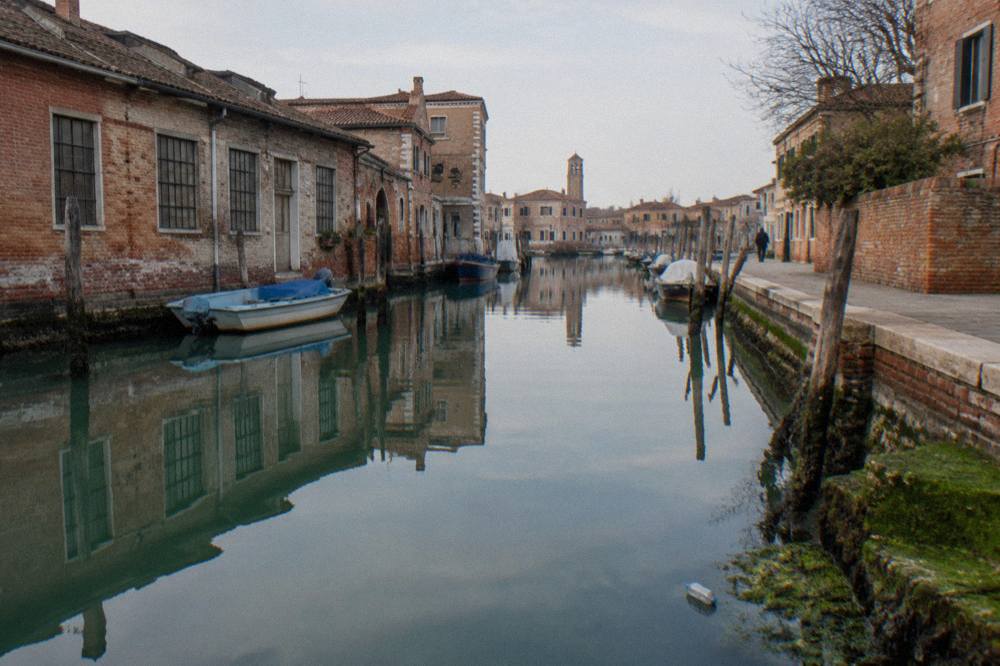
Murano's free surface is its furnaces and its canal architecture: the brick chimneys that mark every glassworks, the Fondamenta dei Vetrai lined with showroom facades, and the Canale di San Donato that splits the island in two. The Glass Museum is paid, the furnaces are businesses, and the Basilica dei Santi Maria e Donato sits at the island's far end as its oldest structure. None of the walking costs anything.
The island rewards a slower loop than most visitors give it. The main drag from the Colonna landing to the basilica takes twenty minutes at tourist pace, but the side streets behind it are residential, quiet and, in the late afternoon, almost empty. This is where Murano stops being a glass shopping centre and becomes a small town of 4,000-odd people who commute to work by boat, hang laundry between chimneys and get their bread from the one bakery worth queueing at.
For the fuller picture, the Murano guide on this site breaks down the island's museums and what they charge.
What Do You Actually Look At On Burano?
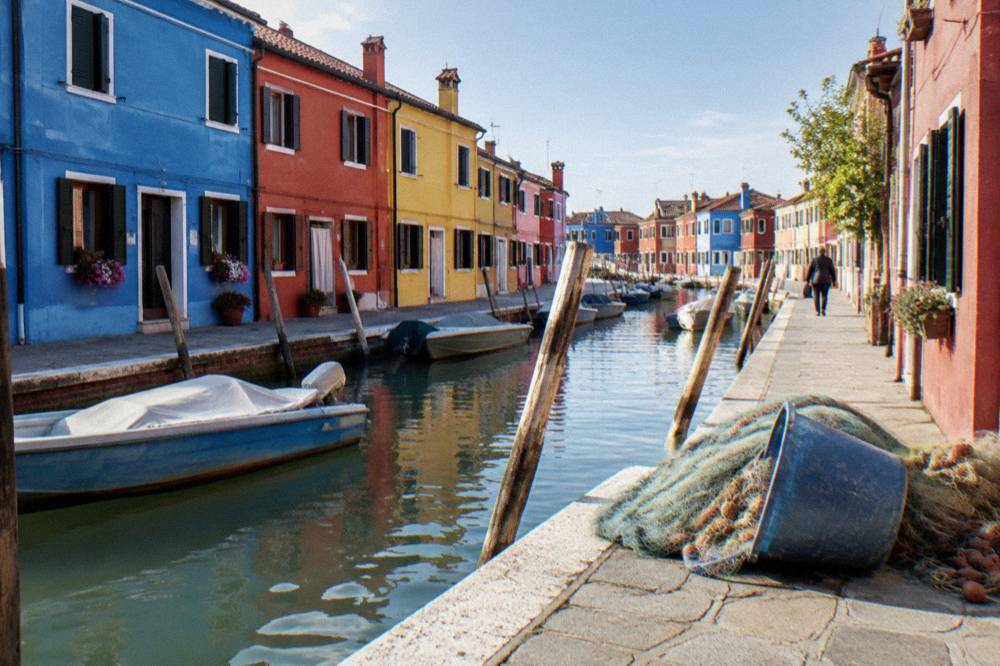
Burano's free surface is the colour itself: house fronts painted in saturated reds, blues and greens along the Rio della Giudecca and every side canal, plus the leaning campanile of San Martino and the working fishing harbour at the island's edges. The Lace Museum is paid. The painted houses are the attraction, they fill every street, and they cost precisely nothing to walk through.
Photography is the activity here, and it peaks in the two hours before sunset when the colours deepen. The classic compositions are along the main canal from the landing, but the better light and thinner crowds are one street back, where the paint is just as loud and nobody is posing. The island is small, roughly a twenty-minute walk end to end, so the whole visit is a loop you can repeat at different angles as the light changes.
The lace tradition is Burano's second layer, visible in shop windows and in the work still done by a handful of embroiderers. Buying is optional, looking is free. The Burano guide on this site covers the museum and the island's layout in detail, and for a two-island plan the two days in Venice itinerary slots Burano into a realistic schedule.
Can A Free Walking Tour Cover The Islands Or The North?
The islands themselves have one listed free walk, the Spanish-only Murano And Burano Islands Trip on GuruWalk. For English-speaking visitors the free walking tours on this site stay in the historic centre, and the strongest for island-bound day-trippers are the northern and Cannaregio walks that end you near the Fondamente Nove boats. All are free, pay what you want, and none requires you to spend beyond the tip you choose.
The northern option is Northern Districts, Locals' Venice, a GuruWalk by Venice Walking Tour, rated 4.82 out of 5 across 3,020 GuruWalk reviews. It runs two hours in English from Campo de la Fava in Castello, which puts you in the part of the city closest to the Murano and Burano departures. Doing it the morning before your island afternoon ties the day together: local Venice first, lagoon islands after, one vaporetto pass covering the moving parts.
For a longer immersion the day before, the 3-Hour Hidden Venice Walk, a GuruWalk by Francesco rated 4.76 out of 5 across 1,911 GuruWalk reviews, starts at Campo San Geremia in Cannaregio, the neighbourhood whose northern edge is the Fondamente Nove, the main jumping-off point for the islands. Three hours of hidden Venice followed by an island day is about as much lagoon as one trip can hold.
Which Island Should You Pick For Your Day?
Pick Burano if your priority is spectacle you cannot get elsewhere, if you photograph, or if you are travelling with anyone who needs the payoff to be obvious and immediate. Pick Murano if you want to watch craft happen, if crowds exhaust you, or if you are combining the trip with Torcello, which is a short hop from Burano and the quietest of the three. Both are free to walk, so the choice is about temperament, not budget.
The compromise most itineraries miss is that the two islands are a single short boat hop apart, so the real question is order, not either-or. Doing Murano first works because its showrooms open earlier and its quiet back streets are best before midday; doing Burano first works because the colours improve as the afternoon warms. What rarely works is trying to add Torcello as a full third stop on a short winter day, since the cathedral there is paid and the island is otherwise near-empty.
For visitors whose time in the city itself is short, there is a case for skipping the islands entirely and spending the day on a free walk instead, because the boat pass alone is EUR 25 for the day and the historic centre's free sights, from Piazza San Marco's open square to the Ghetto streets, cost nothing to reach on foot. The free things to do overview lays out that alternative.
Season matters more than most guides admit. The lagoon in November and December is a different place: acqua alta events cluster in those months, roughly three quarters of them, and while MOSE now blocks the major tides, the raised walkway service that carries pedestrians over flooded streets is suspended from about 1 May to 15 September, meaning it is in place exactly when you might need it in winter. An island day in flood season needs a tide check at Centro Maree the night before. In summer the concern is heat and crowds at the Burano landings, not water.
However you build the day, a directory like Free Things To Do In Venice exists for exactly this arithmetic: seventeen free, pay what you want walking tours across GuruWalk and freetour.com, plus a set of free attractions, so the only fixed costs in your Venice week are boats, beds and the things you choose to enter.
One cost detail worth knowing before you commit to an island day: the glass, lace and Torcello museums are all MUVE civic museums, covered by a single Island Museums ticket at EUR 20 full price or EUR 10 reduced, valid for three months and good for one admission to each of the three. If museums are part of your plan for both the islands and the city, note that this island ticket is separate from the St Mark's Square Museums Ticket, which covers the Doge's Palace, the Museo Correr, the National Archaeological Museum and the Marciana Library's monumental rooms at EUR 35 standard, or EUR 30 if bought online at least 30 days ahead, with a reduced rate of EUR 15 for ages 6 to 14, students 15 to 25, visitors over 65, Venice Rolling Card and ISIC holders. The Doge's Palace hours also shift with the season, 09:00 to 19:00 from 1 April to 31 October and 09:00 to 18:00 from 1 November to 31 March, which matters if you are timing a return from the lagoon.
If you would rather put the museum budget toward state institutions, the Gallerie dell'Accademia is free to everyone on the first Sunday of every month under the Ministry of Culture's Domenica al Museo scheme, with no booking required, and under 18s are always free while EU citizens aged 18 to 25 pay EUR 2; the full price is otherwise EUR 20, Tuesday to Sunday 09:00 to 19:00 with ticket sales ending at 18:00. The same first-Sunday scheme does not apply to the MUVE museums on either the islands or in St Mark's Square, so do not build an island museum day around it. One caution for art lovers planning a Cannaregio detour: Ca' d'Oro, the Galleria Giorgio Franchetti, is currently closed to visitors for restoration and re-installation, and there is no confirmed reopening date or price, so leave it off any near-term list.
Common Questions About Murano Or Burano
Is Murano Or Burano Better For A Free Day Out?
Burano, for most people: its core attraction, the painted houses and canals, is free and fills hours, while Murano's glass spectacle is largely viewed through showroom doors. Both islands are entirely free to walk, both were excluded from the 2026 access fee, and both are reached with the same vaporetto fares, so the difference is what you enjoy looking at, not what you pay.
Are Murano And Burano Free To Visit?
Yes, in the sense that matters: there is no entry charge, no gate and no island ticket on either. The museums on both islands are paid, and the Torcello cathedral is paid too. The unavoidable cost is the boat: a 75-minute vaporetto single is EUR 9.50 and a 24-hour pass is EUR 25.
Does The Venice Access Fee Apply To Murano And Burano?
No. The 2026 access fee applied only to day visitors entering the historic centre on 60 set days between 3 April and 26 July 2026, and Murano, Burano, Torcello and the Lido were explicitly not charged. The season has ended and no official 2027 dates or amounts have been published.
Can You Do Murano And Burano In One Day?
Yes, easily. The islands are a short vaporetto hop apart, and both are small enough that a half day each is generous. A 24-hour pass at EUR 25 covers the whole loop. Most itineraries do Murano's furnaces in the morning and Burano's painted streets in the afternoon light.
Is There A Free Walking Tour Of The Islands?
One listed free walk covers both islands, the Murano And Burano Islands Trip on GuruWalk, but it runs in Spanish only and its boat tickets are an extra cost. The English-language free walking tours listed on this site all run in the historic centre, several of them starting in neighbourhoods close to the island departures.