Murano Without Spending: A Free Guide To The Glass Island
Murano costs nothing to walk. The boat over, the museums and the glass are where the money goes, and knowing exactly where that line sits is the difference between a five euro day and a fifty euro one.
Short answer
Murano is free to enter and free to walk, and the island sat outside the 2026 Venice access fee trial, which ran 60 days from 3 April to 26 July 2026 and is not charged now. The vaporetto ride over costs EUR 9.50 for a 75 minute ticket. The Glass Museum and other island museums are paid, with no first Sunday free scheme.
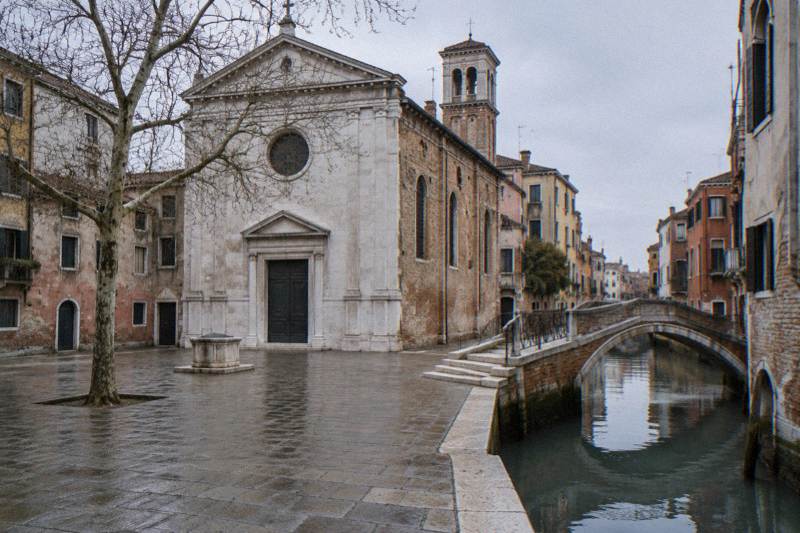
Murano is the island where Venice moved its glass furnaces to keep the fires away from a city built of wood, and the place still runs on that trade today. The good news for anyone counting euros is that the island itself asks nothing of you. There is no gate, no ticket booth at the vaporetto stop, no charge to wander the canals, the bridges and the furnaces' historic frontage along the Fondamenta dei Vetrai. The money goes to exactly two places: the boat that carries you there, and the museums and shops you choose to walk into. This guide, from Free Things To Do In Venice, separates those two things cleanly, because the line between free and paid on Murano is easy to cross by accident and just as easy to respect once you know where it sits.
One point of framing before anything else. Murano is part of the Comune di Venezia, but it is not the historic centre, and that distinction has a price consequence. The 2026 Venice access fee trial, the charge for entering the Citta antica on set days, never applied to Murano, Burano, Torcello or the Lido. The trial ran on 60 non consecutive days between 3 April and 26 July 2026, and it is not charged now. No official 2027 dates or amounts have been published. For the current official position, the city's entry fee page and the access fee FAQ are the two sources to check before any trip.
Is Murano Free To Visit?
Murano is free to walk, with no entry charge and no island ticket, and it sat outside the 2026 Venice access fee trial, which ran 60 days from 3 April to 26 July 2026 and is not charged now. What costs money is the vaporetto ride over, EUR 9.50 for a 75 minute ticket, and the island's museums, which follow the civic museum tariff with no first Sunday free scheme.
That answer surprises people who assumed the access fee covered the whole lagoon. It did not. The fee was a charge for entering the historic centre on set days between 08:30 and 16:00, and the lagoon islands were explicitly outside it. So a visitor standing on the Fondamenta dei Vetrai has paid nothing to be there except the boat fare, and a visitor who walks the island's canals, bridges and campi pays nothing further unless they choose to.
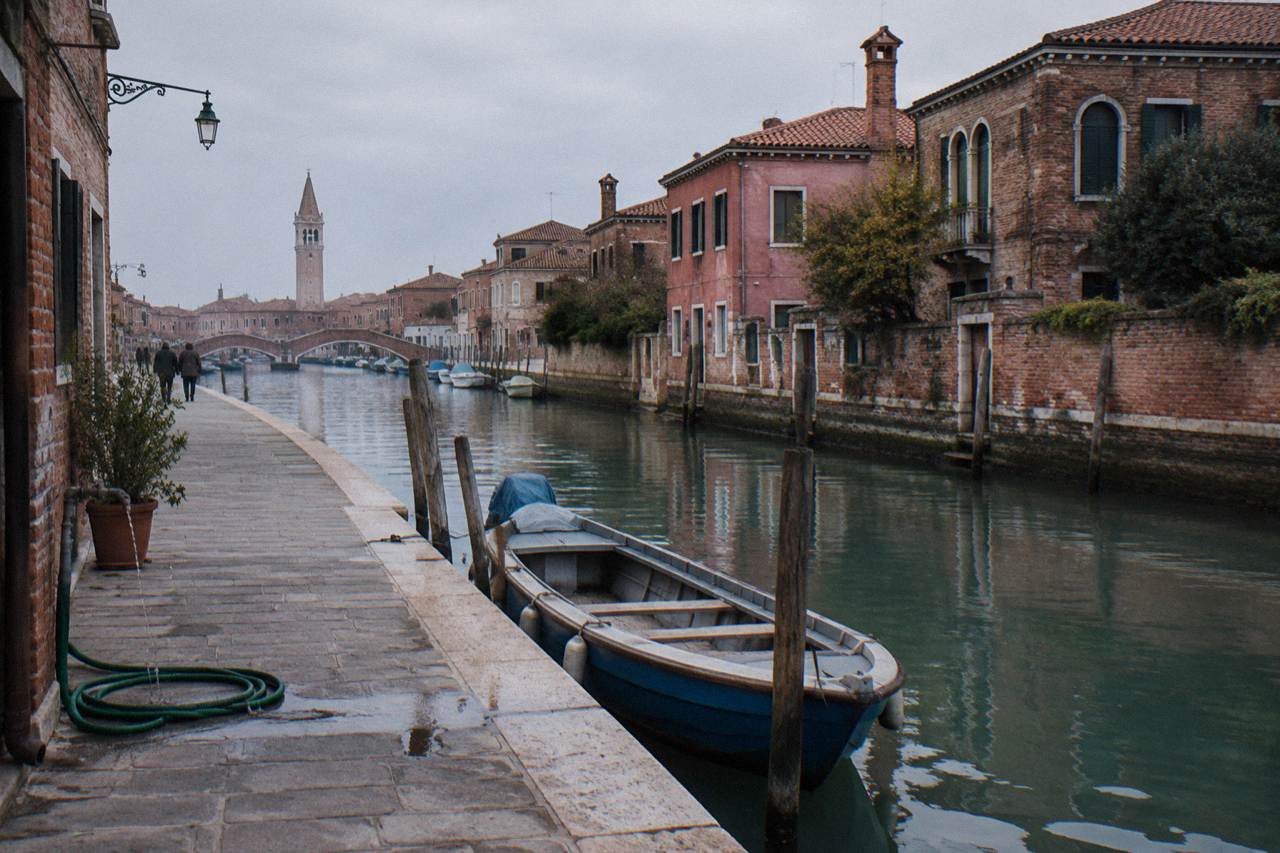
The free ground on Murano is real and generous. The whole island is open street: the Grand Canal of Murano with its view across to San Michele, the glass furnaces' old facades along the waterfront, the shops' window displays, the church exteriors, the small bridges that link the island's five separate islets, and the quiet residential lanes behind the main drags where the island's year round life actually happens. None of it asks for a cent. A family can spend a full afternoon here without a single mandatory expense beyond the boat.
What is paid is equally clear, and the table below keeps the two columns honest. The Glass Museum, the Mosaic Museum and the other civic institutions on the islands follow the MUVE civic museum tariff, which is a regime of its own: no first Sunday scheme, and free days under the Musei in Festa programme are for residents of the Metropolitan City of Venice, not for visitors. That is a different regime from the state museums, and the two are never merged on this site because the rules genuinely differ.
| On Murano | Free or paid | What to know |
|---|---|---|
| Walking the island, canals, bridges and campi | Free | No ticket, no gate, no charge at any hour |
| Church exteriors and waterfront fondamenta | Free | Open street, best light late afternoon |
| Glass shop windows and gallery front rooms | Free to browse | No obligation to buy in any shop |
| The Glass Museum and other island museums | Paid | Civic museum tariff, no first Sunday scheme for visitors |
| Vaporetto ride from Venice | Paid | EUR 9.50 for a 75 minute single ticket |
| Venice access fee | Not charged on Murano | 2026 trial ended 26 July 2026, historic centre only |
The practical takeaway is simple. Budget the boat, decide in advance whether a museum matters to you, and treat everything else as the free layer it is. Visitors who arrive expecting a ticket booth and find none often end up spending more in the first glass shop than the whole rest of the day costs, which is exactly the outcome a little planning prevents.
How Do You Get To Murano From Venice?
The only way visitors reach Murano is by boat, and the vaporetto is not free: a 75 minute single ticket costs EUR 9.50, with 24 hour passes at EUR 25, 48 hours at EUR 35, 72 hours at EUR 45 and a 7 day pass at EUR 65. There is no free boat service for visitors.
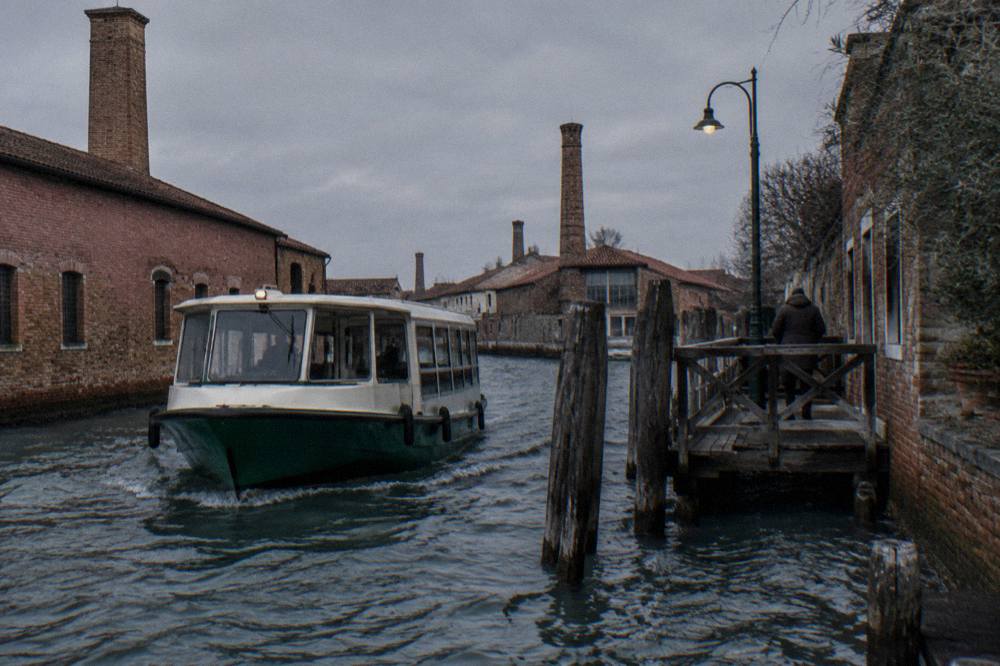
ACTV runs the public boats, and the routes to Murano leave from Fondamente Nove on a short hop of roughly ten minutes, or the longer way around from San Zaccaria and the Rialto area. A single 75 minute ticket covers one journey, so a Murano round trip on singles means two tickets. Anyone planning more than a couple of boat journeys in a day, and Murano plus Burano is exactly that, will usually find the 24 hour pass pays for itself, but that is arithmetic for the reader to run against their own itinerary, not a promise.
The fare table deserves its own look because it is the single biggest real cost of any Murano day, and because the figures get garbled in second hand sources.
| ACTV vaporetto ticket | Price | Notes |
|---|---|---|
| Single, 75 minutes | EUR 9.50 | One journey, validated on boarding |
| 24 hour pass | EUR 25 | Unlimited rides for one day |
| 48 hour pass | EUR 35 | Two full days of travel |
| 72 hour pass | EUR 45 | Three full days of travel |
| 7 day pass | EUR 65 | The long stay option |
| Airport bus, single | EUR 10 | The airport connection |
One planning note on timing. The boats run frequently on the main routes, but the Fondamente Nove departure point is on the northern edge of the historic centre, which makes it the natural pairing for anyone already exploring Cannaregio or Castello. That is worth knowing because the cheapest Murano day is one where the boat journey doubles as the route you wanted to walk anyway, rather than a detour across the city to reach a distant landing.
What Can You See On Murano Without Paying?
Most of Murano's best known sights cost nothing: the Fondamenta dei Vetrai waterfront, the Grand Canal of Murano with its San Michele views, the island's bridges linking its five islets, every shop window on the main drags, and the quiet residential lanes behind them. The churches and museums are the paid exceptions, and glass itself is only free to look at.
The Fondamenta dei Vetrai is the island's spine, a waterfront walk lined with the historic facades of the glass furnaces and their showrooms, and it is the single best free thing here. Walking it end to end takes the better part of an hour at a browsing pace, past shopfronts that range from working studios to grand galleries, and there is no obligation in any of them. The windows alone amount to a free museum of the trade, and unlike the actual museum they change with every season's production.
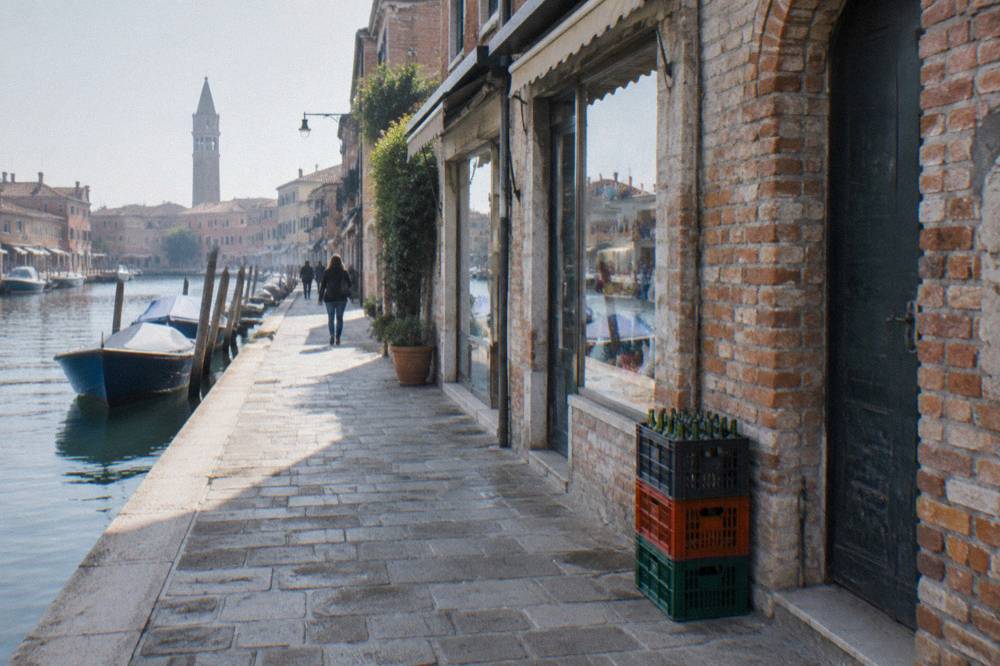
The island's geography is its own free attraction. Murano is five islets stitched together by bridges, and the canals between them give the place a rhythm that rewards aimless walking. The residential lanes behind the main streets are where the island's ordinary life runs, and they cost nothing and ask nothing. The view across the water to San Michele, Venice's island cemetery, is one of the quietest free vistas in the lagoon, especially in late afternoon light.
For visitors who want the same kind of local ground on the main city side before heading out, the free walking tours listed on this site are the natural pairing. This site lists 17 free, pay what you want walking tours across GuruWalk and freetour.com, and the walks that start in the northern districts put you within a short walk of the Fondamente Nove boats to Murano.
The Northern Districts, Locals' Venice walk is the one that fits a Murano day best, and it has the figures to back the recommendation: rated 4.82 out of 5 across 3,020 GuruWalk reviews, a 2 hour English walk meeting at Campo de la Fava in Castello, run on the GuruWalk platform by Venice Walking Tour. You can read more on the Northern Districts, Locals' Venice tour page or See this free tour. Finishing in the northern districts leaves you a straight line to the Fondamente Nove vaporetto for the hop over to the glass island.
The other pairing worth naming is the free walking tour overview for Venice, which explains how the pay what you want model works in practice, and the Murano or Burano comparison for anyone deciding between the two islands rather than committing to both.
Is The Murano Glass Museum Free?
No, the Glass Museum is paid, and it is not free on any first Sunday. It belongs to the MUVE civic museum network, which runs its own tariff, and its free days under the Musei in Festa programme are reserved for residents of the Metropolitan City of Venice rather than visitors.
This is the single most common confusion on Murano, because Venice has two museum regimes and most visitors have only heard of one. The state museums join the Domenica al Museo first Sunday scheme, and the Gallerie dell'Accademia is the confirmed example on its own page, free on the first Sunday and EUR 20 otherwise. The civic museums, which include the Doge's Palace, the Correr, Ca' Rezzonico and the island museums on Murano, Burano and Torcello, do not. Their free days exist but they are a residents' programme. A visitor arriving on a first Sunday expecting a free Glass Museum will be paying.
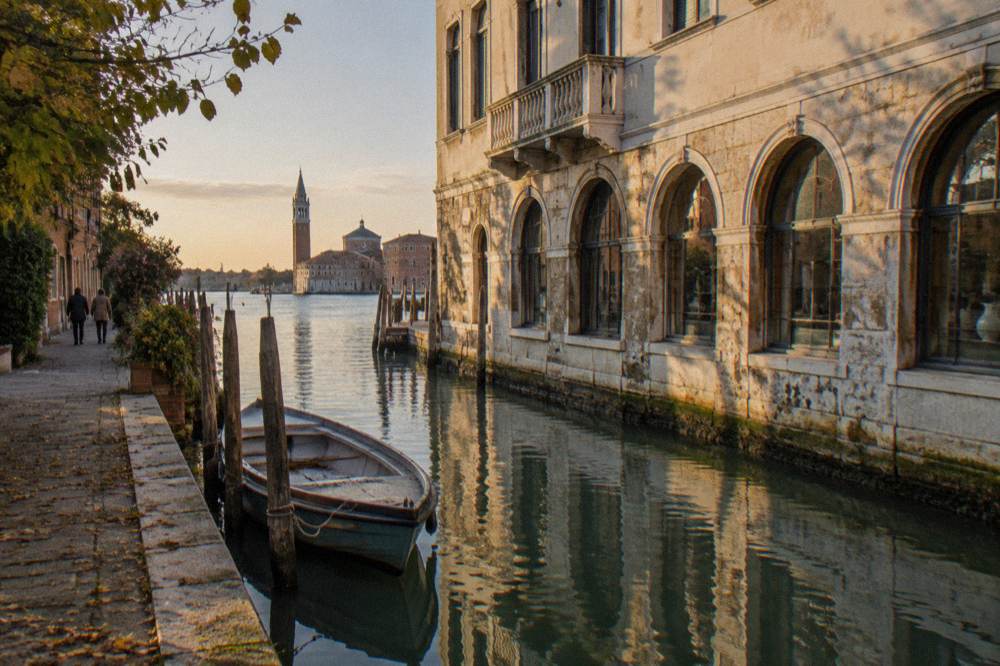
What the museum holds explains why people still pay. The collection traces Venetian glass from its Roman roots through the Renaissance heights to the modern era's turns, and it is the only place on the island where the trade's whole history sits under one roof. Whether that is worth the tariff is a genuine personal call. A visitor who cares about craft history will rate it the best spend of the day; a visitor who mainly wants to see glass being made and browse shops can skip it without missing the island's character, because the island's character is outdoors and free.
Check the MUVE site for the current tariff before you go, and treat anything you read on a third party ticket site with caution, since several lookalike domains are known to hijack Venice attraction searches.
Which Free Walking Tours Pair Well With A Murano Day?
The walks that pair best with Murano start in the northern districts, close to the Fondamente Nove boats: the Northern Districts, Locals' Venice walk rated 4.82 out of 5 across 3,020 GuruWalk reviews, the 3 Hour Hidden Venice Walk rated 4.76 out of 5 across 1,911 reviews, and the Overlooked Highlights Walk rated 4.84 out of 5 across 1,668 reviews, all on GuruWalk and all pay what you want.
A Murano day has a natural shape: a morning walk on the main city, a boat from Fondamente Nove, an afternoon on the glass island, and the walk you choose in the morning determines how the whole day flows. The three walks below are the ones whose meeting points and neighbourhoods sit on the northern side of the city, which is the side the Murano boats leave from, and each is introduced by its own ground rather than by any claim this site cannot source.
The Northern Districts, Locals' Venice walk, run by Venice Walking Tour on GuruWalk, meets at Campo de la Fava in Castello and runs 2 hours in English. It is the natural first choice for a Murano morning because Castello is Venice's largest and quietest district, the part of the city where ordinary residential life is still the norm, and its ground leads naturally toward the northern waterfront where the boats wait.
The 3-Hour Hidden Venice Walk, guided by Francesco on GuruWalk, is the longer option, rated 4.76 out of 5 across 1,911 GuruWalk reviews, meeting at Campo San Geremia in Cannaregio for a 3 hour English walk. Cannaregio is the district that hugs the lagoon's northern edge, and a three hour route through it ends you closer to Fondamente Nove than almost any other starting geometry in the city, which makes it the walk to pick if you want the boat to feel like the next step rather than a cross town trek.
The Overlooked Highlights Walk, also by Venice Walking Tour on GuruWalk, rated 4.84 out of 5 across 1,668 GuruWalk reviews, meets at Campo Sant'Agnese in Dorsoduro for a 2 hour English walk, and it is the contrast pick: Dorsoduro is the southern side of the city, so it means a longer vaporetto leg to reach Murano, but it is the walk for anyone who wants the city's art quarter and the Accademia bridge in the morning before the island in the afternoon.
The table puts the three side by side in the site's own honest format, ratings with their scales and review counts, because a rating without its pool invites the reader to imagine a confidence that may not exist.
| Walk | Platform | Rating and reviews | Duration | Language | Meets at |
|---|---|---|---|---|---|
| Northern Districts, Locals' Venice | GuruWalk | 4.82 out of 5 across 3,020 reviews | 2 hours | English | Campo de la Fava |
| 3-Hour Hidden Venice Walk | GuruWalk | 4.76 out of 5 across 1,911 reviews | 3 hours | English | Campo San Geremia |
| Overlooked Highlights Walk | GuruWalk | 4.84 out of 5 across 1,668 reviews | 2 hours | English | Campo Sant'Agnese |
Two honest footnotes to that table. First, the site also lists a Murano And Burano Islands Trip, a GuruWalk walk that runs in Spanish only and carries extra costs for the boat tickets to the islands, so it is not a free option for most English speaking readers despite the walking format. Second, several other walks on the site run in Spanish only, including Spanish language editions of the San Marco and history walks, and they are listed for readers who want them rather than hidden.
Should You Pair Murano With Burano On The Same Day?
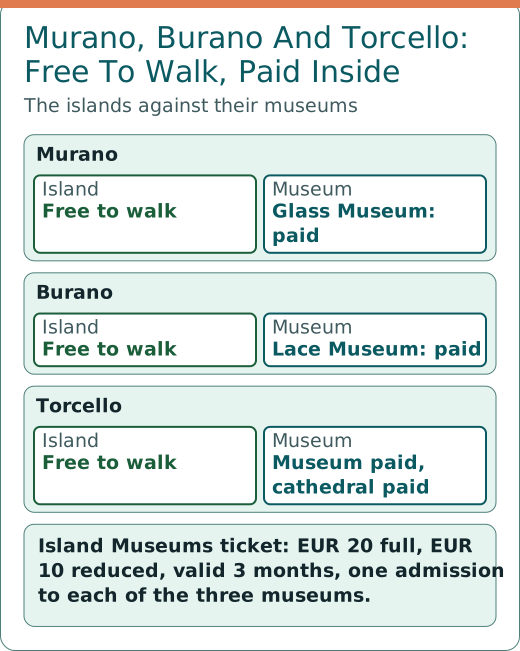
Yes, and the pairing is free at the island end: both Murano and Burano are free to walk, and the boat between them is covered by the same vaporetto ticket you already hold. The costs are the boats and the museums, since Burano's and Torcello's museums are paid under the same civic regime, and Torcello's cathedral is paid too. The islands themselves ask nothing.
The geography makes the pairing almost inevitable. Murano sits between the historic centre and Burano, so the standard day runs Venice to Murano by boat, a couple of hours on the glass island, then Murano north to Burano for its painted houses, and back on the direct line from Burano to Fondamente Nove. Every leg is an ordinary ACTV journey covered by a day pass, which is why the 24 hour EUR 25 pass usually beats singles on this itinerary. The Burano guide covers the lace island in the same free versus paid detail as this page.
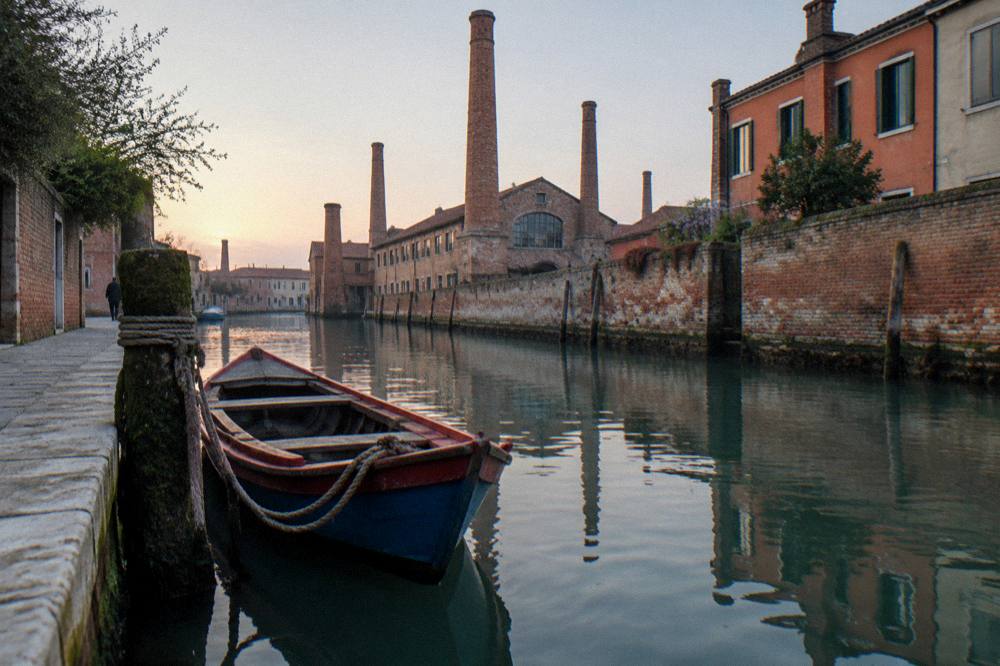
The comparison between the two islands is a genuine one, and the honest version is that they do different jobs. Murano is a working trade island: furnaces, showrooms, a museum of the craft, and a waterfront built by centuries of glass money. Burano is a picture: painted houses, lace, and a pace that has made it the more photographed of the two. A visitor with one island only should read the Murano or Burano comparison post before choosing, because the right answer depends on whether you want craft or colour, and both islands' streets are free while their museums are not.
| Murano | Burano | |
|---|---|---|
| Walking the island | Free | Free |
| Signature free sight | Fondamenta dei Vetrai waterfront | The painted houses and canals |
| Museums | Paid, civic tariff, no first Sunday scheme | Paid, same civic regime |
| Boat from Venice | Fondamente Nove, about ten minutes | Direct from Fondamente Nove, longer |
| Best paired with | A northern districts morning walk | Murano on the same ticket |
A final timing note for the combined day. The last boats back fill up in high season, and the islands empty from late afternoon, so the comfortable shape is glass island in the early afternoon, lace island for the last light, and the direct return while the queues are still short. Winter visitors should add one check: flooding season runs October to March, and the lagoon islands' low quays can go under water when the city's tide forecast rises, so the official acqua alta guidance is worth a minute before a November crossing.
If a guided morning on the main city would complete the plan, these three pay what you want walks are the ones whose meeting points and ground suit an islands afternoon.
Common Questions About Murano
Is Murano Free To Visit?
Yes. There is no entry charge, no island ticket and no gate, and the island sat outside the 2026 Venice access fee trial, which applied only to the historic centre and ended on 26 July 2026. The costs are the vaporetto boat over and any museum or shop you choose to enter.
How Much Does The Vaporetto To Murano Cost?
A 75 minute single ticket costs EUR 9.50. A 24 hour pass costs EUR 25, 48 hours EUR 35, 72 hours EUR 45 and a 7 day pass EUR 65. There is no free boat service for visitors, so the boat is the one unavoidable cost of the day.
Is The Murano Glass Museum Free On The First Sunday Of The Month?
No. The Glass Museum belongs to the civic museum network, which runs its own tariff and does not join the state museums' first Sunday scheme. Its free days under the Musei in Festa programme are for residents of the Metropolitan City of Venice, not for visitors.
Do You Have To Pay The Venice Access Fee To Go To Murano?
No. The 2026 access fee trial charged entry to the historic centre only, on 60 set days between 3 April and 26 July 2026, and Murano, Burano, Torcello and the Lido were never in the charged zone. The trial is not running now, and no official 2027 dates or amounts have been published.
Is It Better To Visit Murano Or Burano?
Both islands are free to walk and both have paid museums under the same civic regime. Murano is the craft island, with furnaces, showrooms and the Glass Museum; Burano is the painted houses and lace island. With a day pass you can do both on one ticket, since the boats run between them.