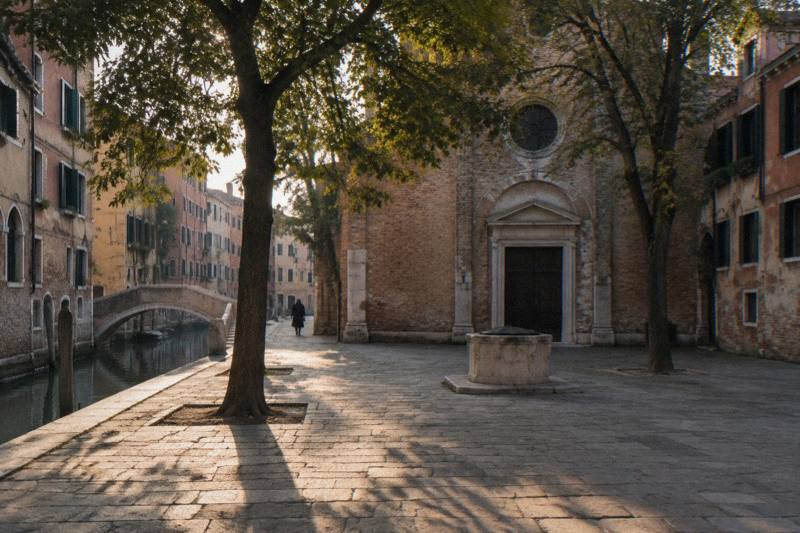
Burano: The Free Guide To Venice's Colourful Island
Burano is the island where Venice stops being marble and starts being paint. This guide covers what is genuinely free there, what the boat really costs, and how to fold the island into a trip built around the 17 free walking tours listed on this site.
Short answer
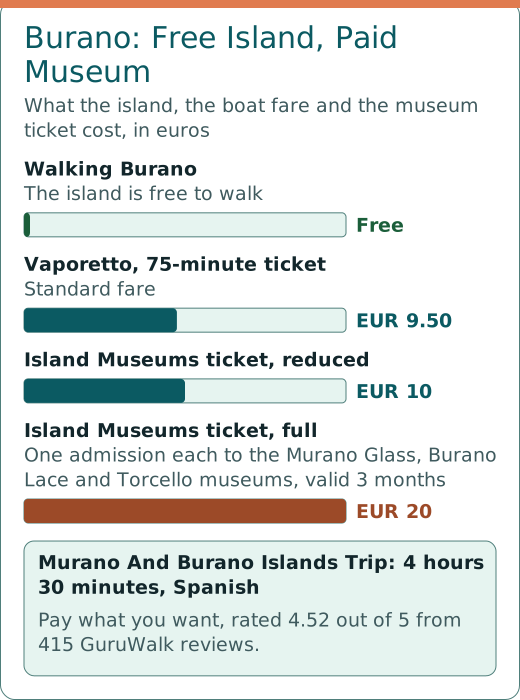
Burano is free to walk: the coloured streets, the canals and the lace-shop windows cost nothing. The boat is the real cost, at EUR 9.50 for a 75-minute vaporetto ticket or EUR 25 for 24 hours. The island's museum is paid, and the Venice access fee is not charged now.
What Is Burano And Why Are Its Houses So Colourful?
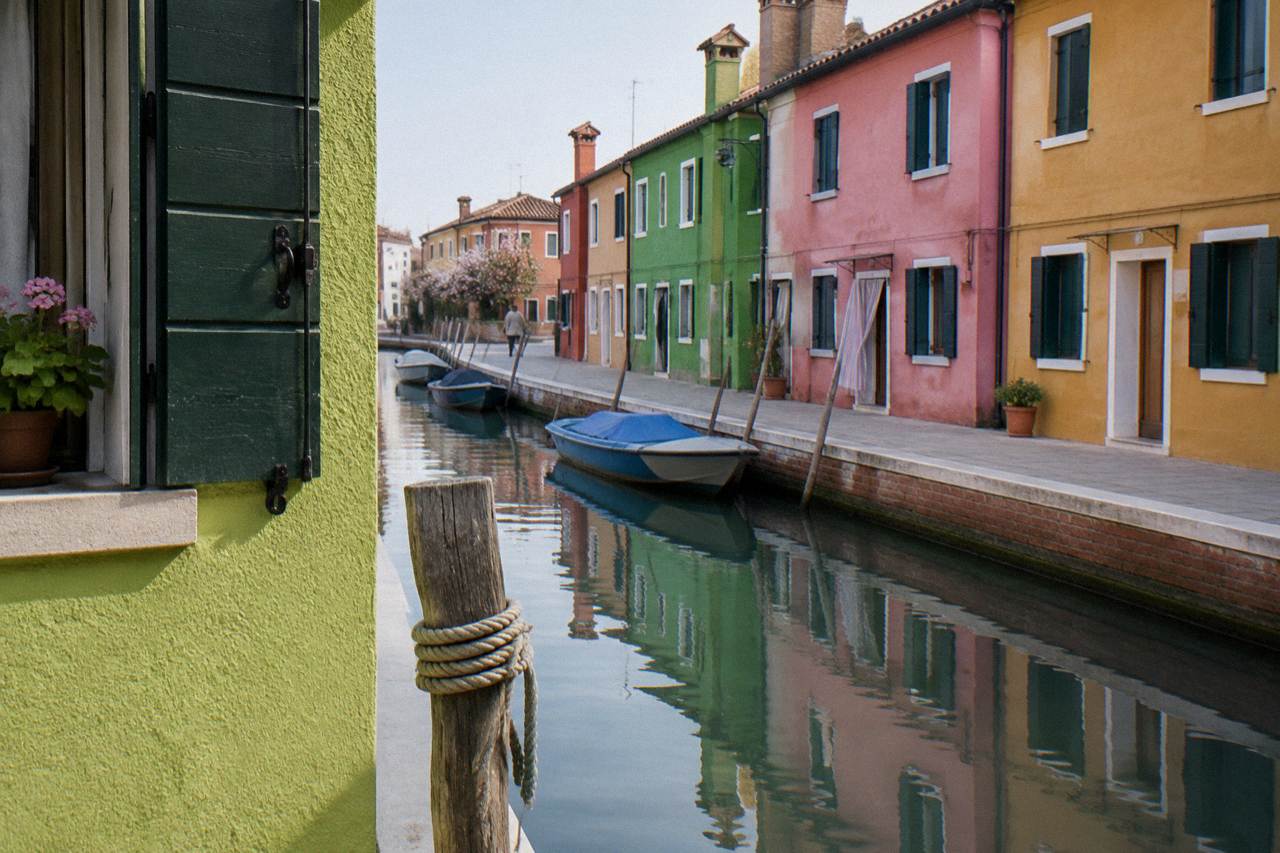
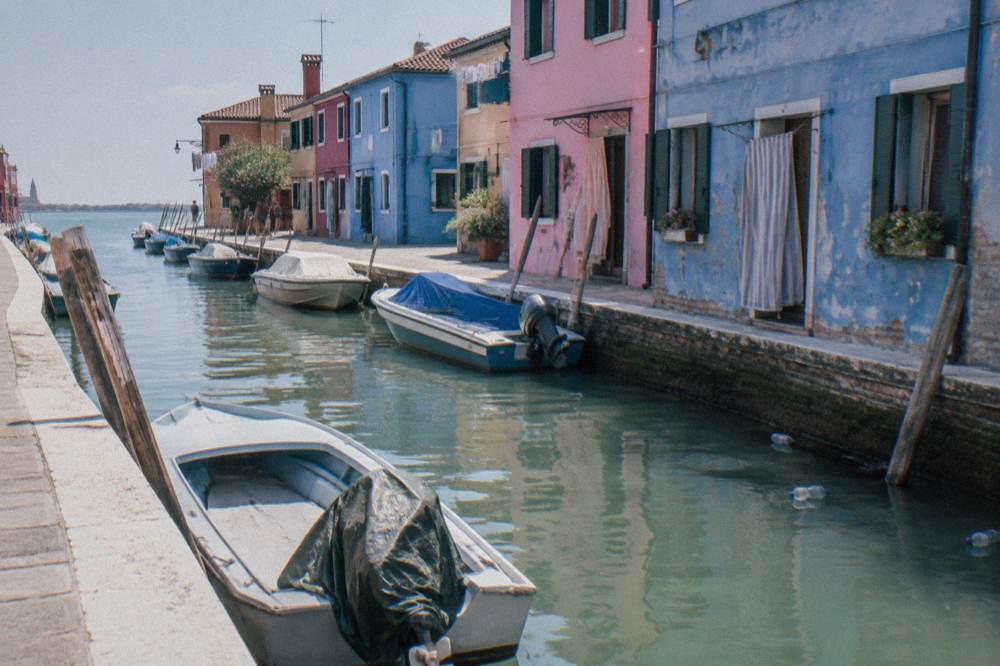
Burano is a small island in the northern lagoon, about 40 minutes by boat from the historic centre, famous for the painted facades of its fishermen's houses and for its centuries-old lace tradition. Walking the island costs nothing. The colours are not decoration for visitors, they are a working tradition, and the whole island is compact enough to cross on foot in under half an hour.
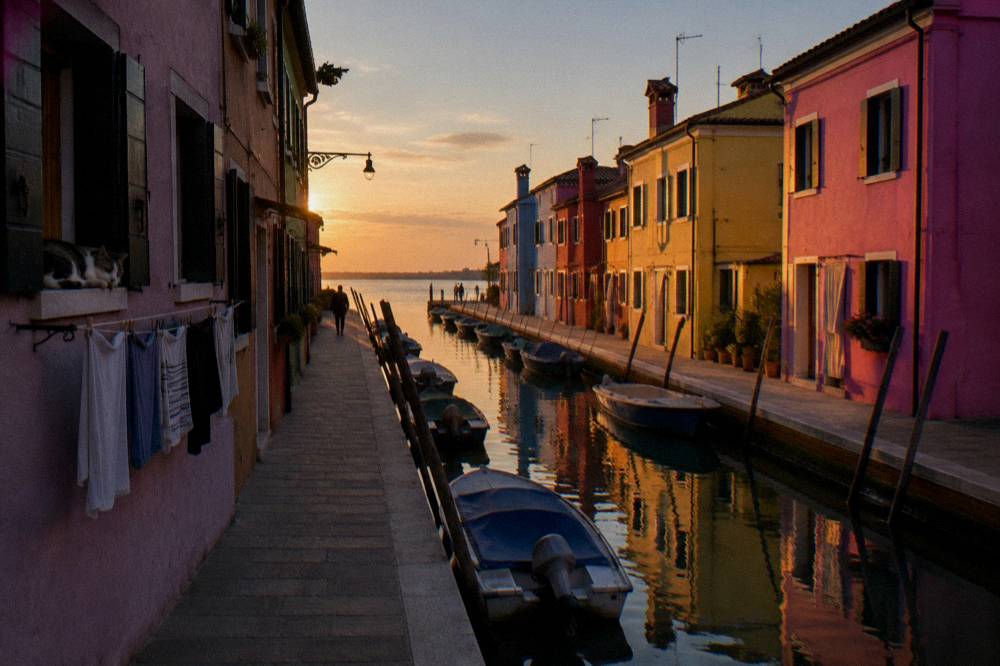
The colours are the whole story. Local tradition holds that the bright paint scheme began so fishermen could find their way home to their own front door through the lagoon fog. Whether or not that origin holds up, the painting is real and it is regulated: residents cannot repaint a house in any shade they like, the palette is controlled so the island keeps its character. The result is a street grid where every turn looks different, and none of it is ticketed. You walk in off the boat ramp and you are in it.
The other half of Burano's identity is lace. The island's lacemakers produced work that was sold across Europe for centuries, and the craft still survives in a handful of workshops. You will see it in shop windows and on displays along the main drags, and browsing costs nothing. The lace museum, the Museo del Merletto, is a separate paid attraction, and it is the one indoor sight people ask about. The painted streets themselves, the canals, the small bridges and the leaning bell tower of San Martino are all open air and all free.
For context on how Burano fits into a wider no-spend itinerary, Free Things To Do In Venice covers the historic centre side of the trip, and this page takes the lagoon side. The two pair naturally: a free walking tour in the morning, a Burano afternoon, and the only money that leaves your pocket is the boat fare.
How Do You Get To Burano From Venice?
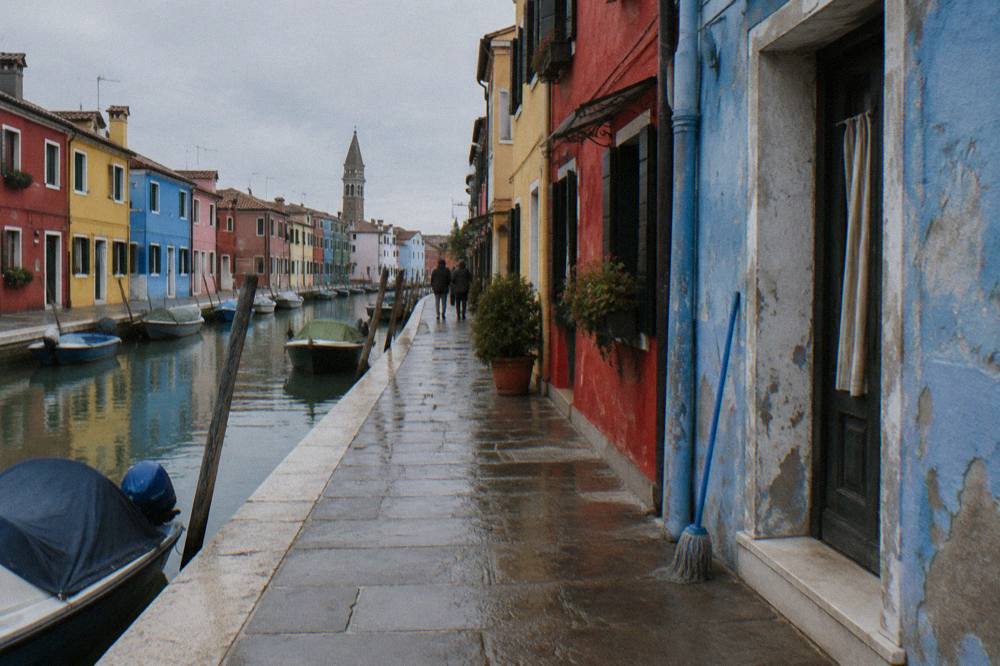
The only realistic public way to reach Burano is the ACTV vaporetto, and the boat is the single biggest cost of the day. A 75-minute single ticket costs EUR 9.50, and a 24-hour pass costs EUR 25, so anyone planning a return trip plus any other boat ride in the same day is usually better off with the pass. There is no free boat service for visitors to the lagoon islands.
The relevant lines run from Fondamente Nove on the northern edge of the historic centre, and the crossing to Burano takes roughly 40 minutes. If you are coming from San Marco or the stations, you first need to reach Fondamente Nove, which on foot is a walk of about 25 minutes from the Rialto area. Many people combine Burano with Murano, since the islands are on connected routes and the same ticket covers the whole day's travel.
The fare structure rewards planning. A single 75-minute ticket is EUR 9.50, which covers one direction only in practice, because a Burano round trip outlasts it. The 24-hour pass at EUR 25, the 48-hour at EUR 35 and the 72-hour at EUR 45 are the numbers to compare against your itinerary. Someone doing Burano alone, straight there and straight back, spends EUR 19 on two singles. Someone adding Murano, or any Grand Canal ride, crosses the line where the pass wins.
| Ticket | Price | What it covers |
|---|---|---|
| 75-minute single | EUR 9.50 | One journey window on ACTV boats |
| 24-hour pass | EUR 25 | Unlimited ACTV travel for 24 hours |
| 48-hour pass | EUR 35 | Unlimited ACTV travel for 48 hours |
| 72-hour pass | EUR 45 | Unlimited ACTV travel for 72 hours |
| 7-day pass | EUR 65 | Unlimited ACTV travel for seven days |
One point of confusion to settle early: the Venice access fee is not a boat fare and it is not charged now. The 2026 trial ran on 60 days between 3 April and 26 July 2026, 08:30 to 16:00, and it applied to entering the historic centre, not to the islands. Burano was never charged. If a day trip to the islands is your whole plan, the access fee is irrelevant to it, and no official 2027 dates or amounts have been published. The official FAQ at cda.ve.it is the source to check before any spring visit.
Can You Visit Burano On A Free Tour?
Only one walk on this site's roster touches the islands, and it runs in Spanish only. The practical free-tour play for Burano is the reverse: take a pay-what-you-want walking tour in the historic centre in the morning, then ride out to the island on your own in the afternoon. The 17 free walking tours listed on this site, across GuruWalk and freetour.com, all start in the historic centre.
The Murano And Burano Islands Trip, run by ITAKA tours on GuruWalk, is the one island walk on the roster, and it runs in Spanish only, with boat tickets to the islands as an extra cost on top of whatever you choose to pay the guide. For English-speaking visitors, the stronger move is to build the island afternoon yourself and spend the guided part of the day in Venice, where the free-walk scene is deep.
Three featured walks show the range. The Overlooked Highlights Walk, run by Venice Walking Tour on GuruWalk, is rated 4.84 out of 5 across 1,668 GuruWalk reviews, runs two hours in English and meets at Campo Sant'Agnese in Dorsoduro. The Hidden Gems, Bilingual Guide walk, run by Scandic Tours on GuruWalk, is rated 4.61 out of 5 across 444 GuruWalk reviews, runs two hours in English and Spanish and meets at Rio Terà Barba Frutariol in Cannaregio. The 3-Hour Hidden Venice Walk, run by Francesco on GuruWalk, is rated 4.76 out of 5 across 1,911 GuruWalk reviews, runs three hours in English and meets at Campo San Geremia in Cannaregio, close to the Fondamente Nove boats you want for Burano.
All three are free to book and pay what you want on the day. None of them is a Burano tour, and that is the honest framing: the island is a self-guided place, and the walks are what make the Venice half of the day rich. The general free walking tour overview explains how the pay-what-you-want model works if it is new to you.
What Can You See On Burano For Free?
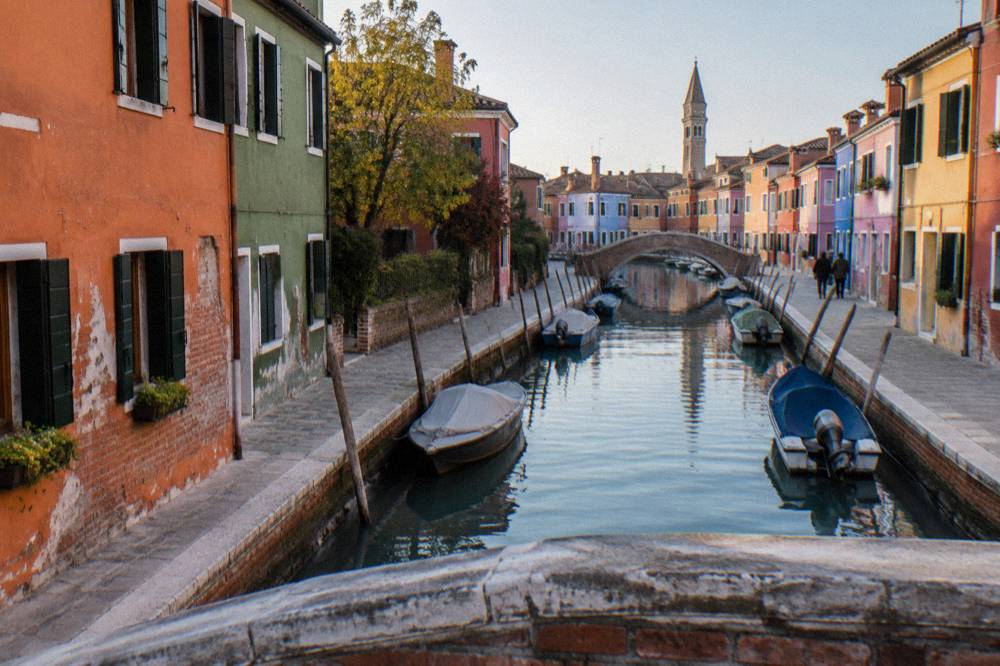
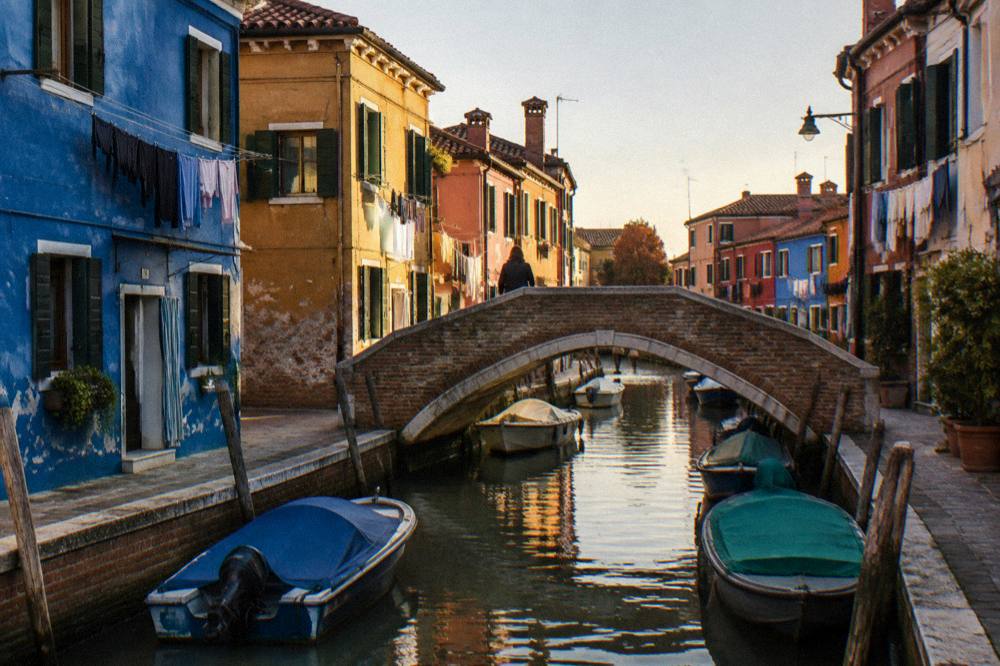
Almost everything. The coloured streets and canals, the facades of Via Baldassarre Galuppi and the side alleys off it, the small bridges, the exterior of the leaning San Martino bell tower and the window displays of the lace workshops are all free to see. The paid items are the lace museum and anything you eat or buy. The island is essentially an open-air sight.
The honest division is between walking and entering. Walking costs nothing and delivers the whole postcard: the painted houses, the canals cutting between them, the laundry lines, the quiet residential lanes a few streets back from the boat dock where the crowds thin out completely. Burano rewards the turn away from the main drag more than almost anywhere in Venice, because the island is small enough that three minutes of walking puts you in a street with nobody in it.
Entering is where money starts. The Museo del Merletto, the lace museum, is a paid attraction, and it is the only museum on the island people commonly ask about. The same pattern holds across the lagoon: Murano, Burano and Torcello are free to walk, but their museums are paid. There is no first-Sunday free scheme covering them, and no free day for visitors. If lace interests you but a museum ticket does not, the workshops along the main street let you look through the windows at the work, which costs nothing.
| On Burano | Free or paid | Notes |
|---|---|---|
| Coloured streets and canals | Free | Open air, no ticket, no hours |
| San Martino bell tower exterior | Free | The lean is visible from the square |
| Lace shop windows | Free to browse | Buying is separate |
| Museo del Merletto | Paid | The island's one museum |
| Meals and cicchetti | Paid | Prices vary, check the board |
| Boat to the island | Paid | EUR 9.50 single, EUR 25 for 24 hours |
Pairing this with a morning walk keeps the whole day honest on cost. The Overlooked Highlights Walk tour page has the meeting point and booking details, and See this free tour is the direct listing. It is a GuruWalk listing, free to book, rated 4.84 out of 5 across 1,668 GuruWalk reviews.
Which Free Walking Tours In Venice Pair Well With A Burano Day?
The best pairings are walks that start near the northern boat stops, because Fondamente Nove is your departure point for Burano. The Cannaregio and Castello walks put you within a short walk of the pier. Dorsoduro starts work too, as long as you budget the crossing time.
The Overlooked Highlights Walk, run by Venice Walking Tour on GuruWalk, meets at Campo Sant'Agnese in Dorsoduro, runs two hours in English and is rated 4.84 out of 5 across 1,668 GuruWalk reviews. It is the walk this site features alongside Burano because it covers the central sights at a pace that still leaves daylight for the lagoon.
The Northern Districts, Locals' Venice walk, also run by Venice Walking Tour on GuruWalk, meets at Campo de la Fava in Castello and is rated 4.82 out of 5 across 3,020 GuruWalk reviews over two hours in English.
The Hidden Secrets And Curiosities Walk, run by ITAKA tours on GuruWalk, meets at Campo della Maddalena in Cannaregio, runs two hours 15 minutes in English and is rated 4.89 out of 5 across 1,189 GuruWalk reviews. Cannaregio is the neighbourhood that contains Fondamente Nove, which makes this the tightest logistics fit on the list: finish the walk, walk to the pier, ride out.
| Walk | Platform | Rating | Duration | Meets at |
|---|---|---|---|---|
| Overlooked Highlights Walk | GuruWalk | 4.84 out of 5, 1,668 reviews | 2 hours | Campo Sant'Agnese, Dorsoduro |
| Northern Districts, Locals' Venice | GuruWalk | 4.82 out of 5, 3,020 reviews | 2 hours | Campo de la Fava, Castello |
| Hidden Secrets And Curiosities Walk | GuruWalk | 4.89 out of 5, 1,189 reviews | 2 hours 15 minutes | Campo della Maddalena, Cannaregio |
How Much Does A Day On Burano Cost?
The absolute floor for a day on Burano is EUR 19 in boat fare and nothing more, since the island itself charges no entry fee and you can walk its painted streets and canals freely; beyond that, costs depend entirely on what you eat, drink, or buy, so a realistic budget for most visitors runs higher once lunch, a snack, and any lace or souvenirs are added.
The planning ranges below are honest brackets, not promises. Cicchetti and a drink at a standing bar run cheaper than a seated lunch on the main street, and the lace museum ticket is a single fixed decision. What does not exist here is a hidden mandatory cost: no island entry charge, no photography fee, no booking requirement to walk the streets.
| Item | Planning range | Optional? |
|---|---|---|
| Vaporetto, two singles | EUR 19 | No, unless you have a pass |
| Vaporetto, 24-hour pass | EUR 25 | No, but better value with Murano |
| Museo del Merletto | Paid, check the ticket desk | Yes |
| Lace or souvenirs | Entirely variable | Yes |
When Is The Best Time To Visit Burano?
Late morning through early afternoon on a weekday gives the best balance of light and crowd, and the painted facades photograph best with midday sun on them. Winter weekdays are the quiet extreme, October to March is acqua alta season in the lagoon, and the access fee does not apply to the islands at all, so spring weekends carry no entry charge for Burano even when the historic centre trial days are running.
The seasonal mechanics matter more here than in the centre. Acqua alta season runs October to March, with the peak around November and December, and the MOSE barriers raise on forecast tides above 110 cm at Punta della Salute. The barriers have prevented major flooding, but lower events can still reach low-lying areas, and Burano being a low lagoon island means it pays to check the tide forecast before a winter visit. The Comune's Centro Maree publishes the official forecasts and alerts, and the official acqua alta guidance explains the system in English.
For the islands themselves, the practical advice is simple. Go early or go late relative to the tour-boat waves, which cluster in the middle of the day. Weekdays beat weekends noticeably. And because Burano is residential, the early morning and the last hour before the boats thin out are when you see it as a town rather than a backdrop.
Burano Or Murano: Which Island Should You Visit First?
If you are choosing one island, Burano is the stronger free sight: the colour and the street grid cost nothing and are the destination in themselves. If you are doing both, the common pattern is Murano first on the way out, Burano second, because Burano is the better place to spend the long afternoon and the slower one to leave. The two islands are on connected vaporetto routes, so the same pass covers both.
The comparison comes down to what each island sells. Murano's identity is glass, and the core experience of glass is indoors: furnaces, showrooms, demonstrations. Burano's identity is paint and lace, and the core experience is outdoors and free. For a no-spend day, that asymmetry decides it. The fuller comparison, including what each island charges for indoors, is in Murano Or Burano: Which Island To Pick, and the glass island has its own page in the Murano guide.
Logistics support the two-island day. The boats between the islands are frequent and the hop is short, so a morning walk in Venice, a Murano stop and a Burano afternoon fits inside a 24-hour pass comfortably. Doing it in the other order works too, but Burano last means you end the day in the place that photographs best in the late light.
What Rules Should You Know Before You Go?
Venice enforces a handful of rules that matter on the islands as much as in the centre: tourist groups are capped at 25 people, loudspeakers are banned, and sitting or eating on bridges and steps can draw fines, as can swimming in canals. None of this stops a normal visitor doing normal things. It means treating the bridges as crossings, not as picnic benches, and remembering that Burano is a working town.
The group-size cap is worth knowing for its side effect: it keeps even the busy streets walkable, and it is part of why the island has not been throttled by tour waves the way central Venice can feel. The sitting rule is the one that actually catches people, because Burano's bridges and canal-side steps look like perfect resting spots and photograph like them too. They are, but resting on them is not what the rules allow.
Beyond the rules, the practical checklist is short. Wear flat shoes, the paving is stone and the alleys are narrow. Check the tide forecast in winter. Bring cash in small notes for cicchetti bars, and check the room or the board for prices rather than assuming. If you are building the whole day out from a short trip, the one day in Venice itinerary shows where an island afternoon fits against the free sights in the centre.
The walks below are the three featured options for the Venice half of a Burano day: all free to book, all pay what you want, all run in English.
Common Questions About Burano
Is Burano Free To Visit?
Yes. Walking the island costs nothing: the coloured streets, the canals and the bridges are all open air. The costs are the vaporetto fare to get there, at EUR 9.50 for a 75-minute single or EUR 25 for a 24-hour pass, plus anything you eat, drink or enter, such as the paid lace museum.
How Do I Get To Burano From Venice?
Take the ACTV vaporetto from Fondamente Nove on the northern edge of the historic centre; the crossing takes roughly 40 minutes. A 75-minute single ticket is EUR 9.50, and a 24-hour pass at EUR 25 usually wins if you are also riding to Murano or anywhere else that day. There is no free boat service for visitors.
Is The Venice Access Fee Charged On Burano?
No. The 2026 access fee trial applied only to entering the historic centre on 60 selected days between 3 April and 26 July 2026, and Murano, Burano, Torcello and the Lido were never charged. The trial is not running now, and no official 2027 dates or amounts have been published.
What Is Free On Burano?
The streets and canals, the painted house facades, the small bridges, the exterior of the leaning San Martino bell tower and browsing the lace shop windows. The lace museum is paid, and meals are paid. The island is essentially an open-air sight, so the free portion is the main portion.
Are There Free Walking Tours On Burano Itself?
The only island walk on this site's roster, the Murano And Burano Islands Trip on GuruWalk, runs in Spanish only and has boat tickets as an extra cost. The featured free walks are all in the historic centre, so the standard pattern is a pay-what-you-want walk in Venice in the morning and a self-guided Burano afternoon.
Burano Or Murano: Which Is Better For A Free Day?
Burano, if the colour and the streets are what you came for, because the whole island experience is outdoors and free. Murano's core experience, glass, is mostly indoors. Doing both on one 24-hour pass is easy, and Burano is the better place to spend the long afternoon.