Venice On A Budget: What A Cheap Day Actually Costs
Venice has a reputation for emptying wallets, but the city's best experiences, its squares, its canals, its churches you can stand outside of, cost nothing at all. This guide separates the real costs from the optional ones.
Short answer
A budget day in Venice can cost almost nothing beyond food. The access fee is not charged now, Piazza San Marco and the campi are free, and the 17 free walking tours listed on this site cost nothing up front. Paid extras add up fast: St Mark's Basilica is EUR 10, the Campanile is EUR 15, and a 75-minute vaporetto ticket is EUR 9.50.
Venice is expensive the way a designer shop window is expensive: everything visible carries a price tag, but the street itself is free. The city's core experience, walking stone alleys that end in water, crossing bridges that frame postcards, standing in a campo while church bells argue with seagulls, costs exactly nothing. What drains budgets is the layer of tickets stacked on top: museums, towers, boats, and a day-trip access fee that existed for part of 2026 and does not apply now. This guide, part of Free Things To Do In Venice, works through the numbers that matter and shows where the free alternatives sit.
The honest starting point is that Venice rewards walkers. Nearly every cost below is optional in a way that is not true of, say, Rome, where the headline sights sit behind turnstiles. Piazza San Marco is free. The Rialto bridge is free. The Grand Canal is free to look at from a dozen points. Once you accept that the interiors are the paid part, a budget Venice trip stops being a contradiction.
How Much Does A Day In Venice Really Cost?
A bare-bones day for one visitor can run on food and a single EUR 9.50 vaporetto ticket, because the streets, squares and canals cost nothing and the walking tours listed on this site are pay what you want. Every euro beyond that is a choice: EUR 10 for St Mark's Basilica, EUR 15 for the Campanile, EUR 35 for the Doge's Palace as part of the St Mark's Square Museums Ticket.
The frame that matters is fixed costs versus optional costs. Fixed costs are the ones you cannot avoid: food, and transport if your legs give out. Optional costs are everything with a ticket desk. The table below separates them so you can see how little is actually mandatory.
| Cost line | Amount | Avoidable? |
|---|---|---|
| Access fee, historic centre | Not charged after 26 July 2026 | Currently moot |
| St Mark's Basilica entry | EUR 10 | Yes, view from the square |
| Campanile di San Marco | EUR 15 | Yes, free views exist from bridges |
| Doge's Palace, St Mark's Square Museums Ticket | EUR 35, or EUR 30 bought online at least 30 days ahead | Yes |
| Vaporetto, 75-minute single | EUR 9.50 | Yes, on foot |
| Vaporetto, 24 hours | EUR 25 | Yes, on foot |
| Free walking tours on this site | Free, pay what you want | Already free |
Two of those numbers deserve a second look. The Doge's Palace ticket drops to EUR 30 if bought online at least 30 days ahead, a real saving for anyone who plans far enough forward. And the vaporetto line is the one that quietly ruins budgets: a single 75-minute ticket is EUR 9.50, so a family of four crossing the Grand Canal twice on impulse spends more than a basilica ticket each. Walking is not just the free option in Venice, it is often the faster one, since boats loop the long way around while footbridges cut straight across.
The access fee deserves its own section, because it is the cost most visitors worry about and the one that is not being collected at all.
Is The Venice Access Fee Charged Now?
No. The 2026 access fee trial ran on 60 non-consecutive days between 3 April and 26 July 2026, from 08:30 to 16:00, and it ended on 26 July. No fee applies outside those dates, and no official 2027 dates or amounts have been published. If you are visiting now, you do not pay or register for anything to enter the historic centre.
The fee, when it ran, was EUR 5 per person if paid by the fourth-to-last day before the visit and EUR 10 if paid in the last four days, charged to day visitors over 14 entering the historic centre. Murano, Burano, Torcello and the Lido were never charged. Overnight guests staying in accommodation inside the Comune were exempt but had to register and carry a QR code from the official portal, which you can still read at the access fee FAQ.
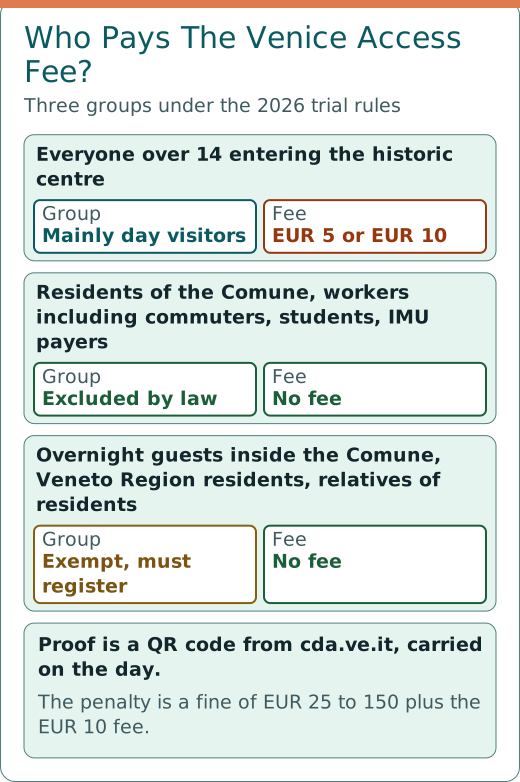
The honest statement about 2027 is that nothing official exists. No calendar, no confirmed amount, no decision has been published, and any figure floating around in news coverage is speculation, not policy. The practical advice is to check the official portal, or the city's own entry fee page, shortly before you travel. Our dedicated guide has the full breakdown of who paid, who was exempt, and how registration worked: Venice access fee explained.
One more cost note for the calendar-minded: the fee was a charge for entering the city, not an attraction, and it was always separate from the overnight tourist tax that accommodation hosts collect. Budget planners should treat the access fee as a line item that is currently zero, and keep it that way in their sums until an official 2027 announcement says otherwise.
What Can You See In Venice Without Buying A Ticket?
Most of Venice's famous image is free: Piazza San Marco, the Rialto bridge, the Grand Canal waterfronts, the Ghetto streets, and the walkable islands of Murano, Burano and Torcello all cost nothing to see. What is paid is the interiors layer: the Basilica at EUR 10, the museums, the towers. A visitor who stays outdoors can spend a full day without a single ticket.
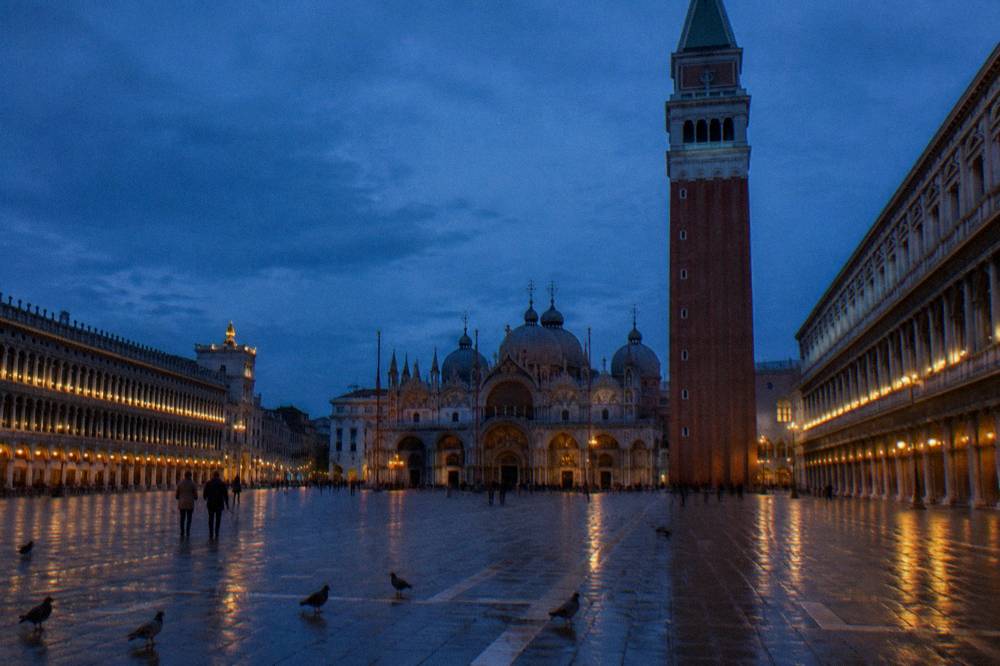
Start with the square itself. Piazza San Marco is free to enter and linger in, which is remarkable given what surrounds it. The paid parts are all vertical or indoor: the Basilica di San Marco is EUR 10, the Pala d'Oro is EUR 10, the museum with the Loggia dei Cavalli and terrace is EUR 10 on top of the basilica, a combined full ticket is EUR 30, and the Campanile is EUR 15. A useful detail from the Procuratoria's tariff: a basilica ticket also admits the holder, within six months, to 34 other sites. That turns the EUR 10 from a one-off into a small pass if you return or explore.
The islands follow the same pattern. Murano, Burano and Torcello are free to walk, and Burano's painted houses alone justify the boat fare for many visitors. Their museums and the Torcello cathedral are paid. The Ghetto streets in Cannaregio are free to wander; the Jewish Museum is a separate paid visit. For the full free-sights rundown, see free things to do in Venice and our wider things to do in Venice guide.
Churches need one careful sentence. Basilica dei Frari, an independent church, charges EUR 8 with its own concessions. Santi Giovanni e Paolo asks an offering of EUR 3.50 for tourist visits and remains free for prayer and Mass. We cover this properly in which churches in Venice are free.
The cheapest way to add depth to the free outdoors is a pay what you want walking tour, and this site lists several. The Heart Of Venice walk, run by Venicemania on freetour.com, is rated 8.9 out of 10 across 2,142 freetour.com reviews, runs 1 hour 30 minutes in English and Spanish, and meets at the Gallerie dell'Accademia in Dorsoduro. Recent reviews on the freetour.com listing note that the route skips St Mark's Square and the Basilica, so treat it as a Dorsoduro-and-centre introduction rather than a square tour.
Which Free Walking Tours Cover The Most Ground?
The 17 free walking tours listed on this site, 16 on GuruWalk and one on freetour.com, all operate on a pay what you want basis, so the tour itself is never a budget risk. The right question is which meeting point and duration suit your day, since the walks fan out from different campi across Cannaregio, San Polo, Castello and Dorsoduro.
Meeting point is the practical filter. If your day starts near the Rialto, the Rialto And Secret Spots Walk, guided by Lucia of Free Walk in Venice on GuruWalk, meets at Campo San Polo, runs 2 hours in English, and is rated 4.92 out of 5 across 366 GuruWalk reviews. It is the strongest-rated walk on the site by score, and its San Polo base puts you a short walk from the Rialto market ground.
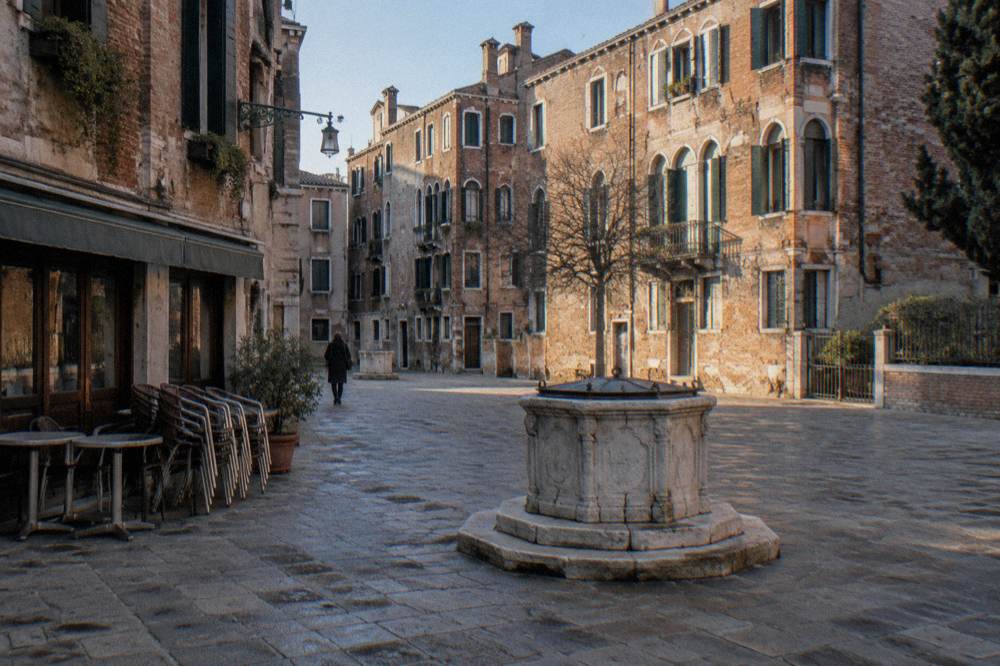
From Cannaregio, The Original Free Walking Tour, guided by Simona on GuruWalk, meets at Campo Santi Apostoli, runs 2 hours in English, and carries a 4.88 out of 5 rating across 325 GuruWalk reviews. Cannaregio is also where the Ghetto streets sit, so a morning walk here pairs naturally with the free Ghetto wandering described above.
The comparison below lines up the cardable walks by neighbourhood so you can slot one into an existing route instead of crossing the city twice. Durations and ratings come from each listing. Note that the Spanish-language walks on this site run in Spanish only, so filter them out if you need English.
| Walk | Platform | Meets at | Duration | Rating |
|---|---|---|---|---|
| Heart Of Venice, Bilingual Guide | freetour.com | Gallerie dell'Accademia | 1 hour 30 minutes | 8.9 out of 10, 2,142 reviews |
| Rialto And Secret Spots Walk | GuruWalk | Campo San Polo | 2 hours | 4.92 out of 5, 366 reviews |
| The Original Free Walking Tour | GuruWalk | Campo Santi Apostoli | 2 hours | 4.88 out of 5, 325 reviews |
| Northern Districts, Locals' Venice | GuruWalk | Campo de la Fava | 2 hours | 4.82 out of 5, 3,020 reviews |
| Hidden Secrets And Curiosities Walk | GuruWalk | Campo della Maddalena | 2 hours 15 minutes | 4.89 out of 5, 1,189 reviews |
| Historic Centre Walk With Annie | GuruWalk | Teatro Goldoni | 1 hour 30 minutes | 4.7 out of 5, 73 reviews |
A note on how these tours work financially, since budget travellers rightly suspect the word free. The guides take no payment up front; you tip what you think the walk was worth at the end. That model is explained honestly in are free walking tours really free, and the tipping etiquette is covered in how much to tip a free walking tour. Our overview page lists the full range: free walking tours in Venice.
Where Can You Eat Cheaply In Venice?
Venice food costs drop sharply the moment you leave the San Marco radius and eat where Venetians eat, standing at a bàcaro counter with cicchetti, the local small plates, rather than sitting at a canal-side table. The sitting fee, sometimes called coperto, and the view premium are the real budget killers, so the cheapest meal in Venice is the one eaten standing up a side street.
The pattern is consistent across the city. Places within sight of a major monument price the view into the menu. Two streets back, the same kitchen charges materially less for the same food. Cannaregio, especially the Strada Nuova side streets, and the area around the Rialto market are the traditional hunting grounds for counter food, and Castello east of San Marco stays cheaper than the streets immediately around the square.
Cicchetti are the budget mechanism that makes this work: small snacks sold by the piece at a counter, ordered a la carte, eaten standing or walking. A round of them with a small glass of house wine, an ombra, is the classic Venetian cheap lunch, and ordering this way lets you cap spending by ordering one item at a time rather than committing to a menu. The same logic applies to pizza al taglio and takeaway focaccia for a bench lunch in a campo, which costs a fraction of table service.
Two rules protect the budget better than any single recommendation. First, never order food or drink with a view of Piazza San Marco if price matters: that is the most expensive real estate in the city. Second, look at where the people behind the counter are eating, because staff lunches mark the honest kitchens. Beyond that, treat any specific price you read online, including in older forum posts, as outdated until you see the board in person, since Venetian menu prices move with the season.
How Do You Get Around Venice Without Overspending?
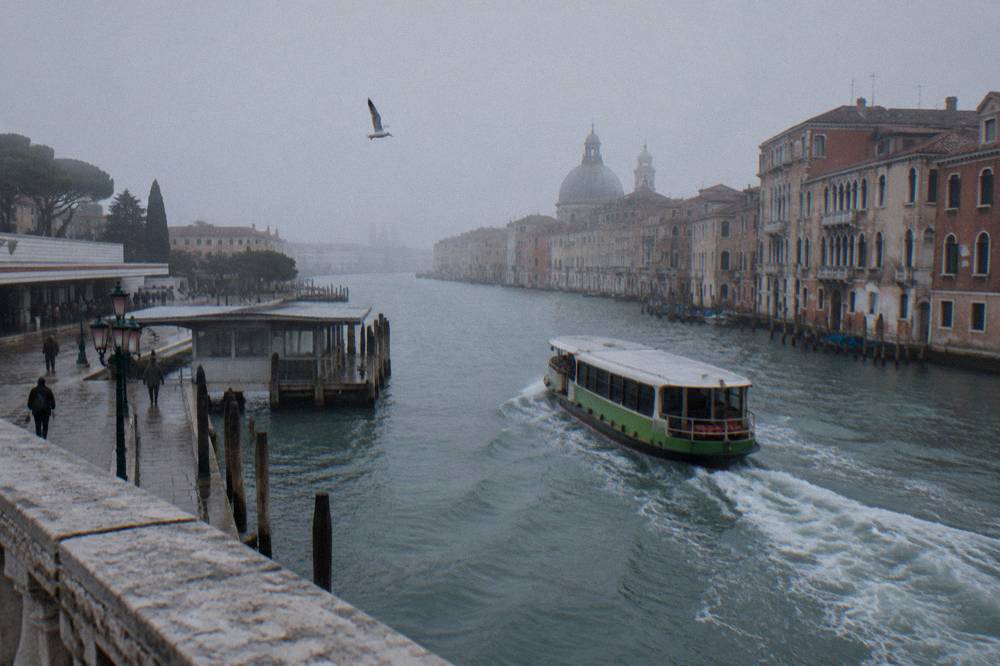
Walking is free and Venice is compact, so transport is the most avoidable cost in the city. When you do need a boat, a 75-minute vaporetto single is EUR 9.50, a 24-hour pass is EUR 25, a 48-hour pass is EUR 35, a 72-hour pass is EUR 45, and a 7-day pass is EUR 65, so passes only pay off above roughly three rides a day. The airport bus single is EUR 10.
The arithmetic is the whole decision. At EUR 9.50 a single, three rides in a day already cost more than a 24-hour pass, so the pass wins from the third ride onward, while two rides never justify it. Most budget visitors walk the historic centre end to end in a day without a boat, and save the vaporetto for the lagoon islands, where a boat is unavoidable. Fares have been confirmed stable for the 2026 to 2027 season, with no increases announced for standard tickets or subscriptions.
| Ticket | Price | Breaks even at |
|---|---|---|
| Single, 75 minutes | EUR 9.50 | Always, for one ride |
| 24-hour pass | EUR 25 | 3 rides or more |
| 48-hour pass | EUR 35 | 4 rides or more |
| 72-hour pass | EUR 45 | 5 rides or more |
| 7-day pass | EUR 65 | 7 rides or more |
| Airport bus, single | EUR 10 | One airport transfer |
The transport line item is nothing at all: Venice is flat, walkable, and crossed by free bridges at every turn. The full fare breakdown, including how the passes compare for island days, is in our vaporetto guide. For the islands specifically, the trade-offs between Murano and Burano are laid out in Murano or Burano, noting that the islands themselves are free to walk while their museums are paid, and the boat fare is the real cost.
What Free Events Fill A Budget Calendar?
Venice gives away its biggest spectacles: the Festa della Madonna della Salute on 21 November 2026, when a votive bridge crosses the Grand Canal and the event is free to attend, and the open-air Carnevale street programme, much of which costs nothing to watch. Seasonal Christmas markets in late November into early January are free to visit, and Festa de San Martino falls on 11 November 2026.
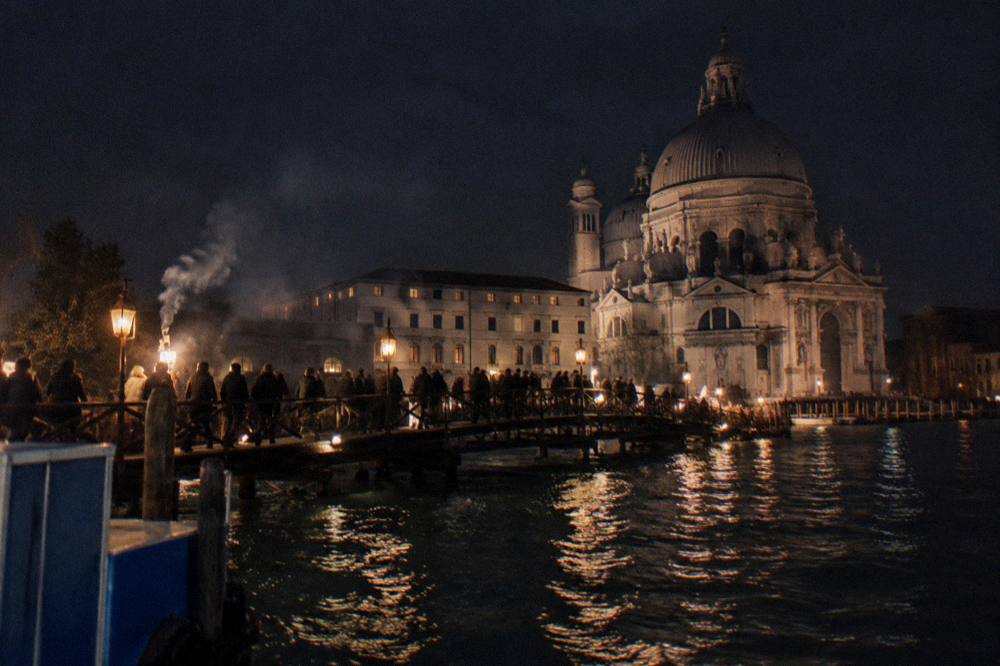
The Salute festival is the locals' favourite and the budget traveller's gift. On 21 November 2026 a temporary votive bridge spans the Grand Canal from San Marco to the Santa Maria della Salute church, built for the traditional pilgrimage that thanks the Madonna for the city's deliverance from plague. Watching the bridge go up and joining the crossing costs nothing, and it is one of the few Venice events where the crowd is mostly Venetian rather than visiting.
Carnevale works the same way at street level. The masked balls and gala dinners are among the most expensive tickets in Italy, but the open-air programme, the costumes in the campi, the flights of fancy along the waterfront, is free to watch, and the full street programme for the coming season has not yet been published. The Biennale Arte ran 9 May to 22 November 2026 with ticketed main venues, though some outdoor elements are public. For the practical side of visiting in the wetter months, the city's own guidance on acqua alta and flooding is worth reading, since the flooding season runs October to March and peaks in November and December.
The budget logic of events is the same as the rest of this guide: the spectacle is free, the seating is paid. A visitor who times a trip to Salute or the Carnevale street days gets the city's most photogenic moments at zero cost, then chooses whether any interior, from the Basilica to the Doge's Palace, is worth adding on top.
Putting The Budget Day Together
A realistic cheap day in Venice looks like this: walk everywhere, see Piazza San Marco and the Rialto for free, join a pay what you want walking tour, eat cicchetti standing up, and reserve the paid tickets for one or two interiors you actually care about. Done that way, the sightseeing cost of a Venice day can be close to zero, with every euro spent a deliberate choice.
The walks below cover the hidden-venice ground, the districts most first-time visitors never reach, and all three are pay what you want. The 3-Hour Hidden Venice Walk, guided by Francesco on GuruWalk, is rated 4.76 out of 5 across 1,911 GuruWalk reviews and meets at Campo San Geremia in Cannaregio. The Overlooked Highlights Walk, from Venice Walking Tour on GuruWalk, is rated 4.84 out of 5 across 1,668 GuruWalk reviews from Campo Sant'Agnese in Dorsoduro. The Hidden Secrets And Curiosities Walk, from ITAKA tours on GuruWalk, is rated 4.89 out of 5 across 1,189 GuruWalk reviews and meets at Campo della Maddalena in Cannaregio.
The one-sentence summary of Venice on a budget: the city charges for what is inside and elevated, and gives away what is outside and at street level, and the outside is the part people come for. Plan around that, and the wallet survives intact.
Common Questions About Venice On A Budget
Is Venice Expensive For Tourists?
Venice can be expensive, but the core experience is free: the squares, canals, bridges and campi cost nothing, and the walking tours listed on this site are pay what you want. Costs come from tickets to interiors like St Mark's Basilica at EUR 10 or the Doge's Palace at EUR 35, and from eating at canal-side tables. We break this down in our guide on whether Venice is expensive for tourists.
Is The Venice Access Fee Charged Now?
No. The 2026 trial ran on 60 non-consecutive days between 3 April and 26 July 2026, 08:30 to 16:00, and ended on 26 July. No official 2027 dates or amounts have been published, so check the official portal before travelling.
What Is Free At Piazza San Marco?
The square itself is free to enter. The paid parts are separate: St Mark's Basilica is EUR 10, the Pala d'Oro is EUR 10, the museum with Loggia dei Cavalli and terrace is EUR 10 on top of the basilica, a full ticket is EUR 30, and the Campanile is EUR 15.
Are The Free Walking Tours In Venice Really Free?
Yes, in the sense that no payment is due up front. All 17 walks listed on this site, 16 on GuruWalk and one on freetour.com, operate on a pay what you want basis: you reserve a place, take the walk, and tip the guide what you feel it was worth at the end.
Is It Cheaper To Walk Than To Take The Vaporetto?
Yes, always. Walking is free and the historic centre is compact. A 75-minute vaporetto single is EUR 9.50 and a 24-hour pass is EUR 25, so passes only pay off above roughly three rides a day, and most budget visitors only need boats for the lagoon islands.
Which Venice Islands Are Free To Visit?
Murano, Burano and Torcello are free to walk, including Burano's painted houses and Torcello's open ground. Their museums and the Torcello cathedral are paid, and the boat fare is the real cost of the trip.